

Labor and the Coalition have announced their parental leave policies. If you are planning to have children, you should be familiar with what they’re offering.
Articles on Parental leave
Displaying 21 - 40 of 53 articles

Mothers with young children are consistently identified as having lower levels of physical activity and leisure opportunities, which place their physical and mental health at risk.

Current parental leave schemes reinforce old gender stereotypes and the pay gap between women and men. Overseas experience shows better targeted leave for new fathers helps everyone.

You might expect progressive policies in our universities, but a parental leave system of primary and secondary caregivers – the first 93% women, the second 96% men – perpetuates the gender gap.

Polls have consistently found robust support for this benefit, with a growing share of the public approving of paid time off for dads.

Women and their careers benefit when men are allowed – and encouraged – by their employers to do more caregiving.

Parents and managers can work together to plan ahead, avoid returnees feeling excluded and maintain a good work-life balance.

Single mothers need more of a break than they get under current laws.

Whatever the eventual impact on women’s candidacies post-pandemic, COVID-19 has the potential to shock the system, upending or reinforcing existing gender imbalances in political power.

Stay-at-home parents have a hard time reentering the workforce after spending time away.

Forty percent of US babies are born to unmarried parents. But the new paid leave policy for most federal workers disadvantages single parents.
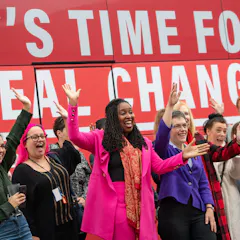
Labour and the Liberal Democrats go further than the current system but would still leave the UK lagging behind many of its international peers.

Does having children make the goal of fairly dividing work at home more elusive?

Breast milk contains ingredients in concentrations that change over the course of the day. Researchers think milk is chrononutrition, carrying molecular messages to help set a baby’s internal clock.

Thanks to a provincial insurance plan, Québec fathers are spending more time with their newborns, bringing about changes in the gender division of labour within the family.

The UK Court of Appeal ruled in late May that it is not sex discrimination for employers to enhance maternity pay but only provide the statutory rate of shared parental pay.

Most mothers want some continuity with their pre-maternal identity, to feel a sense of meaningful contribution to their society, and to enjoy their relationships with their children.

The transition to parenthood comes with plenty of stress. A psychology researcher suggests that paid family leave could help lift some of the burden – with positive health benefits down the road.

There is a wide problem with the way society talks about gender equality.

Research suggests that government spending on very young children is a good investment.
Top contributors
-

Professor of Organisation Studies, University of Oxford; York University, Canada
-
Professor of Psychology, USC Dornsife College of Letters, Arts and Sciences
-
Programme Director, Centre for Labour Law; Lecturer in Mercantile Law, University of the Free State
-
Associate Professor in Law, University of East Anglia
-
Associate Professor of Human Resource Management, York University, Canada
-
Professorial Fellow, Jumbunna IHL, University of Technology Sydney
-
Distinguished Professor of Sociology and Public Policy, UMass Amherst
-
Professor of Consumption & Society, University of Manchester
-
Senior Lecturer in Labour Law, North-West University
-
Professor of Law and John F. Kimberling Chair, Indiana University
-
Professor and Canada Research Chair in Gender, Work, and Care, Brock University
-
Emeritus Professor of Politics and Policy, Deakin University
-
Professor of Sociology, University of Lincoln
-
Adjunct Researcher, University of Tasmania
-
Lecturer in Human Resource Management and Employment Law, University of Salford