
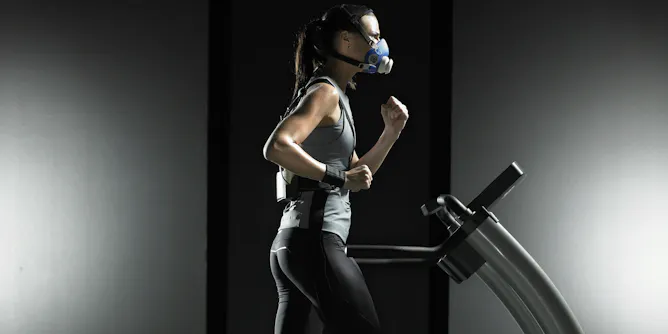
The assumption that has kept women out of so many physiology studies for years — uncertainty about potential fluctuations due to menstrual cycles or hormonal birth control — turns out to be incorrect.
Articles on Physiology
Displaying 1 - 20 of 101 articles

Social media claims a special walking technique can boost your lymphatic system. Here’s what’s actually backed by evidence.

Our skin alone can’t actually tell if something is wet.

Heat waves pose a threat to older adults, but a recent study suggests that they retain an unexpected ability to adapt to high temperatures.
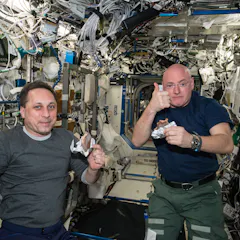
A speech-language pathologist on how complex swallowing is – and how small changes from gravity can complicate the process.

It takes an entire team of electricity, calcium, energy and proteins all working together to move your muscles.

Unregulated peptides sold for muscle gain and anti-ageing carry serious risks, and the evidence suggests women face the greater danger.
Social media has turned a normal part of your skeleton into a problem to fix. It isn’t, and the fixes mostly don’t work anyway.
Older women and people with diabetes are much more likely to develop this condition. So do physio or steroid injections make a difference? And what about surgery?
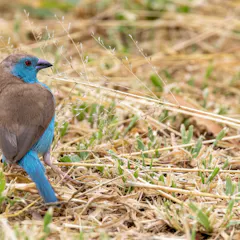
High humidity affected how birds cope with heat and their ability to regulate body temperature.
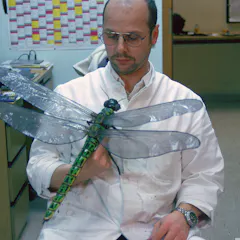
Scientists thought giant dragonflies couldn’t survive in today’s atmosphere – but a study of dozens of insect species shows that’s not the case.

While physical exertion helps athletes stay warm, sweating can lead to dehydration.
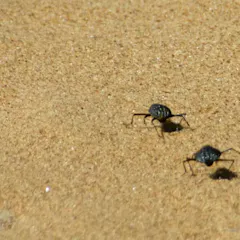
A Namibian desert beetle cools down by running in the sun.

Here’s how a natural compound can easily trick your brain.

When you curse after stubbing your toe, you’re not losing control – you’re activating ancient neural circuits that help your body cope with pain.

The answer lies in what’s known as the body’s ‘master clock’.
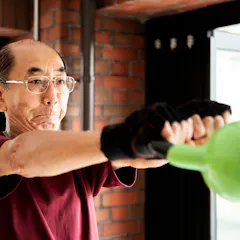
Your brain and body constantly recalibrate what ‘hard’ feels like. The effect of overcoming one small challenge can ripple forward, making the next challenge feel more doable and even rewarding.
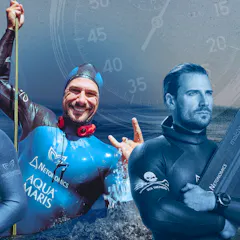
A freediver recently set a new world record for a breath hold. His physical and mental training allowed him to delay a basic human survival response: breathing.
How anatomy, hormones and habits shape toilet trips.

How far can the human body go? Ask Tom Cruise.
Top contributors
-

Professor of Anatomy, Lancaster University
-
Adjunct Associate Professor, Anatomy, UNSW
-
Associate Professor of Exercise Physiology, Mississippi State University
-
Associate Professor of Physical Therapy, University of Dayton
-
Professor, Curtin School of Allied Health, Curtin University
-
Associate Professor of Medical Sciences, University of Wollongong
-
Professor of Anatomy, University of Bristol
-
Professor of exercise and work physiology, University of Montana
-
Duncan Mitchell is a Friend of The Conversation.
Honorary Professorial Research Fellow, University of the Witwatersrand
-
Associate Professor of Health and Sport Science, University of Dayton
-
Doctorant en Sciences du Mouvement Humain, Université Côte d’Azur
-
Doctorant en Sciences du Mouvement Humain, Université Côte d’Azur
-
Consultant Anaesthetist and Professor of Public Engagement and Innovation, Department of Science, Technology, Engineering and Public Policy, UCL
-
Professor of Organisational Behaviour, Bayes Business School, City St George's, University of London
-
Professor of Dermatology, The University of Melbourne