

But economic and cultural forces mean dense housing is harder to develop than low-rise sprawl.
Articles on placemaking
Displaying all articles

Our maps show some kids have nearer, bigger playgrounds than others.

Art can help anchor places even as they are reshaped.
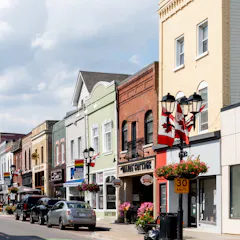
Rising business costs and shifts in the market accelerated by the COVID-19 pandemic are posing challenges for small retailers along Main Street business areas.
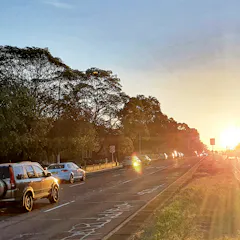
NSW is developing a comprehensive new planning policy with the goal of creating healthy places. A new study finds those people who work as placemakers want these goals embedded in laws and budgets.
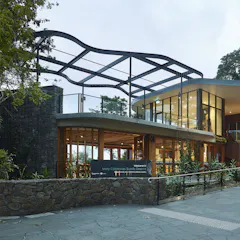
The council, developers, architects and the local community got together to set the principles of what they consider good design in this fast-growing region.

A friendly wave from a neighbour is one of life’s incidental but invaluable interactions. Porches, balconies, front yards and footpaths have proven their importance as cogs of neighbourhood life.

Apartments house one in ten Australians, including a higher share of low-income households than other housing types. A new study identifies why some high-density neighbourhoods work better than others.

Re-imagining cities after COVID-19 is both a practical and philosophical task. People’s perceptions of places are changing. It is a time for planners and policymakers to plan with, not for, people.
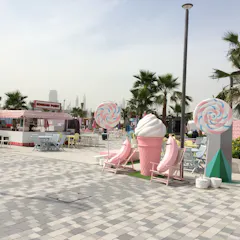
Visitors to Dubai are drawn to its carefully created and recreated urban precincts, but placemaking in this city helps sugercoat the reality of autocratic rule.
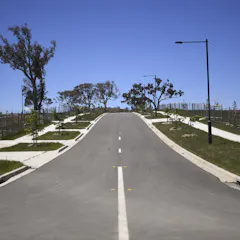
A sense of place matters for people and communities. When a suburb is created from scratch, close attention needs to be paid to the cues from the landscape and meanings people attach to the area.

Kebab vans symbolise the success of ‘bottom-up’ multiculturalism, providing a way for the non-European cultural ‘other’ to become part of our way of life.

The secret of creating attractive, liveable places sounds deceptively simple: connect people to places, people to transport and people to people.
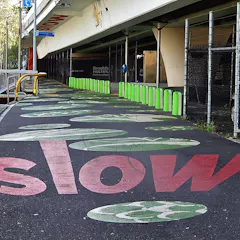
Smart cities are usually optimised like a business for speed and efficiency. Placemaking can slow down cities to improve health and wellbeing and promote more democratic engagement of citizens.
Top contributors
-

PhD Candidate and Sessional Tutor, The University of Melbourne
-
Professor and Fellow of the Curtin Academy, Curtin University
-
Senior Lecturer in Architecture, Queensland University of Technology
-
Senior Lecturer in Landscape Architecture, The University of Melbourne
-
Senior Lecturer in Urban and Environmental Planning, Griffith University
-
Professor, City Futures Research Centre, UNSW
-
Senior Lecturer in City Planning, UNSW
-
Deputy Director, Australian Urban Design Research Centre, The University of Western Australia
-
Associate professor in urbanism, University of Sydney
-
Senior Research Fellow, Institute for Social Science Research, The University of Queensland
-
Lecturer of Arts, Culture & Media, Rutgers University - Newark
-
Professor of Planning and Director of Urban Transformations Research Centre, Western Sydney University
-
ARC DECRA Fellow at the Centre for Urban Research, RMIT University
-
Associate Professor, Social Innovation Design, Faculty of Design, OCAD University
-
PhD Candidate, Centre for Urban Research RMIT, RMIT University