
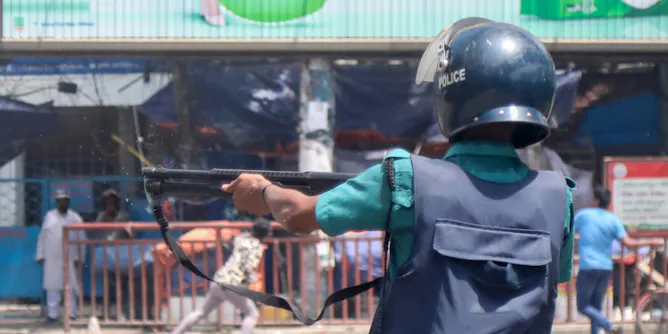
Police brutality has left many protesters dead in Bangladesh, but the authorities are not being held to account.
Articles on Policing
Displaying 61 - 80 of 381 articles

Our research found that while ShotSpotter may have benefits for improved detection and response, it offers little benefit for enforcement and clearance and did not reduce gunshot victimization.
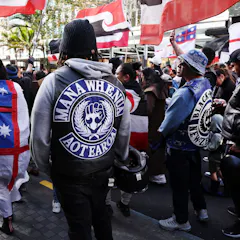
International research suggests many anti-gang policies actually increase crime, rather than reduce it. These local experts could help us do better – if New Zealand’s politicians would listen.

An analysis of trends over the last 20 years in Canada could not find any correlation between increases in municipal police budgets and a reduction in crime rates. There’s another way forward.

Our research shows the smallest of appearance changes are enough to lead to mistaken identifications in a police line-up. It doesn’t bode well for the justice system.

For host cities football fans are simultaneously potential consumers and criminals. But they have rights, and fan zones are a good way of protecting fans, the public and the streets.
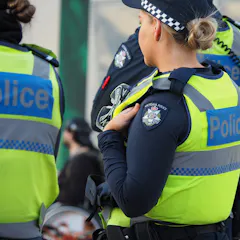
New research shows police specialising in family violence are concerned current approaches leave victim-survivors unprotected.
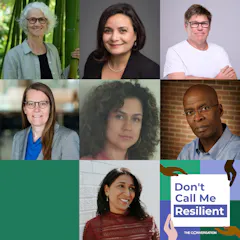
In this bonus episode, you’ll meet some of the producers who help make this podcast to revisit some of our favourite episodes from past seasons.

Community notifications are intended to be helpful, however, they can also make reintegrating back into the community challenging for released individuals.
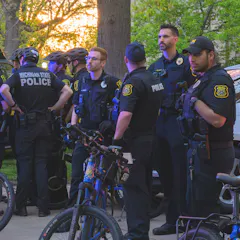
From culture shock to a lack of family support, slow progress on diversity in police recruitment reflects real challenges in a tough field.
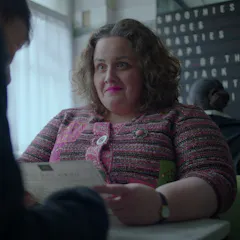
By using risk assessment guidelines, police could have taken steps to mitigate Martha’s stalking of Donny before it got worse.
Confiscating firearms from alleged abusers might seem like a good idea, but it’s unlikely to make much of a difference.
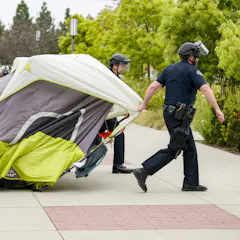
Framing dissent and poverty as a menace to public order can threaten fundamental rights, particularly when it’s used to justify the deployment of predictive technology.

The SIU plays a vital role in providing oversight of Ontario police officers. But how effective is the agency in practice?

As climate change ravages coastal livelihoods, piracy is on the rise, imperilling seafarers and trade.
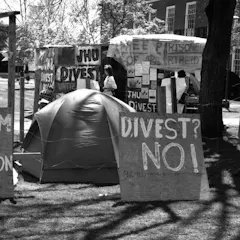
In the 1980s, university administrators called the police on anti-apartheid protesters, threatened to revoke their scholarships and ordered staff to demolish encampments.
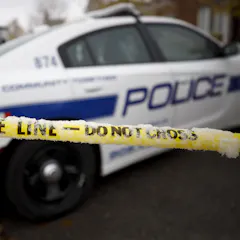
The diagnosis of excited delirium has come under fire from doctors and other mental health professionals, but is still used by police forces, sometimes with tragic results. It’s time to end its use.

The current blue-on-blue battle between competing law enforcement agencies in a large British Columbia city does little to strengthen public trust in the rule of law and in our police forces
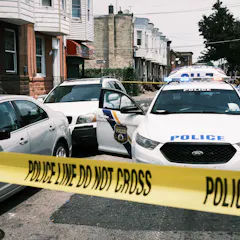
A social science researcher followed a dozen teens from different neighborhoods in North, West and Northeast Philadelphia, tracking their family histories and heart rates as they navigated daily life.
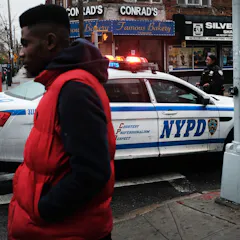
Evidence from NYC shows that stop-and-frisk policing leads to greater mistrust of police and more racial disparities in the criminal justice system.
Top contributors
-

Associate Professor in Criminal Justice and Criminology, Bond University
-
Professor of Law, University of Technology Sydney
-
Assistant Professor of Criminal Justice and Criminology, Georgia State University
-
Emeritus Professor in Law and Criminal Justice, Adelaide University
-
Senior Lecturer in Law, UNSW
-
Associate Professor, UNSW
-
Assistant Professor, Augusta University
-
Professor (Practice), Faculty of Business and Economics, Monash University
-
Professor Emerita of Criminology, UNSW
-
PhD Candidate in Social Work and Criminology, UNSW
-
Professor, Sociology, University of Alberta
-
Professor of Criminology, University of Leeds
-
Eleanor Rathbone Chair of Sociology, University of Liverpool
-
Assistant Professor of Criminology and Criminal Justice, University of South Carolina
-
Associate Professor in Law, University of Canterbury