

A new ‘born alive’ bill has been brought before federal parliament. While it won’t pass, it reveals the strategies of the growing anti-abortion push.
Articles on Pro-life
Displaying 1 - 20 of 23 articles

The term ‘pro-life’ can seem simple – but how Americans and advocacy groups interpret it varies widely.
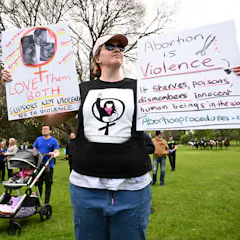
Opponents of abortion used to say ‘love them both’, but recent protests in New South Wales show how the strategy has taken a more confrontational tone. But why?

Academic research on changing social norms relating to gender and sexuality is largely silent on how these changes can affect those who ‘do not agree’.
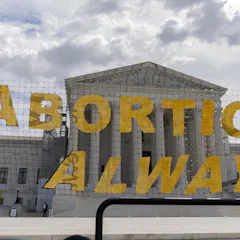
A historian of gender and women’s rights explains how women’s protests focused on their rights evolved from the 1960s through the present.

Most Americans surveyed did not know how pregnancies are dated or how long a trimester is – but this is especially true among some groups, like people who say they support six-week abortion bans.
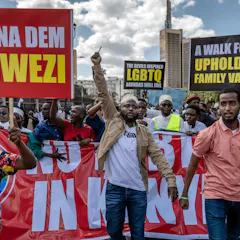
Ultra-conservative pro-family groups finance campaigns to influence the policies of governments and schools.

An analysis of anti-abortion rights groups in the US shows that while some specifically turn to Christianity to explain their positions, others are looking at broader, human rights arguments.

Abortion bans and restrictions have numerous downstream effects on health care. For instance, medical students in states where those laws exist will not receive training for some standard procedures.

When Justin Trudeau raised the issue of rape victims during a recent argument with an anti-abortionist, he inadvertently suggested there are acceptable and unacceptable reasons to abort.

If the ruling to reverse the use of mifepristone stands, it will not only severely restrict abortion access for women throughout the US – it will have far-reaching effects on health care.

The women’s rights movement in the 1800s did not openly support legalizing abortion or birth control. But the reasons why are complex.

For many who must travel to get an abortion, the financial burden of the trip can be overwhelming.
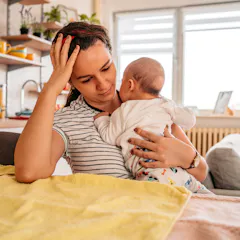
Escalating legal restrictions throughout the US might mean an increase in mental health disorders for those who are denied an abortion.
When ideological enemies talk across their great divides, something good can happen – it reduces stereotypes and inflammatory language directed at people who don’t agree on the abortion rights issue.

Abortion pills are available online, and many of them are safe. But not all sites have been properly vetted for legitimacy.

Faith can inform opinions about abortion on both sides of the political debate, but the Bible itself says nothing directly about the topic, a biblical scholar explains.

Offering free pregnancy tests, sonograms and counseling, the pregnancy help movement maintains more than 2,700 resource centers throughout the United States.
The reasons why people may seek out late-term abortions are complex and are often based on new medical information and delays caused by state policies.

An ethicist argues that choices made by celebrities could impose unjustified risk of harm on others.
Top contributors
-

Professor of Sociology, University of California, San Francisco
-
Senior Lecturer in US History, College of Human Sciences and Culture, Flinders University
-
Associate Professor of Political Science, Miami University
-
Assistant Professor of History and Interdisciplinary Studies, Kennesaw State University
-
Associate Professor of Political Science, University of Oregon
-
Associate Professor of Legal Studies and Political Science, UMass Amherst
-
Professor of Political Science, Hartwick College
-
Lecturer, Massachusetts Institute of Technology (MIT)
-
Professor of Political Science, Augusta University
-
Associate Professor of Family Medicine, School of Medicine, University of Washington
-
Associate Professor, Philosophy, University of California, Davis
-
Postdoctoral Researcher, University of Gothenburg
-
Associate Research Scientist, African Population and Health Research Center
-
Associate Professor of Obstetrics, Gynecology and Gynecologic Surgery, University of California, San Francisco
-
Associate Professor, Women's and Gender Studies, Carleton University