
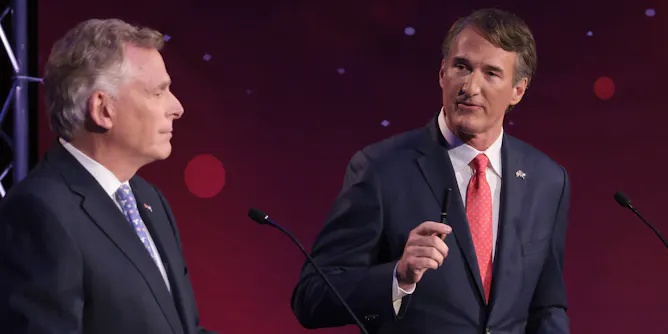
With control over the Virginia Legislature at stake in the Nov. 7 election, the historic battle over what is taught in public schools remains a priority for both Democrats and Republicans.
Articles on Public education
Displaying 21 - 40 of 61 articles
Recent Supreme Court decisions have signaled a shift in how the country’s highest court interprets the limits on religion in schools.
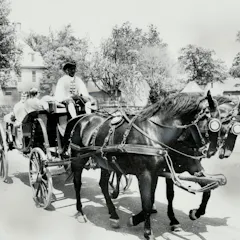
Though it is a fact that some enslaved people learned valuable skills, it’s a myth that they had the same path of upward mobility that white laborers enjoyed.
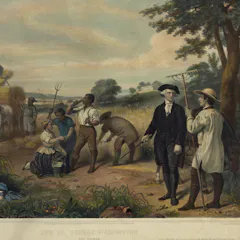
Florida’s new standards for teaching social studies include throwbacks to an interpretation of slavery as benign or inconsequential.

Children’s books that feature Asian protagonists are rare. Two scholars decided to offer their own in their attempt to reduce racial prejudice.

For the formerly enslaved Black people in Texas, Juneteenth meant more than freedom. It meant reuniting families and building schools and developing political power.

Most school-choice programs in the US have been approved by lawmakers. But when asked for their views, voters have overwhelmingly rejected them.
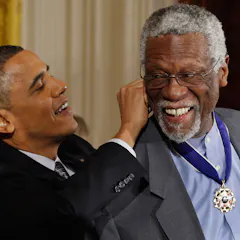
America’s complicated history with race can be told through the lives and times of Black Americans, a view that some GOP-controlled state legislatures want to restrict, if not outright ban.

The Supreme Court has yet to rule on whether school dress codes are protected under the law.
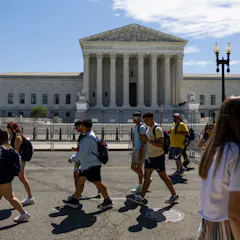
Once again, the court has expanded the legal ways that public funds can be used for students at religious institutions.

If Texas Gov. Greg Abbott had his way, the state’s past of lynching Blacks would be taught as an exception rather than the rule. History tells a different story.

In the early 1960s, the McDonogh 19 school was the site of fierce opposition to racial integration. The building is now owned by one of the Black girls who first integrated the school.

When private contractors build schools they don’t necessarily meet the needs of communities for a lower cost than what governments can provide, and there’s less public accountability.

A new approach to urban planning is needed to restore hope in African cities. There are three keys that can help unlock this.
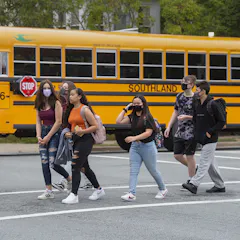
A policy of “choice” for full-time online schooling would weaken public education, erode funding for in-classroom supports and drive those who can afford it to private education.
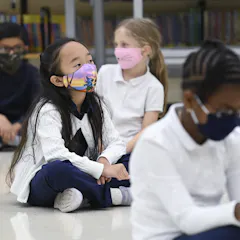
Statistics Canada could help provinces and territories design and implement interventions to improve schooling quality, and governments should better engage with the public.
The push to expand charter schools in the U.S. contributed to a robust movement of teachers’ unions and allies demanding a well-resourced public school system.

The turn to private funding of education reduces the responsibility of governments to adequately fund schools and to ensure all children have access to high-quality education programming.

There is outrage over government funding to a private school, but what if the money is used to benefit the wider community?

First, the United Conservative Party lifted the cap on charter schools, and now new legislation has cut school boards out of the process to establish a charter school.
Top contributors
-

Joseph Panzer Chair in Education and Research Professor of Law, University of Dayton
-
Professor of History, Sam Houston State University
-
Professor, Faculty of Education, York University, Canada
-
Associate Professor, Faculty of Education, University of Windsor
-
Associate Professor of Social Studies Education, College of Charleston
-
Professor of Law & Walter H. Stowers Chair of Law and Religion, Michigan State University
-
School Education Program Director, Grattan Institute
-
Assistant Professor of Educational Leadership and Policy Studies, University of Memphis
-
Associate Dean, School of Graduate Studies & Professor, Faculty of Education, Queen's University, Ontario
-
Professor of Education, Furman University
-
Director of Research and Development, Pivot Professional Learning; and Honorary Fellow, The University of Melbourne
-
Professor, Leadership and School Transformation, School of Education, University of Newcastle, University of Newcastle
-
Senior Research Fellow, The Centre for Independent Studies; Associate Investigator, ARC Centre of Excellence in Cognition and its Disorders, Macquarie University
-
Associate Professor, Faculty of Education, Western University
-
Professor, University of Toledo