
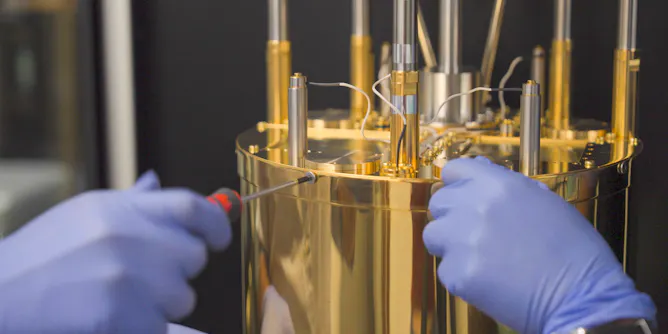
A new facility in Queensland will allow researchers from academia and industry to test new ideas on a real quantum processor.
Articles on Quantum computing
Displaying 1 - 20 of 128 articles
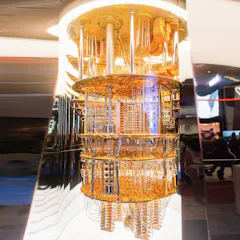
The new machine works in a different way to many other quantum devices.
Particles’ properties at the quantum level could one day enable faster computing and better cybersecurity.

US-UK company Quantinuum has produced a fault-tolerant quantum computer with high performance.
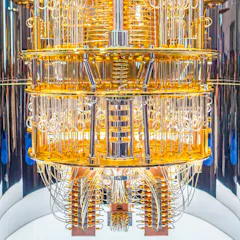
More profitable applications for quantum computers are eclipsing the drive to break encryption.

Combining AI with quantum computing could enable doctors and researchers to analyze the human body at an unprecedented molecular level, unlocking breakthroughs in personalized medicine. Yet significant quantum technology hurdles remain before this vision becomes reality.

Quantum hardware and software are advancing rapidly – and our online encryption systems need to change to stay ahead.
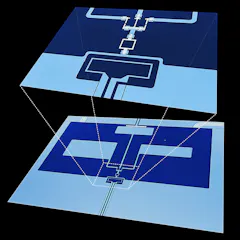
The discovery that superconducting circuits can behave like quantum particles was a revolutionary development in the field of quantum technologies.

Science fiction sometimes uses quantum concepts to make the impossible seem plausible. But real-world developments will likely have profound societal implications.
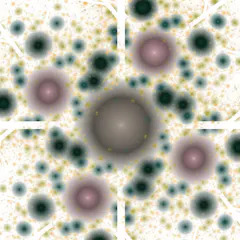
Physicists have found a way to redistribute uncertainty in quantum measurements, paving the way for ultra-sensitive atom-scale sensors.

The £150bn package could yield real benefits in public health, as well as other areas of technology.

A ‘quantum telephone’ connecting atomic nuclei could make practical quantum computers easier to build and use.

Researchers have used quantum physics to reversibly scramble videos so that even future quantum computers won’t be able to hack them.

The news that a certain class of cryptographic algorithms just got 20 times easier to hack has set hares running.
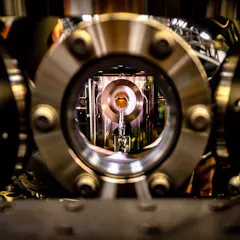
Quantum computers are getting closer and closer to being useful in the real world.
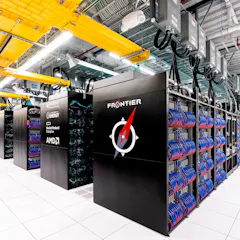
Today’s supercomputers are enormously powerful, but the work they do − running AI and tackling difficult science − is pushing them to their limits. Building bigger supercomputers won’t be easy.
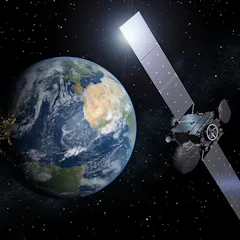
The extraordinary potential of quantum computers also threatens the security systems that keep our digital world safe.

New Zealand has a strong legacy in quantum physics. But to turn this into a thriving commercial sector will require investment in training and retaining top talent.

Photonic quantum computing is so back.
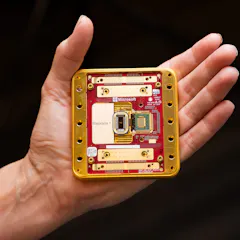
A new “topological” approach to quantum computing may address longstanding challenges with the technology.
Top contributors
-

Professor, Quantum Nanosystems, UNSW
-
A/Prof, UTS Chancellor's Postdoctoral Research and ARC DECRA Fellow, University of Technology Sydney
-
Professor, Information Security Group, Royal Holloway, University of London
-
Head of Quantum Systems and Principal Research Scientist, Monash University
-
Professor in Physics, The University of Queensland
-
Director, Centre for Quantum Dynamics, Griffith University
-
Professor of Quantum Physics and Quantum Technology, University of Sydney
-
Professor of Mathematics, University of Sydney
-
Associate Professor of Photonics and Quantum Sciences, Heriot-Watt University
-
Postdoctoral Fellow in Quantum Physics, University of Colorado Boulder
-
Chancellor's Fellow, Department of Physics, University of Strathclyde
-
Postdoctoral researcher, Imperial College London
-
Professor of Quantum Technologies (Physics and Astronomy), University of Sussex
-
Professor of Physics and Director of the Lancaster Quantum Technology Centre, Lancaster University
-
Scientia Professor in Quantum Engineering, UNSW