
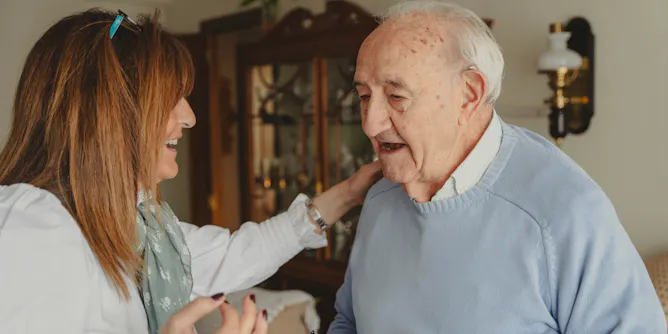
Accessing care often means long wait lists, complex forms and significant out-of-pocket costs. So start planning early, before a crisis hits.
Articles on Residential aged care
Displaying 1 - 20 of 36 articles
More than 3,000 patients are stranded in hospital waiting for discharge to a more appropriate aged care facility. Here’s why.
Residents with higher incomes and assets will be required to pay for a larger contribution than those on a pension.
A new payment system requires wealthier people to contribute more for non-clinical services. Here’s what it means for Australians planning for in-home or residential aged care.

After months of negotiations between the major parties, the government has announced its new plan for aged care. Here’s what it means for people in residential aged care and their families.
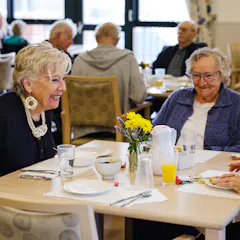
Making meals more appealing and giving aged care residents more choice, sounds simple enough. But you need the right ingredients to make it work on a wide scale.
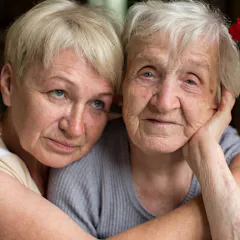
You’re worried and you want to see them well cared for. You’ve tried to talk to them about aged care but been met with swift refusal. Now what?

In future, Australia will spend much more on aged care. This increased spending needs to be well planned, so access is protected and all older people – regardless of income – get the care they need.
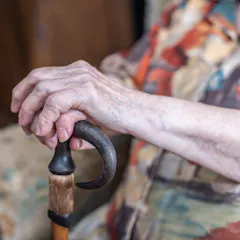
One proposal to fund the rising costs of aged care is a Medicare-style levy. However, this seemingly neat solution isn’t the answer to our aged care funding problems. Here’s why.

Aged care is one of the government’s biggest ongoing funding challenges. But for a sustainable system, we need to ensure everyone is paying their fair share. Here’s how to make it more equitable.
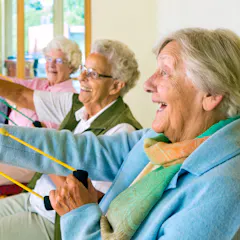
Elderly people living in aged care are among those most at risk. But not enough are getting vaccinated as we approach winter.

The decision to move a loved one with dementia into residential care is an incredibly difficult one. These considerations may help.
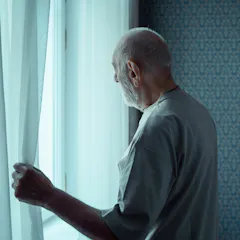
We spent 312 hours observing 39 residents at six Australian aged care facilities to find out how and where they spend their time across the day.

Respite care needs to be understood as a service for the carer as much as for the older person they care for.

Here’s how to go about raising issues with the relevant person or authority to improve aged-care standards for you or your loved one.

It’s time to rethink these physical environments with peoples’ fundamental human needs at the heart of design.

Devalued and paid significantly less than nurses, it’s no wonder Australia’s aged care workforce have had enough.
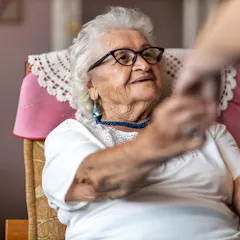
We measured financial literacy among 589 informal carers that substantially helped an older person make a decision about paying for residential aged care. Less than half were financially literate.

There are around 50 sexual assaults in Australian aged care homes every week. But staff are expected to assess the severity and impact of incidents without training.
Examining the records of 2,900 nursing homes we’ve found no evidence that where there’s more competition there’s better care or lower prices.
Top contributors
-

Professor, Aged Care Medical Research Australian Centre for Evidence Based Aged Care, La Trobe University
-
Professor of Health Economics, University of Technology Sydney
-
Professor in Ageing and Health, University of Sydney
-
Honorary Enterprise Professor, School of Population and Global Health, and Department of General Practice and Primary Care, The University of Melbourne
-
Associate Professor of Accounting, University of Technology Sydney
-
Professor of Nursing Aged Care (Dementia), University of Technology Sydney
-
Postdoctoral Research Fellow, Translational Health Research Institute (THRI), Western Sydney University
-
Research Assistant, Monash University
-
Emeritus Professor of Public Health, La Trobe University
-
Davina Porock is a Friend of The Conversation.
Professor of Nursing, Director of Centre for Research in Aged Care, Edith Cowan University
-
Senior Lecturer (Teaching and Research), Discipline of Occupational Therapy, School of Health Sciences, Faculty of Medicine and Health, University of Sydney
-
Adjunct Professor of Architecture and Urban Design, Queensland University of Technology
-
Associate Professor, Monash University
-
Adjunct Professor of Architecture, University of Technology Sydney
-
Professor, Crawford School of Public Policy, Australian National University