

Most older New Zealanders live in private homes. As the population ages, making streets, transport and public spaces work for them will become crucial.
Articles on Smart cities
Displaying 1 - 20 of 108 articles
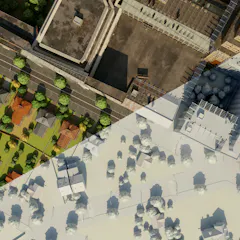
AI systems can already monitor traffic lights, scan for potholes and answer residents’ questions – the hard part is making sure people can trust them.

City transformation is increasingly being shaped by a complex interaction between the past and the future.

People want technology that supports them and eases their struggles. The technology must be controlled by the community and enhance people’s daily lives.

AI-powered systems can help manage energy grids, building temperatures and predict weather to store and use energy more efficiently.
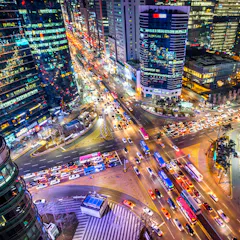
By 2050, the majority of the world’s population will live in cities. So how do we make them as liveable as possible?
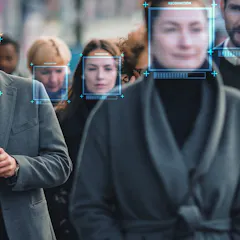
From facial recognition to delivery drones, cities around the UK are already trialling AI tech.
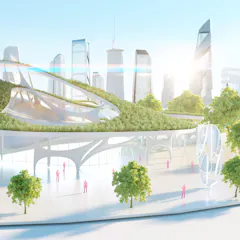
Increased applications of artificial intelligence have led to smart cities becoming AI-driven communities, with their own governance models and exclusive access.

AI could take us beyond the concept of smart cities, telling us how and why things happen in urban settings.

The Canadian federal government is pursuing the idea of “smart cities,” but in the wrong way.

There are many uses for digital systems that are not centrally controlled and that allow large numbers of people to participate securely, even if they don’t all know and trust each other.

Having the ability to decide either to do something or not, and to act accordingly, is a basic definition of freedom. Smart buildings challenge this freedom.
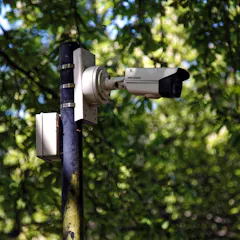
As states and nations struggle to regulate growing AI use, municipal authorities are often leading the way. An emerging paradigm known as AI Localism can help us better define the way forward.
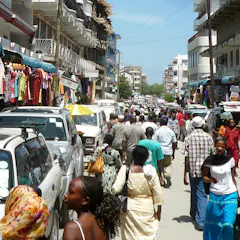
Informal workers are victims of the smart city drive in Africa.

‘Smart’ solutions to urban solid waste are creating serious challenges for low-income women waste workers in India.

Smart cities’ focus on technology has made the digital divide worse, not better. The new infrastructure law could change that.
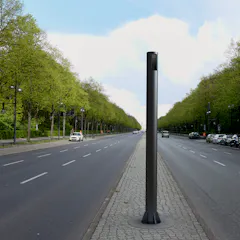
Smart street furniture can do a lot of things at once. Some of these functions offer the public clear benefits, but the data collection and surveillance capabilities raise a number of concerns.

We have the technology to make it easier for older Australians to pursue active ageing in their own communities. The smart city just needs their input to make it work for them.
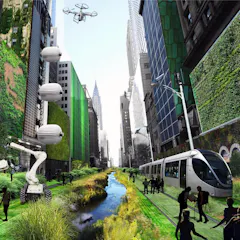
We need to change how we imagine the cities of the future in order to respond to today’s concerns.

The Internet of Things will transform industry, agriculture, and our cities. But we need to consider carefully the risks as well as the rewards.
Top contributors
-

Professor, Faculty of Business & Economics, University of Winnipeg
-
Vice Chancellor’s Senior Research Fellow, School of Global, Urban and Social Studies, RMIT University
-
Professor in Human Geography, UCL
-
Associate Professor of Political Science, Brock University
-
Professor of Strategic Design, Queensland University of Technology
-
Associate Professor, University of Canberra, Stockholm Environment Institute
-
Professor of Urban Studies and Planning, Queensland University of Technology
-
Associate Professor, School of Built Environment, UNSW
-
Director, Melbourne Sustainable Society Institute, The University of Melbourne
-
Associate Professor and Director of the Australian Smart Cities Consortium, Adelaide University
-
Associate Professor of Urban Planning, The University of Melbourne
-
Senior Lecturer in Industrial Design, UNSW
-
Professor Sustainability and Urban Governance, RMIT University
-
Leader, Centre for Risk and Community Safety, RMIT University
-
Professor of Spatial Science, University of Leeds