
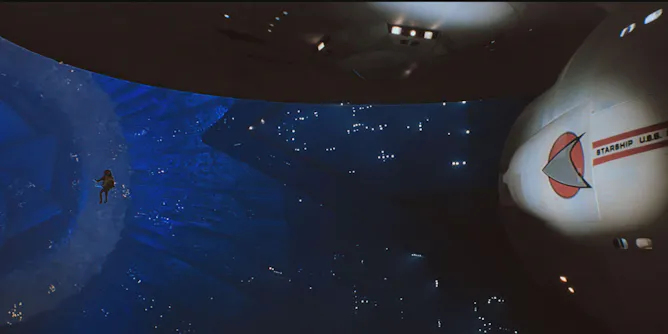
The first appearance of a wormhole in Star Trek was a typically pioneering reference to what was then a niche research topic.
Articles on Space travel
Displaying 1 - 20 of 145 articles
SpaceX is poised to test its latest, most powerful rocket and to become a publicly traded company, all while under pressure from environmentalists.
The high-speed, hypersonic and extremely hot re-entry is the last challenge the Artemis II crew will have to endure on their epic 10-day mission.
Project Hail Mary reminds us how important our world is – and how vital science is to our continued existence on it.

While humans lose muscle within weeks of inactivity, brown bears preserve muscle during hibernation, offering clues for maintaining our muscle health.
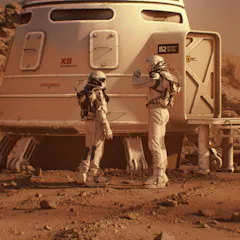
High-energy particles streaming through space can damage DNA and increase cancer risk, but antioxidants, tardigrades and hibernation could help astronauts make the journey safely.
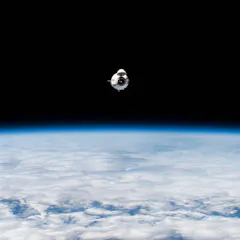
Earth is the only home humans have ever known. But that might not be the case for much longer.
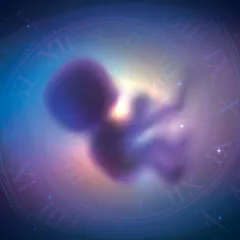
Growing a baby in space sounds like science fiction. Here’s why it might stay that way.

The all-women crew of Blue Origin reinforced the enduring connection between style symbolism, and space travel.
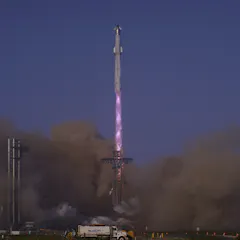
The Starship program has already experienced more failures than many other space missions in the past. Will it ever see success – and if so when?
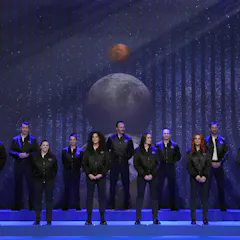
Figuring out how to make spacecraft more accessible to astronauts with physical disabilities can also make them safer for long-duration missions.
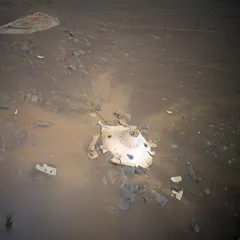
The US wants to put a flag on Mars. But there’s a risk it could carry unwanted stowaways that might compromise future scientific investigations.

The Polaris Dawn mission, funded by billionaire Jared Isaacman and Elon Musk’s SpaceX, may hint at the future of space travel.
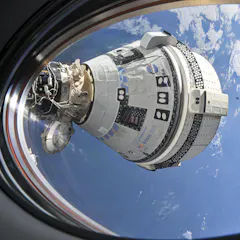
Boeing Starliner took the astronauts to the International Space Station – but NASA doesn’t think it’s safe for the return trip. What happens next?
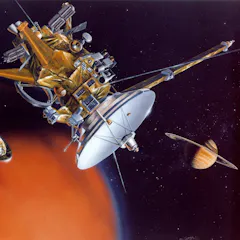
From the International Space Station to the twin Mars rovers, scientists and astronauts often form a deep emotional bond with the space objects they work with.
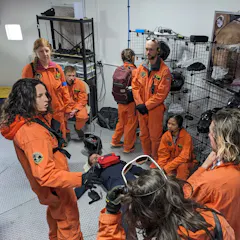
Future space missions will fly farther and longer than ever before – which means crew members may need more involved medical care in space.

Here’s why a healthy balance of microbes is important for astronauts when they travel to Mars and beyond.
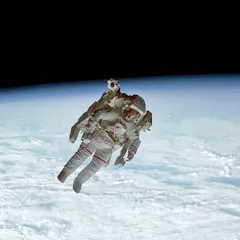
Sixty years ago, philosopher Hannah Arendt argued an interplanetary perspective may be bad news for humanity as we know it.

It’s remarkable to see these three innovative, bravely experimental and often unsettling Australian story collections – by a debut author and two prize-winners – published so closely together.

Humans have always been fascinated by the moon and before we could really get there we travelled to it in our stories.
Top contributors
-

Associate Professor in Archaeology and Space Studies, Flinders University
-
Professor of Planetary and Space Sciences, The Open University
-
Professor of Aerospace Medicine and Rehabilitation, Northumbria University, Newcastle
-
Professor of Hypersonic Aerodynamics, The University of Queensland
-
Senior Lecturer, Centre for Hypersonics, School of Mechanical and Mining Engineering, The University of Queensland
-
Kevin Orrman-Rossiter is a Friend of The Conversation.
Sterrenkenner, History & Philosophy of Science, The University of Melbourne
-
Professor of Astrobiology, UNSW
-
Associate Dean of Innovation and Engagement, Swinburne University of Technology
-
Space Plasma Physicist, Imperial College London
-
Senior Lecturer in Physics, Nottingham Trent University
-
Associate Professor, University of Texas Rio Grande Valley
-
Associate Professor of Hip-Hop, University of Virginia
-
Reader in Astrophysics, Keele University
-
Senior Lecturer in Space Systems Engineering, University of Glasgow
-
Professor of Strategy, Warwick Business School, University of Warwick