

Health Canada is drafting important regulations for assisted reproductive technologies. Initial documents treat egg donors and surrogates as little more than spare parts and walking wombs.
Articles on Sperm
Displaying 41 - 60 of 80 articles

The release of TV program The Handmaid’s Tale and a study on male sperm numbers have left some worried about the future of human fertility.
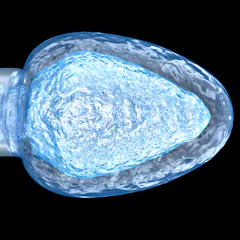
A better understanding of sperm could help develop new fertility treatments and contraceptives for men.

Numerous studies suggest that spirulina could help safeguard fertility.
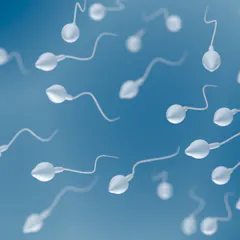
If this trend continues, most men will be infertile by 2060.
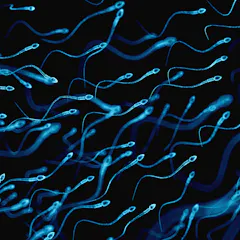
Doctors should examine more than just sperm count in infertile men.

Thinking of having a baby? It’s not all down to women to get healthy in preparation.

In 1997, scientists announced they’d created a healthy sheep cloned from another ewe’s mammary gland cell. Two decades on, the technique is being refined and applied to new challenges.
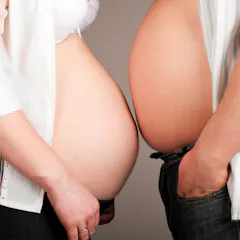
If you’re planning to become a parent, better lifestyle habits can reduce the risk of obesity in your children.

Victorian attitudes influenced what scientists thought they were observing about sexual behaviors in the animal world. But modern techniques reveal the myth for what it is.

Health benefits come with regular sexual contact with the same male partner before pregnancy commences.

Did your holiday gift list include radiation-shielding undies to protect your privates from cellphone radio waves? A radiation expert explains they’re unnecessary – your phone won’t affect your fertility.
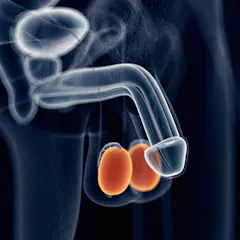
Men with Klinefelter’s syndrome are infertile, as the extra X chromosome affects the ability to produce sperm.
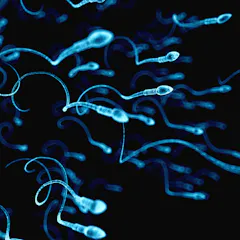
Sexual competition has made sperm the most diverse - and fascinating - cells in the animal kingdom.

Evolution also does not claim humans evolved from primates. Neither does it say non-human primates, including monkeys, baboons, chimpanzees and gorillas, will evolve into humans with time.

The National Health and Medical Research Council call for public submissions on whether sex selection should be allowed without a medical reason recognises changing social attitudes.
Thanks to IVF and donor conception, infertile couples, single women and lesbian couples now have a better chance at starting families. But how does it all work? Ask the experts here.
I sometimes forget that people can feel embarrassed listening to me talk about my research on sperm. But often those same people can also be a source of amazement and inspiration.

Historically, donors were told it was best they were anonymous, while recipients were told it was best not to tell their child.

Freezing young men’s sperm might remove worries about them fathering children in later life, but do we really want the state routinely meddling in conception?
Top contributors
-

Professor and Director, Robinson Research Institute, Adelaide University
-
Senior lecturer in reproductive Biology, University of Sheffield
-
Reader / Associate Professor in Reproductive Science, Manchester Metropolitan University
-
Adjunct Senior Research Fellow, Global and Women's Health, School of Public Health & Preventive Medicine, Monash University
-
Associate Professor of Medical Sciences, University of Wollongong
-
Principal Lecturer in Wildlife Conservation, Nottingham Trent University
-
Professor of Reproductive Medicine, Queen's University Belfast
-
Professeur, UMR ISYEB (Institut de Systématique, Évolution, Biodiversité), Muséum national d’histoire naturelle (MNHN)
-
PhD Candidate, L’Université d’Ottawa/University of Ottawa
-
Associate Professor, Department of Epidemiology and Preventive Medicine, Monash University
-
Adjunct Professsor, School of Psychology, Faculty of Health and Medical Sciences, Adelaide University
-
Academic; Consultant (Health Law), University of Sydney
-
Associate Professor, Centre for Evolutionary Biology, The University of Western Australia
-
Distinguished Research Professor, Emerita, Dalhousie University
-
Postdoctoral Researcher of Evolutionary Biology, University of Pennsylvania