

Over two years of interviews with a cohort of STEM college students, many described feeling something personal was lost after using AI to improve their writing.
Articles on STEM learning
Displaying all articles

Asking children to explain what they are building or allowing them time to explore without interruption can deepen the STEM learning embedded in play.
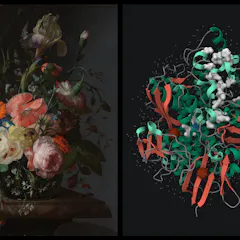
This process of looking and asking questions about what you are looking at is needed at all levels of science, and science students can learn through arts-inspired visual analysis.

Children can transform ordinary items into extraordinary play scenes with Barbie and Barbie-like dolls.

Both teachers and our media landscape contribute to how youth make sense of what is expected of them, and who are bound to excel in which fields.

Listening for events like black hole collisions is important in astronomy research – and the technology is only getting better.

Due to restricted resources and infrastructure, few schools have been able to adopt online learning as a result of the lockdown.

In a three-year project, students were taught STEM skills by designing solutions for real-world problems. An evaluation of the project found most students were stimulated and engaged.
Early STEM skills are as important as early literacy skills. Parents can help their preschoolers develop STEM skills by working these simple techniques into everyday activities.
STEM professionals who change careers to become teachers are often intrinsically motivated, and can help engage kids in STEM subjects with their real-world experience.

From collecting bugs to using math apps, there are many ways parents can engage in STEM activities with their kids to support their learning.
In English and science alike, every student and teacher brings his or her own language patterns to class. But how can educators make sure that language bias doesn’t harm student achievement?
Top contributors
-

Associate Professor, Early Childhood Curriculum Studies, MacEwan University
-
Professor of Elementary Mathematics, Queen's University, Ontario
-
Research Fellow, Centre for Social Impact, UNSW
-
Associate Professor of Education, English, and Linguistics, William & Mary
-
Professor of Language, Literacy and Culture and Director of the Center for Social Science Scholarship, University of Maryland, Baltimore County
-
Professor in Mathematics and Director: Govan Mbeki Mathematics Development Centre, Nelson Mandela University
-
Professor, Jean Augustine Chair in Education, Community & Diaspora, York University, Canada
-
Professor, Centre for Astrophysics and Supercomputing, Swinburne University of Technology
-
Associate Dean (Teaching and Learning), Edith Cowan University
-
Associate Professor, Health and Human Services, MacEwan University
-
Assistant Professor, Chemistry Education Research, Queen's University, Ontario
-
PhD Candidate in Art History, Queen's University, Ontario
-
Associate professor Early Childhood and Primary Education, University of Canberra
-
PhD Candidate, Ontario Institute for Studies in Education, University of Toronto