

An Anishinaabe storyteller and healer from Serpent River First Nation shares Ojibwe teachings on suffering, acceptance and Ceremony as ways of connecting Indigenous healing wisdom with psychological practice.
Articles on Suffering
Displaying 1 - 20 of 28 articles

In his new book, Cree behavioural scientist Louis Busch walks readers through teachings from several prominent Indigenous Knowledge Holders to reveal how suffering can provide both personal insight and communal strength.

Mindfulness can improve health and well-being, but it may not work for everyone. Buddhist teachings suggest that how it is practiced – and who guides it – matters.

Declawing cats causes irreversible nerve damage and chronic pain. New research from Quebec concludes it should be banned.

A scholar of Buddhism explains why creating a digital afterlife for loved ones may cause us to miss critical moments for genuine transformation and connection.

The point of mindfulness is not to be more productive at work or just to relax − it is inner transformation.

In religious traditions, patience is more than waiting, or even more than enduring a hardship. But what does patience look like? And when should we not exercise patience?

Stories in Greek mythology on the cycle of nature showing youth, death and rejuvenation can have lessons for us today on how grief changes over time and transforms who we are as people.

For Buffett, escapism was not merely some fiddling flight of fancy. It acknowledged the brutalities and indignities of everyday life.

A scholar of Roman Catholicism explains why Pope Francis’ visit to Mongolia, home to fewer than 1,500 Catholics, is significant.

Bill C-7 has created ethical tensions between MAID providers and palliative care, between transparency and patient privacy, and between offering a dignified death rather than a dignified life.

Since 2016, Canada’s practice of offering MAID has followed a trajectory of ever-expanding eligibility. The ultimate expansion would make MAID available to anyone who wanted it, for any reason.

A look at whether modern Buddhists adhere to the faith’s original religious principles or simply guilty of a cherrypicking cultural appropriation that turns religion into a fad.

Pessimism, as explored by the philosopher Schopenhauer, offers tools to come to terms with the idea that refusing to relentlessly pursue happiness is perhaps the most reasonable attitude.
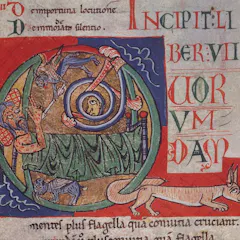
The field of ‘monster studies’ looks at how texts reflect ideas about what’s evil, weird or scary.

The answer could lie in evolution.

A scholar of digital religion and Buddhism argues that not all Western Buddhism practice is inauthentic. Here’s a way to know what’s real.

Christians have engaged in passionate debates over the meaning of the resurrection. Baptists may be distinct in that they believe an external religious authority cannot enforce views on such matters.
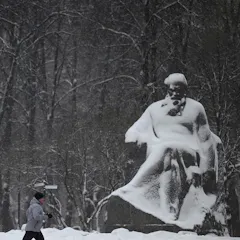
If Dostoevsky insists that one cannot shy away from horror and tragedy, Tolstoy would contend that people must act upon what they see.

On World Kindness Day, a scholar of Buddhist studies explains its idea of compassion and the diverse ways to think about and express kindness.
Top contributors
-

Psychotherapist, Doctoral Candidate (UofT OISE), Bear Clan Nisichawayasihk Cree Nation., University of Toronto
-
Lecturer, Philosophy of Traditional Judaism, Colorado State University
-
Associate Professor of Classical Studies, Tufts University
-
Assistant Professor, Palliative Physician, Queen's University, Ontario
-
Professor of Psychology, Management, University of Toronto
-
Assistant Professor of Hebrew Bible, Brandeis University
-
Professor of Political Science, Anthropology, Public Policy and Law, USC Dornsife College of Letters, Arts and Sciences
-
Research Associate - Faculty of Health Sciences, University of Lethbridge
-
Elizabeth Kahl Figge Chair in Catholic Studies, University of Iowa
-
Visiting Researcher, University of Oxford
-
Professor of American Literature and Religion, University of Victoria
-
Assistant Professor of Mental Health & Wellness; Registered Psychotherapist, Western University
-
Professor of Philosophy and Head of the School of Humanities, University of Glasgow
-
Professor of Classical Studies, Brandeis University
-
Professor of Psychology, University of Toronto