

Some experts believe what we are sometimes seeing today is not true gentle parenting, but rather an anxious drift into permissive parenting.
Articles on Tantrums
Displaying all articles
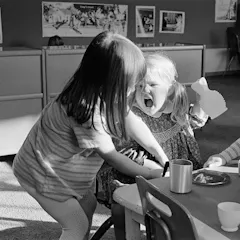
Caring for a toddler can be challenging and requires patience. Understanding the psychology behind a toddler’s actions can help weather some of the rockier days.

One’s about behaviour, the other about emotions. Here’s how to respond to tantrums and meltdowns without losing your cool.

School is out and Santa is on his way, but there’s still a bit of a wait before he wriggles down that chimney.

There is every chance your situation can improve. And the earlier you start, the better the outcomes.

First, check if your child is really hangry, or just angry. Feeding straight away isn’t always the answer.

The best way to avoid any family tensions at home is to know how to spot them building and then try to calm things down. Here are some tips on how to do that.

Every child develops at a different pace so it can be difficult to know what’s normal.

Think of it like a ladder. You might not be at the top right now, but each new thing you learn takes you a step closer and means that your parents can relax the rules a little.

A survey of Australian parents has found many are overwhelmed by the stress of managing their child’s behaviour.

Some children’s tantrums, irritability and defiance well exceed that typically found in healthy children of the same age. This can be overwhelming for parents, especially as children grow.

Tantrum throwing peaks at age two, as children experience the perfect storm of not being able to express themselves verbally while simultaneously developing their sense of autonomy and independence.
Top contributors
-

Associate Professor, School of Psychology, Deakin University
-
Paediatrician and Lecturer in Child and Adolescent Health, Department of Paediatrics, The University of Melbourne
-
Senior Lecturer, Graduate School of Health, University of Technology Sydney
-
Professor of Psychology, UNSW
-
Associate Professor in Psychology, Deakin University
-
Associate Professor of Clinical Psychology, University of Sydney
-
Senior Lecturer, Institute for Physical Activity and Nutrition (IPAN), Deakin University
-
Professor of Educational Psychology, University of Wollongong
-
Lecturer in Nutrition Sciences, Institute for Physical Activity and Nutrition (IPAN), School of Exercise and Nutrition Sciences, Deakin University
-
Senior Fellow, Department of Psychiatry, University of Melbourne, The University of Melbourne
-
Professor of Social Psychology, The University of Queensland
-
Assistant Professor of Early Childhood Education, University of Wisconsin-Stout Polytechnic
-
Senior Lecturer in Nutrition and Population Health, Institute for Physical Activity and Nutrition (IPAN), Deakin University
-
Assistant Professor in Clinical Psychology, Bond University
-
Associate Professor in Clinical Psychology, Bond University