
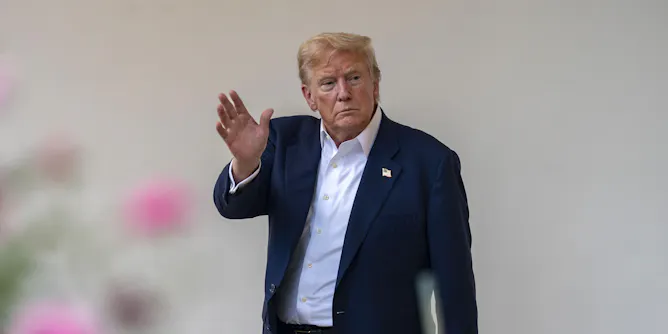
The winners and losers (so far) in Trump’s trade gamble.
Articles on Tariffs
Displaying 81 - 100 of 371 articles

For decades, Malaysia and the US have enjoyed a mutually beneficial relationship. Could that be changing?
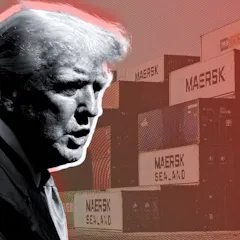
As the US winds back some of its highest tariff threats, Australia should see a small benefit.
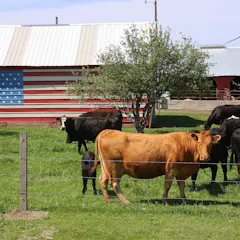
Has Australia’s beef industry been sold out for the benefit of a trade deal with the United States? Or is this just a poorly timed announcement?

Sanseitō, an ultranationalist populist party, gained in Japan’s elections after framing immigration as a central issue.

Rather than continuing to retaliate with tariffs of its own, the Canadian government has begun to confess that such a tactic may be a losing battle against Donald Trump.

The US is Australia’s biggest export market for pharmaceuticals. If the tariffs go ahead, manufacturing could suffer.

New trade barriers are set to go into effect in July 2027.
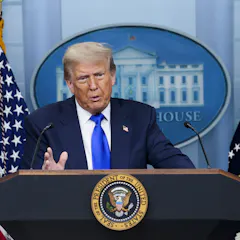
Borrowing is more expensive. Investors are holding back.
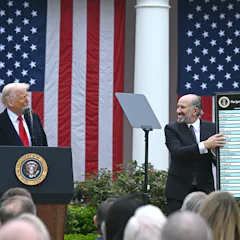
Trump believes the United States holds all the cards in trade talks. That’s not necessarily the case.
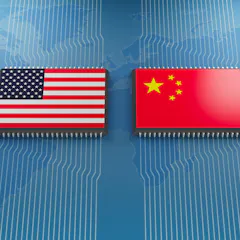
Supply-chain decoupling doesn’t stop rival nations from hacking each other and can make it worse. A cyber-espionage expert explains what does work.

The prime minister’s failure to get a meeting is neither a failure nor a snub, but he does need to find a way to make the relationship work.

Europeans are still struggling to adjust to new conditions – and the conditions to which they need to adjust also continue to change dramatically.
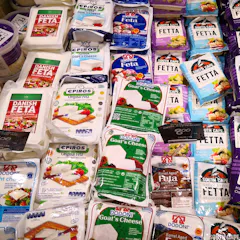
The European Union wants to reserve specific food names for its own producers. Australia argues these are generic names and we should keep them.
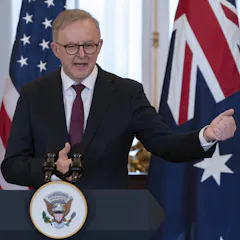
Ahead of Anthony Albanese’s likely first meeting with Donald Trump this month, a US politics expert says ‘begging’ for lower tariffs would be a mistake.
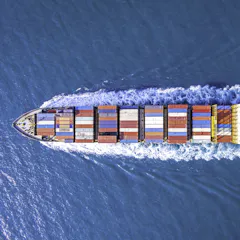
Amid the chaos of Trump’s tariff wars, there is an opening for Australia to seize the moment with new trade partnerships.
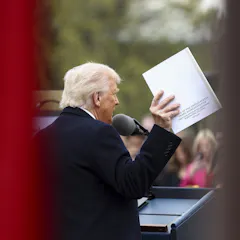
The ruling against the Trump administration was based on two separate lawsuits. But there’s little chance it will bring global trade chaos to an end.

At a time of changing geopolitical and physical environments, achieving long-term agricultural resilience means diversifying Canada’s crop production.
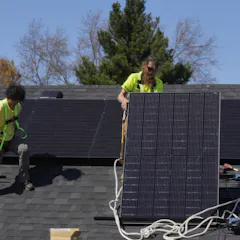
US manufacturers do not produce enough solar panels to meet the nation’s demand, but industry investments and federal tax incentives have been making progress.
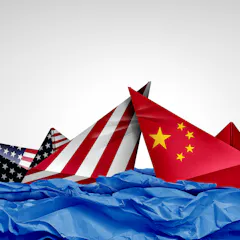
Central banks around the world are faced with conflicting forces as the tariff wars continue. The Reserve Bank of Australia has war-gamed how it could play out.
Top contributors
-

Professorial Fellow, University of Canberra
-
Professor, and Executive Director: Institute for International Trade, and Director of the Jean Monnet Centre of Trade and Environment, Adelaide University
-
Associate Professor of Political Science, Georgia State University
-
Senior Research Fellow, Institute for International Trade, Adelaide University
-
Distinguished Professor, Arthur J. Gosnell Professor of Economics, & Head, Department of Sustainability, Rochester Institute of Technology
-
Professor of Trade Law and Taxation, Queensland University of Technology
-
Associate Professor of Economics, University of South Carolina
-
Emeritus Professor of Law, University of Auckland, Waipapa Taumata Rau
-
Professor of Economics, University of Minnesota Duluth
-
Associate Professor of Agri-Food Trade and Policy, University of Guelph
-
Professor of Economics, Auckland University of Technology
-
Honorary Research Fellow, City Political Economy Research Centre, City St George's, University of London
-
Professor Emeritus of Economics, Babson College
-
Senior Lecturer in Economics, Bournemouth University
-
Professor of Law and Director of the UOW Transnational Law and Policy Centre, University of Wollongong