

Our understanding of the causes of Alzheimer’s disease is evolving. Recent discoveries have revealed the important role of the cerebral vascular system.
Articles on The Grey Revolution
Displaying 1 - 20 of 24 articles

Research has moved past the question of whether we can live longer. The new question is whether we’re willing to invest — seriously, equitably and early — in the things that will help us live better.

Heat waves pose a threat to older adults, but a recent study suggests that they retain an unexpected ability to adapt to high temperatures.

The AI industry is dominated by young, male tech workers. It runs the risk of developing apps and tools that reproduce these gender and age-biases.

The challenge is not a lack of evidence. It is a lack of urgency.
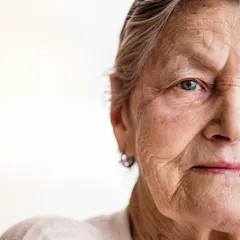
Aging plays a significant role in the development of conditions that can lead to blindness. However, most of these can be prevented or delayed.

Music has value in dementia care, but re-envisioning its role beyond treatment involves engaging individuals in music experiences that foster self-expression, identity and meaningful interactions.

Baby boomers are helping to reduce the taboo surrounding older adults’ sexuality.

Bilingualism may interact with verbal memory and sex steroids to influence dementia risk in unexpected ways.

An in-ear device could help detect the early signs of Alzheimer’s and Parkinson’s, well before symptoms appear.

As the baby boomer generation ages, cities must rethink the accessibility of public spaces. Comfort, legibility and geometric clarity are the essential elements of an inclusive city.

Long-term care is not strictly a medical service; it’s also a home and social environment. To ensure Canadians can age with dignity, we need ways to assess dignity in our health systems.

Research has found that older adults who experience persistent difficulties in daily activities like preparing meals, shopping or driving face a higher risk of developing Alzheimer’s disease.

Dementia today occupies the same stigmatized, system-neglected space that cancer did half a century ago. And history shows us that stigma, not simply the absence of cures, delays progress.

Stay in work or retire? There are many reasons to do both, but in order to retain workers, employers need to be aware of these factors.

Even modest amounts of strength training, even with lighter weights, can meaningfully preserve muscle and maintain your ability to move with confidence.

Two decades after the Women’s Health Initiative study, evolving research on menopause hormone therapy is shedding new light on women’s brain health.
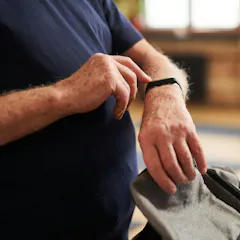
Continuous tracking using real-time location systems is becoming increasingly common in hospitals and long-term care homes, raising questions about ethics and data use.

Even post-pandemic lockdowns, online programs enhance access, supporting fitness and independence as women age.

The long-term care system is under pressure — both from an aging population and from a workforce in crisis. More humane, sustainable models of care are critical.
Top contributors
-

Research Data Scientist at Hotchkiss Brain Institute, University of Calgary
-
Professor, Cumming School of Medicine, University of Calgary
-
PhD Candidate in Health & Exercise Science, Concordia University
-
Associate Professor, Chair International Health, MacEwan University
-
Professeur associé, sociologie, Université Laval
-
Professeur agrégé en neuropsychologie, Université du Québec à Trois-Rivières (UQTR)
-
Professor, Health Geography and Social Gerontology, University of Victoria
-
Professor Emerita/Research Associate Gerontology, Simon Fraser University
-
Professor of Chemistry and Senior Scientist of the Krembil Research Institute, University Health Network, University of Toronto
-
Scientist, Women's Age Lab, Women's College Hospital - Assistant Professor, Dalla Lana School of Public Health, University of Toronto
-
Medical Science Master's Student, University of Calgary
-
Assistant Professor, Political Science, Concordia University
-
Professeure à l'Université TELUQ, Université du Québec, directrice de l'ARUC sur la gestion des âges et des temps sociaux et de la Chaire de recherche du Canada sur l'économie du savoir, Université TÉLUQ
-
Postdoctoral Fellow, Department of Kinesiology, McMaster University
-
Affiliate Professor, Department of Family Medicine, McGill University