
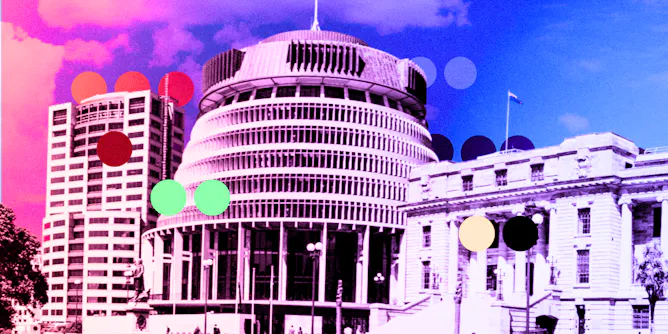
Complex negotiations will now determine the makeup of New Zealand’s next coalition government – with a new, untested party under intense scrutiny.
Articles on The Opportunity Party (TOP)
Displaying all articles
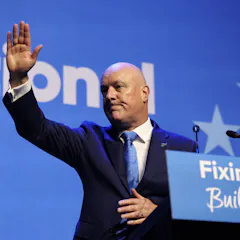
The final election result won’t be known for three weeks and coalition negotiations will take even longer. But it’s not correct to say ‘there’s no government’.
Provisional results suggest a parliamentary overhang of nine seats, which means a majority requires 66 seats.

With special votes still to come, three possible scenarios could determine who governs NZ – and whether Christopher Luxon or Chris Hipkins becomes prime minister.
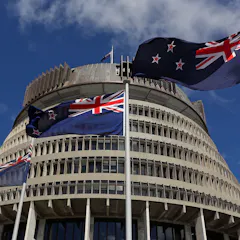
With so many variables in play, and polls pointing to a very tight result, there may be no obvious winner on the night – and a long wait for a new government.

National’s repeated refusal to work with potential king-making party Opportunity might appear self-sabotaging – but there’s a hidden logic at play.
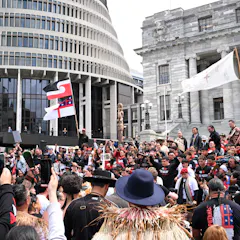
How much should Māori voices count in public life? And when does decision-making belong outside government and within Māori institutions?
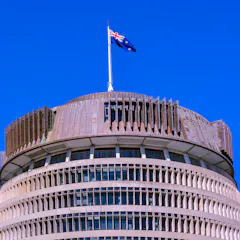
One poll gives the left bloc its first lead in any poll since June, but another has the right bloc still in front. Opportunity has an opportunity.
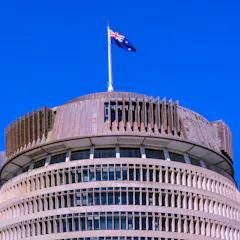
Despite gains for the Greens and slumps for Labour and National, the overall left-right balance remains largely unchanged.

Opportunity’s ‘citizen’s income’ policy would do the least for the worst off, and retains many of the current system’s targeting complexities.
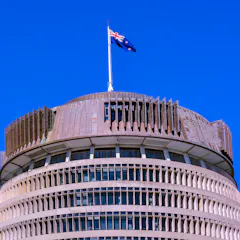
With just over two months until the election, polls have settled into a new normal, with no clear frontrunner evident.

If the Opportunity Party holds the balance of power after the election, its ‘honouring te Tiriti’ policy could be a deal maker – or breaker.
Top contributors
-

Election Analyst (Psephologist) at The Conversation; and Honorary Associate, School of Mathematics and Statistics, The University of Melbourne
-
Research Associate, Public Policy Institute, University of Auckland, Waipapa Taumata Rau
-
Adjunct Professor, Stout Research Centre, Victoria University of Wellington and Auckland University of Technology, Professor of Political Science, Charles Sturt University
-
The Conversation
-
Adjunct Research Fellow, School of Government, Te Herenga Waka — Victoria University of Wellington
-
Professor of Politics, Te Kunenga ki Pūrehuroa – Massey University