

The Mark Lamberti case shows that South African business suffers from deeply rooted racial prejudices.
Articles on Transformation
Displaying 21 - 40 of 46 articles

The governor of South Africa’s Reserve Bank has been appointed to chair an important IMF committee. Countries in sub-Saharan Africa stand to benefit.

The Steinhoff corporate scandal will do South Africa a huge service if it makes the point that corruption and mismanagement have nothing to do with race.

The slow pace of transformation in post apartheid South Africa is a reflection of persisting racism that has infected formal corporate institutions.
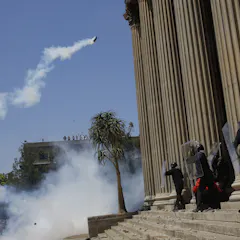
It’s easy to understand why the government treats each student demand as distinct. But these are complex issues and they are intertwined.

The push for decolonisation could ironically end up trapping universities in a colonised curriculum.
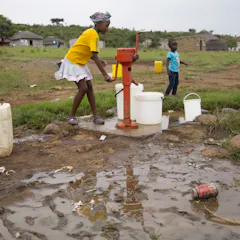
Massive state capture activity is taking place in the South African water sector under the guise of radical economic transformation, threatening financial sustainability and water supply.

South Africa needs take a radically different path if it is going to make its economy more inclusive. It must start from the premise that markets are intrinsically skewed to historic privilege.

If researchers pose the right questions about transformation, this can lead to better answers, stronger policies and, ultimately, real change.

South Africa’s Finance Minister Pravin Gordhan spoke of protecting the economy from predators. This is commendable but not enough to build an inclusive economy.
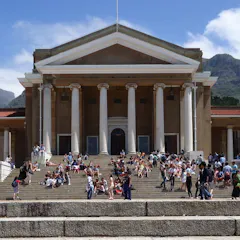
When students are genuinely listened to and understood, and their proposed solutions to problems are taken seriously, real change can happen in university faculties.

When several South African universities merged, it was hoped this would improve access and equality. It had the opposite effect.
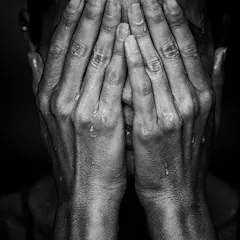
Universities are so busy trying to make ends meet that there’s no time to listen to their communities’ stories. It’s crucial to develop safe spaces where tough conversations can happen.

Knowledge is power. If you own it, you can control those without it. Since so much knowledge about Africa doesn’t sit on the continent, it’s apparent that Africa lacks power in this regard.

Decolonising the curriculum is far more nuanced than replacing theorists and authors. Universities first need to define how they approach the development and dissemination of curricula.
Much of academic philosophy, even on the African continent, is openly and unashamedly in love with the idea of the West as destiny.
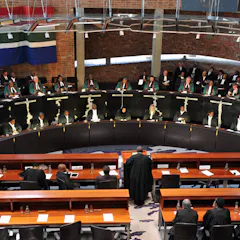
For law faculties, the transformative vision embodied in South Africa’s constitution provides a potent driver for change. So what does a transformed law faculty look like?

In future, universities will only survive if they can produce knowledge fast and innovate. This will require transformational leadership that gets everyone involved.

The debate about the quality of High Court judges after the Pistorius trials reflects a different cultural clash in South Africa – one in which incompetence is often associated with black people.

Universities need to change to become more equitable learning spaces. But what’s the best way to measure their transformation, identify gaps and emphasise successes?
Top contributors
-

Professor of Political Studies, University of Johannesburg
-
Professor of Higher Education, Rhodes University, South Africa, Rhodes University
-
Associate Professor of Climate Change, Technology and Policy, Carleton University
-
Professor of Religion, Psychology and Culture, Vanderbilt University
-
Senior Lecturer in Psychology, Leeds Beckett University
-
Professor of Policy Analysis, RAND School of Public Policy
-
Professor/Senior Research Fellow, Centre for Advancement of Scholarship, University of Pretoria
-
Prof of Archaeological Science, University of Oxford
-
Professor of Higher Education and Human Development, University of the Free State
-
Senior Lecturer, University of Cape Town
-
Professor of Law, New York Law School
-
Visiting Adjunct Professor, School of Governance, University of the Witwatersrand
-
Lecturer of Philosophy, University of the Western Cape
-
Interim Head of the Health Sciences Education Department, University of Cape Town
-
Professor of English Language Teaching and Literacy Development, Rhodes University