

The declaration does very little to change how countries may legally approach immigration control.
Articles on UK migration policy
Displaying all articles

The number of people holding both British and EU passports increased significantly between 2011 and 2021.

How did Mahmood, who once stated that she personally supported a general amnesty for all undocumented workers, become the face of a hardline Labour migration policy?
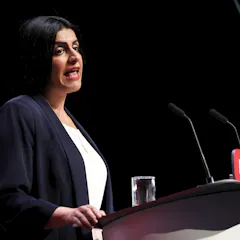
In this hierarchical system, migrants are kept on extended probation and judged by standards never applied to British nationals.

‘Operation Restoring Justice’ would face legal, logistical and diplomatic hurdles.

These commitments have cemented the UK at the heart of the rules-based international order.

Like the structures of smuggling groups have evolved and adapted in response to police or border enforcement, so will their systems to move money safely.

Campaigners, academics and groups that support asylum seekers have long called for the UK to introduce “safe and legal routes”.

Members of the public are more likely than MPs to think immigration has been too high in recent years.
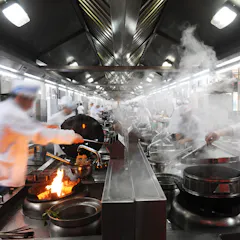
The UK’s ongoing need for workers drives migrants to take huge risks and face high financial costs.

Revisions to migration data are inevitable if ONS sticks to its current timelines.

The Rwanda policy ultimately never got off the ground before the general election.

The onus now appears to be shifting from the migrants to smugglers who have been profiteering from this inhumane trade.

The new government has vowed to ‘smash the gangs’ and increase border security.
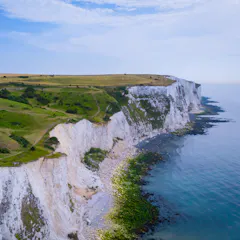
When people need to be rescued in the Channel, it can be confusing which country is responsible.
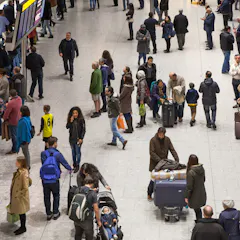
Government policies can affect how many people arrive, what rights and protections they have in the UK, and what happens to those who arrive without permission.
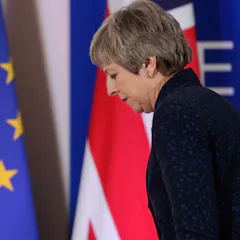
The 2010 general election put immigration front and centre of the political landscape for the next 14 years.
Top contributors
-

Professor of International Migration and Forced Displacement and Director of the Institute for Research into International Migration and Superdiversity, University of Birmingham
-
Lecturer in International Politics, Aberystwyth University
-
Researcher, Centre on Migration Policy and Society (COMPAS), Deputy Director, Migration Observatory, University of Oxford
-
Senior Lecturer in Public Policy, Lancaster University
-
Chair in International Business, University of Leeds, and Founding Co-Director of Migration, Business & Society, University of Leeds
-
Senior Scientist, Competence Center for Sustainability Transformation and Responsibility, Vienna University of Economics and Business, and Founding Co-Director of Migration, Business & Society, Vienna University of Economics and Business
-
Senior Lecturer in British Politics, University of Liverpool
-
Assistant Professor, Politics of Climate Change, University of Warwick
-
Departmental Lecturer in Criminology, University of Oxford
-
Professor of Human Rights Law, Middlesex University
-
Senior Visiting Research Fellow, UCD Sutherland School of Law, University College Dublin
-
Researcher, The Migration Observatory, University of Oxford
-
Reader in Political Science and International Relations, Aston University
-
Senior Lecturer in Law, The University of Law
-
Professor, Department of Politics, University of Liverpool