

Immune cells can carry HIV into the brain, leading to problems with memory and cognition. Blocking other immune cells from the brain can make matters worse.
Articles on Viral load
Displaying all articles
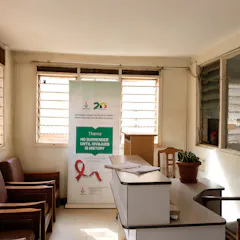
A mix of domestic revenue generation, efficiency gains and strategic partnerships is essential to sustain and expand HIV programmes despite declining external aid.

Authorities and experts are reducing the time window they estimate people are protected from getting infected again after they’ve recovered from a bout of COVID.

A vaccinated person is less likely to get COVID, is less contagious, and is contagious for a shorter time.
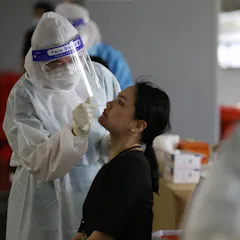
‘Breakthrough’ infections can happen because of waning immunity or high viral doses. But our vaccines are still excellent at preventing severe disease and death.

Nigeria must increase its testing capacity and do more genomic studies to deal effectively with the Delta variant of COVID-19.
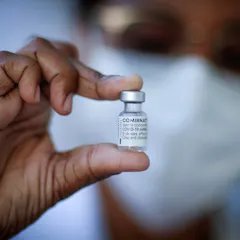
Vaccination is likely to substantially reduce virus transmission by reducing the pool of people who become infected, and reducing virus levels in people who do get infected.

Children in the study seemed to display a very strong “innate” immune response.

A new test developed in Australia will reportedly be able to tell us whether someone has a high ‘viral load’. But that doesn’t automatically make them a ‘superspreader’.
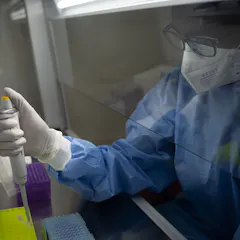
Pooled testing, or group testing, has been used to diagnose relatively rare conditions, such as infection in blood donors. It could be used for universal early infant diagnosis and viral load testing.

France says one metre, Spain says two. But what really constitutes a safe distance when it comes to COVID-19?

It is impossible to anticipate if, how or when COVID-19 might take a loved one. But there are ways to prepare.
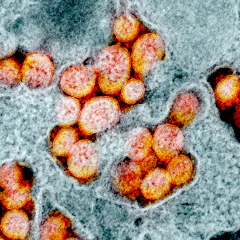
Two phrases you hear a lot these days are viral load and infectious dose. What do they mean? Do they reflect the severity of disease or whether someone will get severely ill? Two experts explain.
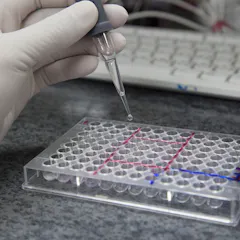
Introducing viral load testing at health facilities can help South Africa reach the United Nations target to end AIDS.

Stigma stops people from getting tested for HIV, and staying on their treatment. Unless it’s addressed, the AIDS epidemic will persist.
Top contributors
-

Associate Professor of Microbiology and Immunology at Emory University, University of Pittsburgh
-
Executive Secretary, Nigerian Academy of Science
-
Professor, School of Biomedical Sciences and Pharmacy, University of Newcastle
-
Pathologist / Consultant Virologist, Stellenbosch University
-
Associate Professor in Environmental Engineering, UCL
-
Doctoral Researcher, School of Public Health and Public Health Technical Advisor, Anova Health Institute, University of the Witwatersrand
-
Head: Division of Medical Virology, Stellenbosch University
-
Laboratory Head, WEHI (Walter and Eliza Hall Institute of Medical Research)
-
Associate Professor and Research Leader in Virology and Infectious Disease, Griffith University
-
Laboratory Head, The Peter Doherty Institute for Infection and Immunity
-
Senior Lecturer at the Australian National University Medical School, Australian National University
-
Distinguished Professor, Professor of Immunology, RMIT University
-
Vice Chancellors Senior Research Fellow in Immunology, RMIT University
-
Laboratory Head, Department of Microbiology and Immunology, The University of Melbourne
-
Professor of Emergency Health Services, University of Maryland, Baltimore County