
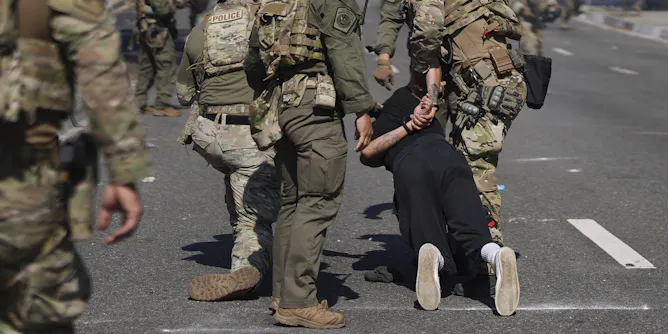
New data from a global rights-tracking project shows the country had large declines in 2025 on 8 of the 9 civil and political rights it measures.
Articles on Voting rights
Displaying 1 - 20 of 112 articles
Mail-in voting was created during the Civil War so soldiers could vote. That legacy helped shape how the Supreme Court ruled more than 160 years later.

125 years ago, the Supreme Court ruled that some territories belonged to the US but weren’t part of it. The reasoning was openly racist – and it still shapes how millions are represented in Congress.

Florida voters don’t like Gov. DeSantis’ redistricting plans, but it doesn’t tend to be a vote-determining issue.
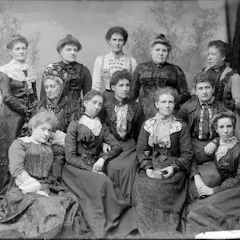
Apart from voting, April 25 1896 was also the day women got the right to govern – in a world first.
The US Constitution gives states control of elections. An executive order by President Trump aims to take away that control. A former federal judge says a president can’t just deny the Constitution.
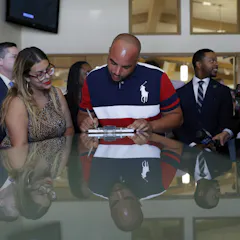
At least 20 million Americans have served time. Most of them can’t or don’t vote, and that may distort some election outcomes, a political scientist argues.

From the civil rights era of the 1960s until today, white victims of government violence have received disproportionate attention.

The House has passed a bill to require proof of citizenship for voting. Although it likely won’t become law, the bill raises constitutional questions.

The electoral system used by many global democracies eliminates gerrymandering and has been shown to give more equal representation to minorities and women.
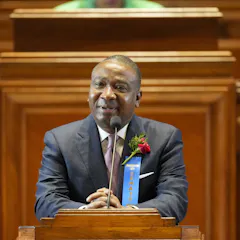
The Supreme Court appears poised to abolish a key part of the Voting Rights Act. It may draw on a constitutional amendment that empowered African Americans.
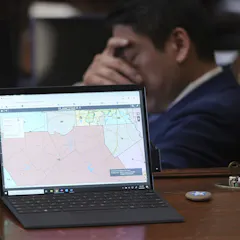
Gerrymandering has existed since the United States’ earliest days, but now technology and political trends are supercharging it.

What is the purpose of US District Courts
and Court of Appeals, and why do some courts have multiple judges and others have only one?

The Constitution does not grant Congress authority to set voter-eligibility requirements in federal elections.

While the US supports nonpartisan election observers in other countries, the practice has a low profile in this country.
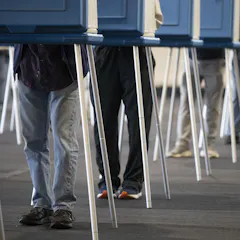
While Harris and Trump diverge on many key policy issues, they find common ground in other areas.
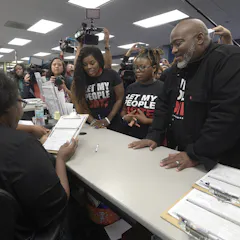
Community organizations across the US have launched grassroots operations to inform people with convictions of their voting rights.
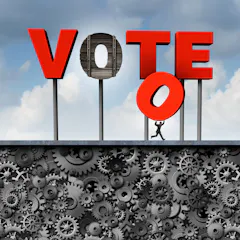
Those depressing articles that say ‘This one secret, magic thing will overturn the election results and your vote won’t count’? An election law scholar calls them ‘electoral process porn.’
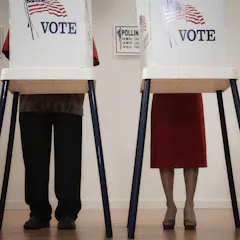
Every state’s regulations and procedures are different, and it is vital that you understand the requirements and opportunities to vote where you live.

In two recent rulings, the conservative justices handed state lawmakers new power to redraw congressional maps to their liking – including in ways that end up diluting the Black vote.
Top contributors
-

Professor of Law, University of Richmond
-
Assistant Professor of Political Science, University of Pittsburgh
-
William Nelson Cromwell Professor of Jurisprudence and Political Science, Amherst College
-
Professor of Political Science, Valdosta State University
-
Professor of History, Texas A&M University
-
Professor of Leadership Studies, University of Richmond
-
Assistant professor of politics and policy, Simmons University
-
Research Associate, Idaho Policy Institute, Boise State University
-
ARC Laureate Fellow, Professor of Government and International Relations at the University of Sydney and McGuire Lecturer in Comparative Politics, Harvard Kennedy School
-
C.O. Johnson Distinguished Professor of Political Science, Washington State University
-
Derek H. Alderman is a Friend of The Conversation.
Chancellor's Professor of Geography, University of Tennessee
-
Professor of Geography and Senior Research Associate in the Rock Ethics Institute, Penn State
-
Professor of Constitutional Law, New York University
-
Associate Professor of Social Work, University of Tennessee
-
Graduate Student in History, Northwestern University