

Legislation changing Treaty provisions within the law is due to be introduced before this year’s election, with legal challenges and protests likely.
Articles on Waitangi Tribunal
Displaying all articles
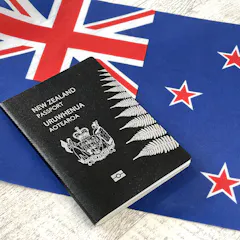
The US Supreme Court will soon rule on Donald Trump’s attempt to end automatic citizenship rights for people born in the US. It’s not a clear-cut issue in NZ either.

The review is a coalition promise, but is based on questionable assumptions about the tribunal’s legal status and purpose. And now the UN is looking at it.

ACT has been trying to pass a version of its Regulatory Standards Bill for 20 years. Opposed by the Waitangi Tribunal and others, it is now poised to succeed.

Using structured literacy to teach te reo Māori is more about an educational ideology than about understanding the essence of New Zealand’s Indigenous language.

The Principles of the Treaty of Waitangi Bill will likely die after it goes to select committee – or will it? A possible referendum on the issue would raise the stakes considerably.

Despite today’s tensions over Treaty principles and Māori political representation, the language revitalisation movement has delivered the culturally confident generation its trailblazers dreamed of.

With ACT’s Treaty Principles Bill imminent, how much do we know about the current principles? And were they ever a proper reflection of the text and intent of te Tiriti?

If Māori did not explicitly cede sovereignty in 1840, neither did they fully retain it. If sovereignty is already being shared, where does Te Tiriti o Waitangi sit within our unwritten constitution?

We need a richer account of democracy within which to locate the Voice, to lift the quality of public debate about it.
Far from expanding its jurisdiction or having a veto over parliament, the powers of New Zealand’s Waitangi Tribunal have been steadily reduced in recent decades.

Plant breeders must now engage with kaitiaki if special relationships with a plant have been asserted. But Māori have no say on the introduction of exotic plants that could become invasive.

The impact of colonialism can’t be reversed, but as New Zealand implements the UN declaration new ideas emerge of a state that represents first peoples more fairly.

The land occupation at Ihumātao, near Auckland’s airport, is reviving forms of protest common in the 1970s, now enhanced by new media and led by a new generation of Māorikeen to see grievances addressed.
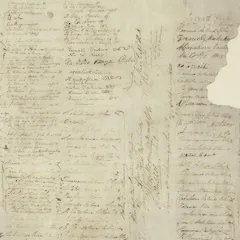
The Treaty of Waitangi, signed in 1840, is New Zealand’s foundation document. But debate continues about the exact meaning of the treaty text.

The New Zealand government’s move to close charter schools as part of its education reform has prompted strong Māori criticism.

Reconciliation efforts were established in New Zealand 30 years ago to tackle grievances stemming from government initiatives that have seen Māori lose both resources and power.
Top contributors
-

Honorary Adjunct Professor, Te Kawa a Māui - School of Māori Studies, Te Herenga Waka — Victoria University of Wellington
-
Adjunct Professor, Stout Research Centre, Victoria University of Wellington and Auckland University of Technology, Professor of Political Science, Charles Sturt University
-
Professor of History, Te Kunenga ki Pūrehuroa – Massey University
-
Associate Professor, Faculty of Māori and Indigenous Studies, University of Waikato
-
Treaty educator, Māori & Indigenous Studies, University of Waikato
-
Associate professor, University of Canterbury
-
Senior Researcher in Maori Studies, Te Kunenga ki Pūrehuroa – Massey University
-
Professor, Aotahi School of Māori and Indigenous Studies, University of Canterbury
-
Professor of Law, University of Waikato
-
Professor of Law, University of Waikato
-
Associate Professor, Pania Te Maro, Te Kunenga ki Pūrehuroa – Massey University
-
Senior lecturer, Institute of Education, Te Kunenga ki Pūrehuroa – Massey University
-
Senior Lecturer, Politics and International Relations, University of Auckland, Waipapa Taumata Rau
-
Associate Professor, School of Law, University of New England
-
Emeritus Professor of Law, University of Auckland, Waipapa Taumata Rau