
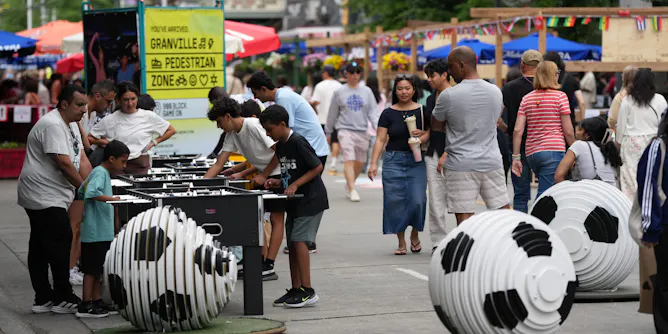
Pedestrianized spaces can help support local businesses, give public spaces back to people and retrieve them from cars.
Articles on Walkability
Displaying all articles
Resilient urban mobility can be created by giving people options that ensure they can still move around when a shock affects one form of transportation.

But economic and cultural forces mean dense housing is harder to develop than low-rise sprawl.

After decades of sprawling suburbs, various cities are embarking on densification projects that emphasize proximity, diversity, and neighborhood services.
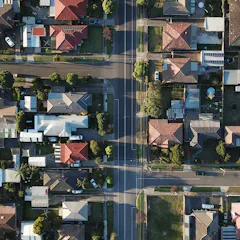
Choosing an area to live is tricky. But many people overlook the importance of walkable, leafy and quiet suburbs. Here’s how to check.
Many older people with reduced mobility say they feel ‘hurried’, ‘rushed’ and ‘unsafe" when walking around their city.

To create inclusive, sustainable communities, we must challenge the restrictive boundaries that confine children’s experiences.
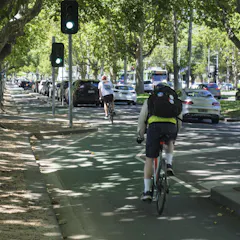
Early in the pandemic, when there was much less traffic on the roads, people took to their bikes. But since then, fewer people are cycling, with rates now lower than in 2011.
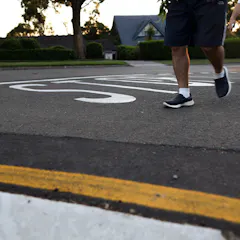
Some councils have installed zebra crossings at selected T-intersections, where they do improve safety. The problem is they also add to the existing confusion at other intersections.

Shade, street furniture, streetscapes – they all matter when it comes to making a footpath appealing.

Income, accessibility, the presence of green space and the availability of amenities are neighbourhood features that affect how COVID-19 has spread through cities.

Our surroundings will be very different over the duration of a typical mortgage.
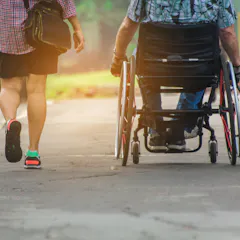
The post-pandemic recovery presents an opportunity for creating accessible environments.
Top contributors
-

Professor of Physical Activity and Community Health, School of Sport, Exercise and Rehabilitation Sciences, University of Birmingham
-
Associate Professor of Behavioural Science, Co-Director, Centre for Motivation and Behaviour Change, University of Bath
-
Graduate Research Assistant, Gerontology, Simon Fraser University
-
Research Fellow, Centre for Transport and Society, University of the West of England
-
Research Fellow, City Futures Research Centre, UNSW
-
Adjunct Research Fellow, School of Human Sciences, The University of Western Australia
-
Associate Professor and Principal Fellow in Urban Risk and Resilience, The University of Melbourne
-
Professor in Geomatics and SDI, The University of Melbourne
-
Associate Professor in Transport Engineering, Department of Infrastructure Engineering, The University of Melbourne
-
Lecturer in Disaster Resilience Infrastructure, RMIT University
-
Postdoctoral Research Fellow, Melbourne School of Design, The University of Melbourne
-
Assistant Professor of Sociology; Affiliate, Network for Economic and Social Trends (NEST), Western University
-
Professor in Building Engineering, Carleton University
-
PhD Candidate in Climate Change Resilience, University of Surrey
-
PhD Student, Gerontology, Simon Fraser University