

Weaving is one of humanity’s oldest crafts, but its patterns helped inspire early computing. Today, textile makers are using conductive yarns and digital looms to invent new kinds of technology.
Articles on Weaving
Displaying all articles
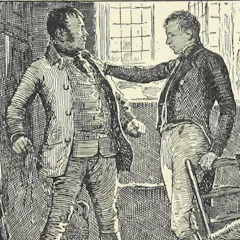
In the age of AI we are once again hearing about Luddites, the 19th-century textile workers who sought to protect their livelihoods in early industrial England.

A new project renewed traditional net-making practices on Widjabal Wia-bal Country in northern New South Wales.
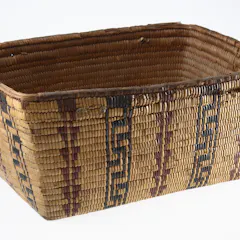
Craft practices are not supplemental to human survival: they enable it, and have always been at the centre of technological innovation.
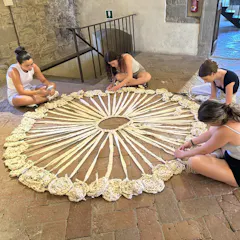
Textile work in a global learning program is a vehicle for exploring new forms and esthetics, and building collaborative creative practices.
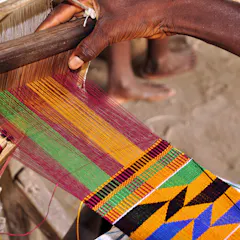
Kente cloth reflects Asante beliefs, values and history.
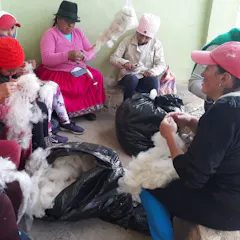
Women meet to weave, reflect, commiserate, share culture and tell stories in hopes of passing down ancestral knowledge.
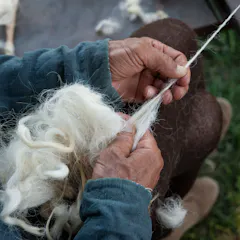
From fibre to fabric. The process of making textiles has been important to humans for almost 35,000 years.

War rugs are more reflections of market forces than memorials to suffering.

How even sleepy, rural Mid Wales was once an industrial heartland feeding the slave trade.

Eight artists use textiles to investigate history, self and place in a new exhibition that draws on rich histories, but could use more contextual information in its presentation.
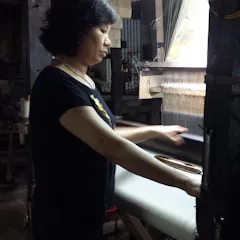
Many major luxury goods firms have long made place a key part of their identity, and a visit to a traditional silk-weaving centre in Vietnam shows that the approach could work for small firms too.

Basket weaving and knitting are used pejoratively to make a point but not ‘manly’ pursuits such as metalcrafts or woodwork.

The Lady and the Unicorn tapestries, woven around 1500, have been called the ‘Mona Lisa of the Middle Ages’. While they make for breathtaking viewing, their threads are encoded with much meaning.
Top contributors
-

Deputy Co-ordinator, Journalism Program, Swinburne University of Technology
-
Adjunct Lecturer, Faculty of Science and Engineering, Southern Cross University
-
Lecturer in Art History , University of Sydney
-
Senior Lecturer and Course Coordinator, Indigenous Knowledge Program, Southern Cross University
-
Educational Designer, Centre for Teaching and Learning, Southern Cross University
-
Postdoctoral research fellow, Université Savoie Mont Blanc
-
Assistant professor, Early Childhood, Faculty of Education, York University, Canada
-
Walter H. Annenberg Professor of the Humanities and Professor of Religious Studies, University of Pennsylvania
-
Professor of Early Childhood Education, Western University
-
Associate professor, Fashion, Toronto Metropolitan University
-
Professor of History, University of South Wales
-
Full professor, GEM
-
Manager - Circular Economy Initatives and ANFF-Deakin Hub, Deakin University
-
Associate Research Fellow, Deakin University
-
Lecturer, Educational Innovations in Science and Technology, Kwame Nkrumah University of Science and Technology (KNUST)