
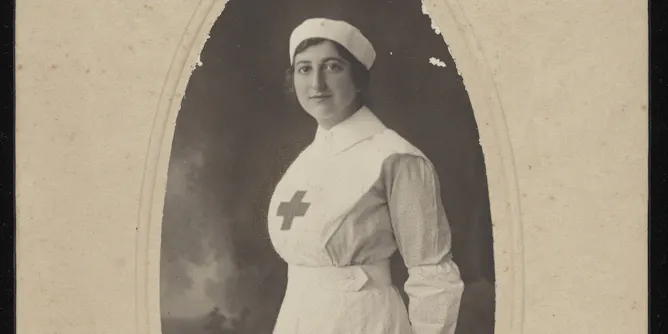
The letters Bertha wrote to her father John Monash reveal the agonising struggle of women on the home front.
Articles on World War I
Displaying 1 - 20 of 371 articles
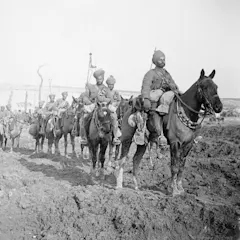
The ‘tears of womenfolk’ in Punjab became the biggest hurdle to military recruitment by December 1924, according to colonial officials.
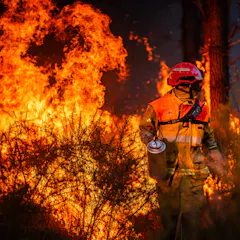
Europe is full of buried explosives left over from 20th century wars, and wildfires are now reaching them more regularly.
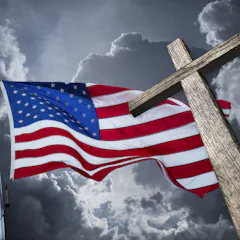
From the Civil War to the Cold War, existential fears have fueled claims that America is a Christian nation, a historian of US Christianity explains.
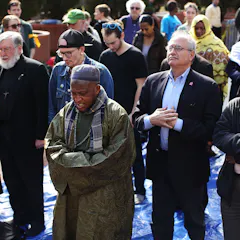
Research on social bonding suggests that common traditions can foster connection not only within communities but also across cultural and religious boundaries.

Russia’s war in Ukraine has passed another grim milestone.
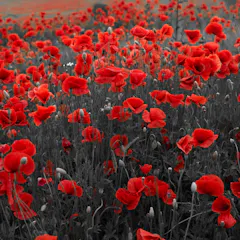
During and after WWI, thousands of American women acted as mothers for displaced French children. A war studies research fellow weighs in with considerations for teaching this vital, often overlooked part of transatlantic wartime history.

Mourning black has never been considered a natural part of Anzac Day history and tradition. But 110 years ago it was a stark reminder of death in war.
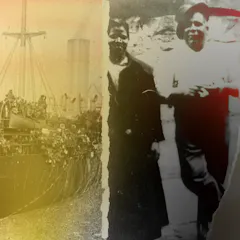
More than 1,000 Aboriginal Australians served in WWI – but unlike white soldiers, they weren’t feted as heroes. They responded with collective activism.
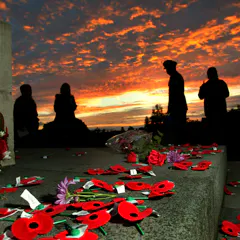
From real to cloth to plastic and now virtual, the poppy demonstrates how material objects become imbued with profound meaning over time.
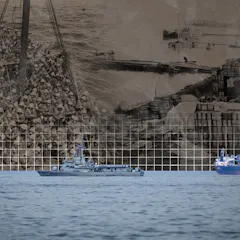
Gallipoli was a hastily launched military campaign over a maritime choke point – and has parallels with the Strait of Hormuz.
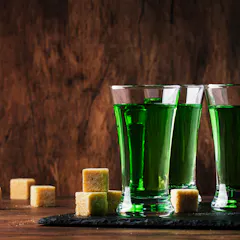
A researcher examines the bad press surrounding absinthe which led to its ban in France in 1915, while drawing parallels with more recent, ‘scathing’ examples of scapegoating and social control.
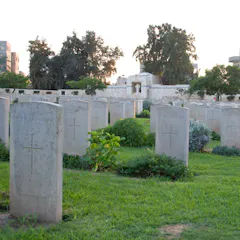
The destruction of war graves in Gaza has rightly received global attention. But this isn’t the first time Commonwealth war dead have been dragged into conflicts.
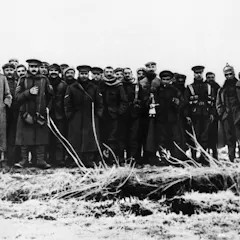
World leaders like to talk up peace at Christmastime. But alongside the tales of seasonal breaks in fighting are incidents of adversaries taking advantage of the season.
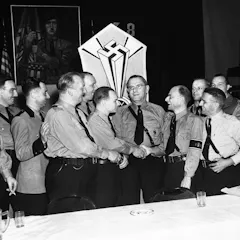
Although thousands of Americans embraced fascist ideas during the interwar years, a new study examines why the US has had little appetite to remember that past.
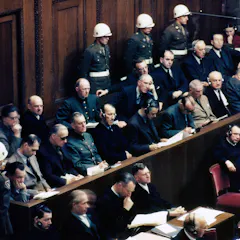
The new film highlights how the tribunal broke ground – and where it fell short – raising enduring questions about complicity, morality and whether humanity can ever truly judge its worst crimes.

While the choir scenes are wonderful, the film is most affecting in its quietest moments.
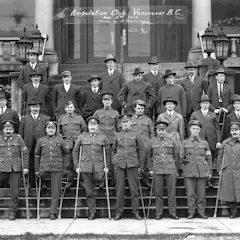
After the First World War, two war amputees raised the profile of disabled veterans and challenged ableism as they trekked 2,000 kilometres from Calgary to Thunder Bay.
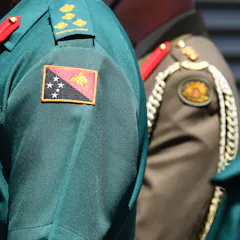
Papua New Guinea has played a pivotal role in some key moments in Australian history- including Federation.

A series of lectures on decolonisation sheds new light on contemporary conflicts.
Top contributors
-

Chancellor's Professor of Medicine, Liberal Arts, and Philanthropy, Indiana University
-
Principal Lecturer in History, Manchester Metropolitan University
-
Professor, University of Leeds
-
Senior Lecturer, School of Humanities and Social Sciences, Deakin University
-
Lecturer in History, University of Auckland, Waipapa Taumata Rau
-
SEACAMS R&D Project Manager, Centre for Applied Marine Sciences, Bangor University
-
Professor of Economics, University of Warwick
-
Associate Professor in Politics and International Relations, Monash University
-
Associate Professor, School of History, ANU / Chercheur Associé at the Centre d’Histoire de Sciences Po, Australian National University
-
Assistant Professor of Literature and History, University of Warwick
-
Reader in Modern Political History, Loughborough University
-
Senior Lecturer in Sociology, Adelaide University
-
Senior Lecturer in Modern European History, Cardiff University
-
Professor in German Studies, The University of Melbourne
-
Professor of Creative Arts, Griffith University