

Saudi Arabia’s escalating conflict with the Houthis in Yemen will force its new defence partners Turkey and Pakistan to confront some difficult questions.
Articles on Yemen
Displaying 1 - 20 of 159 articles
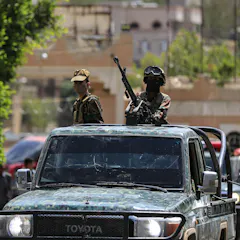
Seizure of the Bab el-Mandeb Strait complicates a widening conflict in the Persian Gulf. It also risks reigniting Yemen’s civil war.
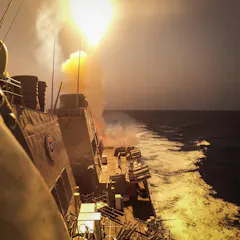
The African shoreline is now much more valuable to outsiders who want to monitor, contain or outflank the waterway opposite them.

Recent events in Yemen could drag Saudi Arabia into the conflict.
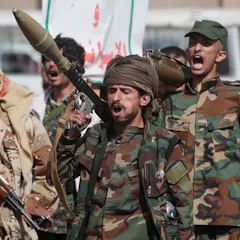
The resumption of fighting, paired with the ongoing closure of the Strait of Hormuz, complicates regional strategy and energy policy for the Gulf powerhouse.
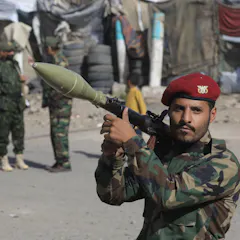
The recent Houthi advance has revived the seemingly endless conflict between Saudi Arabia and its antagonists in Yemen.
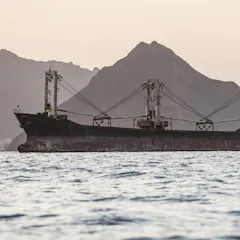
The move suggests Iran and its allies are settling in for a long war. That could mean pain for the global economy.

For centuries, the world’s entire coffee supply flowed through one Yemeni port.
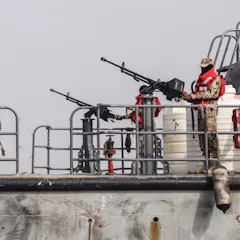
The ongoing war in Iran has created an expanding zone of risk for shipping, including for Saudi Arabia’s strategy of redirecting oil exports away from Hormuz.

Each year, about 10–12% of global shipping trade passes through the Bab el-Mandeb Strait – whose name means ‘Gate of Tears’.

Yemeni coffeehouses have gained culinary prominence in recent years, offering brews of coffee and tea seasoned with cardamom, ginger, cloves and other ingredients.

The Houthis’ alleged support for Al-Shabaab militants in Somalia remains limited at this stage, although it is nonetheless concerning.
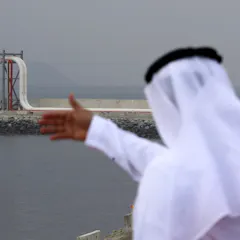
The UAE and Saudi Arabia have long been at odds over oil policy. The latest move is also likely to further their broader regional rivalry.

A decade of shifting regional alliances, continuous conflict and outside interventions have narrowed the path for diplomacy.

In normal times, as much as 14% of global maritime trade goes through the Bab el-Mandeb Strait. Disruption would be felt around the world.

Countries don’t just switch from fossil fuels to renewable energy sources. Each takes its own path, depending on its economy, international trade relations and government stability.

Key sources of drinking water have been targets in past conflicts. And Iranian strikes have already hit close to some.
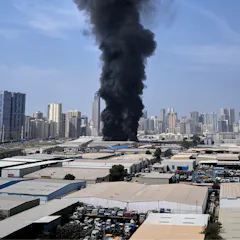
By using its drone and missile arsenal on its neighbours, Iran is telling the region, and the world, the regime will not go quietly.

Initially, the two gulf states were in alignment over Yemen’s civil war. But the Arab coalition’s unity has long since gone.
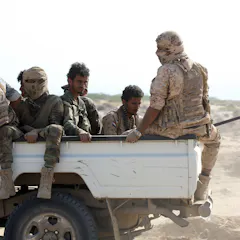
The seizure of southern Yemen by separatists raises the prospect of the country being carved in two.
Top contributors
-

Director of the Curtin Extremism Research Network (CERN), Curtin University
-
Professor of International Relations, Lancaster University
-
Lecturer in International Relations, University of Glasgow
-
Associate Professor, Department of Peace, Human Rights & Cultural Relations, American University School of International Service
-
Ph.D. Candidate in Political Science, Colorado State University
-
Fellow for the Middle East at the Baker Institute, Rice University
-
Professor of Peace Studies, University of Bradford
-
Professor of International Politics, Clinton Institute, University College Dublin
-
PhD Researcher, SOAS, University of London
-
Associate Professor, School Of Politics & International Relations, University College Dublin
-
Lecturer, Department of War Studies, King's College London
-
PhD Candidate, Political Science and International Relations, Curtin University
-
PhD Candidate (ABD), York University, Canada
-
Adjunct assistant professor, Carleton University; L’Université d’Ottawa/University of Ottawa
-
Law Professor in Constitutional Law, Criminal Law, Election Law, University of Memphis