

Sunny Adé is celebrated as the King of Jùjú music.
Articles on Yoruba culture
Displaying all articles
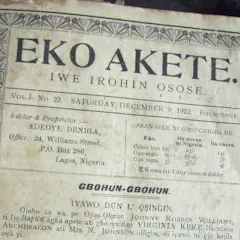
English was imposed as Nigeria’s official language, but the British had no way of controlling what people did with it.

Oluwole faced a double challenge: a woman in philosophy and an African, confronting both sexism and Eurocentric bias.

Evangelical filmmakers turned prayers into special effects and spiritual battles into dramatic storylines and created a new genre.

Fela Kuti’s legacy plays out in music, in politics and even in food, with Nigerian restaurants paying homage to him on their menus.

Seven Doors, a Nigerian series, explores the themes of kingship, kinship, love, betrayal, family and restitution.

The annual Ọ̀ṣun festival is a week-long event that usually takes place between the end of July and early August.

Fela Kuti created his own myth, and his fans did the rest. Today his music and politics are as relevant as they were before his death in 1997.

Germaine Acogny has risen as a female artist who has defied stereotypes to become one of the world’s most revered dance makers.

Fuji music is a way of life for millions of Yoruba people. It’s the prism through which they understand their world.

Aso ebi - colourful fabrics worn at social events in NIgeria - makes parties glamorous but the cost can also be burdensome.

A new Nigerian movie, Jagun Jagun, adds to the growing number of recent films of major cultural prestige eulogising heritage in war, bravery, and royalty.

We need deep-time African urban history and theories to make sense of contemporary urban life and anticipate its future possibilities in African terms.

Kidjo has a remarkable cultural vision that spans the globe but stays true to her roots.

Nigerian popular music - Afrobeats - is storming the world’s stages. But it’s just the latest stage in a vibrant century of recorded music in the country.

By providing insights from different disciplines, a new book uncovers new themes in the history of Yoruba people of West Africa

South Africa has tended to prioritise race relations over gender relations since formal apartheid ended.
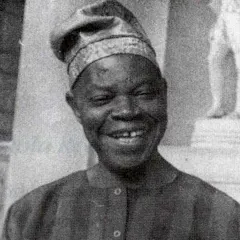
Amos Tutuola has contributed significantly to the resilience of ways of life and worldviews that could easily have disappeared under the weight of colonialism, globalisation and the market economy.

Much of academic philosophy, even on the African continent, is openly and unashamedly in love with the idea of the West as destiny.

Several indigenous child-rearing practices have helped babies develop strong immune systems to ward off allergies. These should be actively promoted.
Top contributors
-

Professor of History, Cardiss Collins Professor of Arts and Sciences, Northwestern University
-
Professor of Drama, Theatre and Film Studies, University of Jos
-
Lecturer of Philosophy, University of the Western Cape
-
Lecturer, University of KwaZulu-Natal
-
Postdoctoral fellow, SARChi Chair in Gender politics, Stellenbosch University
-
Lecturer in Music, University of Nigeria
-
Assistant Professor, Ethnomusicology, University of Minnesota
-
Senior Research Fellow, Institute for Humanities in Africa, University of Cape Town
-
Lecturer, Redeemer's University
-
Professor of History and African and African Diaspora Studies, Florida International University
-
Professor, Canadian and Cultural Studies, Stockholm University
-
Research Fellow, Rhodes University
-
Senior Lecturer in Broadcast, Film, and Multimedia, University of Abuja
-
Emeritus Professor of African Cultural Anthropology, University of Birmingham
-
PhD researcher, Cornell University