
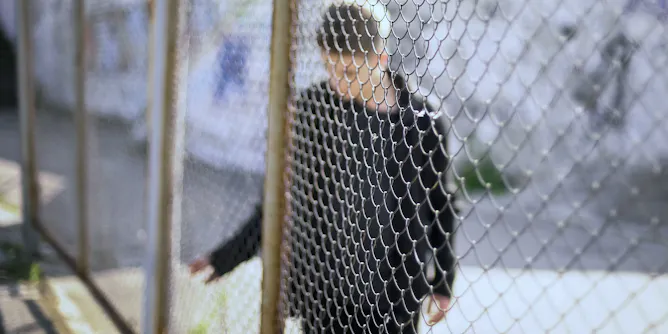
The federal Senate inquiry into Australia’s youth justice and incarceration system should have mandated a minimum age of criminal responsibility.
Articles on Youth justice
Displaying 1 - 20 of 35 articles

In England and Wales, members of the public can request a sentence review.

Gangs offer belonging, identity, protection and support for young people.

Children may have complex needs and overlapping conditions.

New research shows increased mental health support would help break the cycle of incarceration - and drive down recidivism.

Young Black people are over-represented through the whole justice system, from their interactions with the police to their presence in prisons.

In an Australian first, a children’s court has introduced a ‘justice facility dog’ to help reduce anxiety for young people in court. But has it helped?

Music can provide incarcerated youth with opportunities to build confidence, engage with learning, develop social skills, and and redefine themselves from young offenders to young artists.
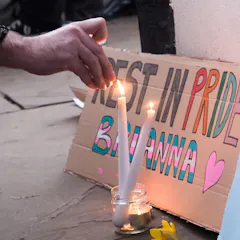
Naming them links their identities with Brianna’s – and may lead to harassment against their families.

The Law Enforcement Conduct Commission has handed down a damning report into an unlawful policing strategy. It’s the latest example of First Nations children being over-policed.
Children as young as ten don’t have access to Medicare if detained. And they’re dying of largely preventable diseases.

Better screening when young people enter the youth justice system would help identify those who are neurodivergent.

In New Zealand, you can be considered capable of criminal intent from the age of ten. But this is young by international standards, and many believe reform is overdue.
Do we want to punish some of the most vulnerable young people in the community, or do we want to reduce re-offending? The Northern Territory’s proposed youth justice reforms suggest the former.

Young people’s voices need to be heard if we are to solve the knife crime crisis.
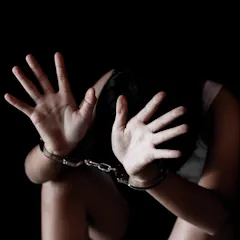
A significant proportion of teachers surveyed (36.8%) believed 16 was the minimum age of criminal responsibility.

Hundreds of Australian children aged ten to 13 are in juvenile detention. Legal and medical experts say we must raise the age of criminal responsibility to 14.

What’s most concerning is children are being charged in out of home care for unnecessary and avoidable offences. We need to do a better job of placing children safe environments.

In one year, an average 566 children between 10 and 13 were in detention. Almost 70% were Indigenous children.
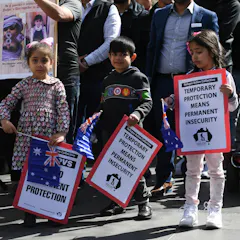
In a recent report, the UN Committee on the Rights of the Child was highly critical of the Australian government for its youth justice failures and the rise of children with mental health issues.
Top contributors
-

Senior Lecturer in Criminology, Edge Hill University
-
Professor of Law, University of Technology Sydney
-
Professor of Criminology, Loughborough University
-
Professor (Practice), Faculty of Business and Economics, Monash University
-
Senior Lecturer in Law, UNSW
-
Professor of Criminology, University of Technology Sydney
-
Co-Director, Columbia University Justice Lab, Senior Research Scientist, Columbia School of Social Work, Columbia University
-
Professor, Centre for Women's Studies & Gender Research, Sociology, Monash University
-
PhD Candidate, University of Technology Sydney
-
Professor in Justice and Legal Studies, School of Global, Urban and Social Studies, RMIT University
-
Senior Lecturer, Youth Work & Youth Studies, Social Equity Research Centre, RMIT University
-
Researcher, University of Technology Sydney
-
Emeritus Professor of Criminology, University of Oxford
-
Senior Lecturer in Criminology, De Montfort University
-
Senior Lecturer in Applied Health and Social Care, Edge Hill University