

They called for time to play and mental health support.
Articles on Youth mental health
Displaying 81 - 100 of 183 articles

Early intervention programs for young people with psychosis might cost more initially, and require more intensive support for longer periods, but they’re worth the investment.

It was hoped intensive early intervention programs might ‘bend the curve’ and change the lifetime trajectory of illnesses such as schizophrenia. But that doesn’t appear to be the case.

Teens have been through a lot in the pandemic and things won’t simply go back to normal as the nation opens up. Here’s how to support their mental health during the transition.

A survey of high school students highlighted the tensions they faced when classes moved online during COVID-19 lockdowns.
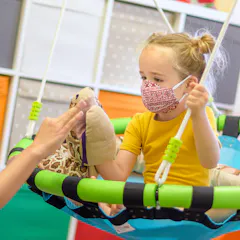
Public health measures introduced to protect people from COVID have often exacerbated health conditions and delayed access to therapy for those living with disabilities.

Parents can support their children through the coming weeks of year 12 exams by using four strategies.

The pressure of needing to be a model minority — successful, quiet, hardworking — can force people to internalize their mental anguish and ends up leaving gaps in our mental health services.

By integrating parents and other family members in therapy, young people will have more consistent support between the therapist’s office and their home.
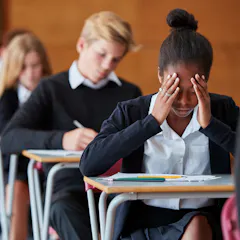
Attention control theory holds that heightened anxiety impairs the efficiency of mental processes. For instance, stressing about something can make us lose focus on the task at hand.
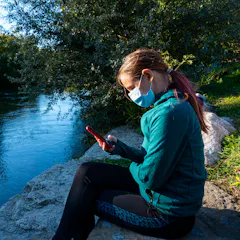
Presentations to a Melbourne eating disorder clinic jumped by 63% in 2020, as young people struggled with isolation, loneliness and boredom.
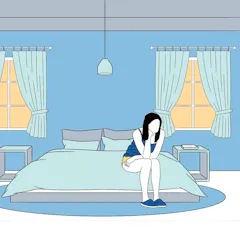
Is there a mental health crisis among young people, or are worry and sadness to be expected? Pathologizing normal, healthy responses to adverse events promotes misunderstanding about mental illness.

New information Instagram makes teens feel worse about their bodies is an opportunity for parents to start a conversation with their children about their online lives, and encourage positive habits.

Year 12 students, particularly in NSW and Victoria, have been disconnected from friends and faced anxiety over the uncertainty of exams. This added to the already high stress levels of this age group.

Self-harm is often a response to mounting stress and uncertainty. So it’s not surprising rates have gone up during the pandemic. Self-harm can be a means to cope and establish control over emotions.
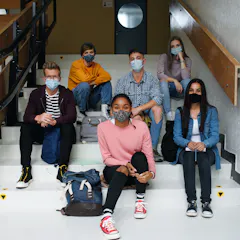
New research shows the dire effects of the pandemic on the mental health of children and youth, with as many as 25 per cent of young people affected. Immediate action can help address this distress.

You’re probably wrong about how much time you spend on your devices, and that has big implications for the link between device use and mental health.

A recently released schools policy guide has been receiving some criticism. Reports suggest it instructs teachers to not use terms like “boys and girls”, for instance. This is not entirely correct.

The federal budget’s A$2.3 billion for mental health may well make it easier to access services. But there’s no guarantee this will translate to improved mental health in Australia — here’s why.

A former student at a therapeutic boarding school, who is now a scholar, explains why she believes a growing outcry is making a difference.
Top contributors
-

Tier 1 Canada Research Chair in School-Based Mental Health and Violence Prevention, L’Université d’Ottawa/University of Ottawa
-
Professor, Canada Research Chair in Determinants of Child Development, Owerko Centre at the Alberta Children’s Hospital Research Institute, University of Calgary
-
Professor emeritus, The University of Melbourne
-
Professor of Adolescent Health The University of Melbourne; Director, Royal Children's Hospital Centre for Adolescent Health; and Murdoch Children's Research Institute, The University of Melbourne
-
Associate Professor, School of Psychology, Scientist, Children's Hospital of Eastern Ontario Research Institute, L’Université d’Ottawa/University of Ottawa
-
Assistant Professor of Psychology, Wayne State University
-
Professor of Psychiatry, The University of Melbourne
-
Senior Research Fellow in Mental Health, Victoria University
-
Senior lecturer, Monash University
-
Professor of IT Ethics and Digital Rights, Bournemouth University
-
Assistant Professor of Psychiatry, University of Colorado Anschutz
-
Associate professor, RMIT University
-
Lecturer, School of Education, Edith Cowan University
-
Scientia Professor & Head of the School of Psychiatry, UNSW
-
Assistant Professor of School Psychology, University of Dayton