

We overestimate how much other people notice our own behaviour and any social missteps.
Articles on UK universities
Displaying 1 - 20 of 113 articles

We may soon know the answers to many long-standing mathematical problems.
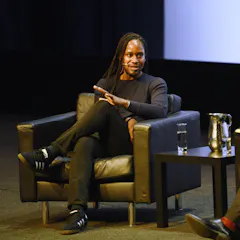
There is a difference between being invited into a university and feeling wanted there.

Financial pressures can reduce the amount of time, energy and emotional capacity available for revision.

The employment benefit of a degree is large.

Engagement in mental health frameworks is voluntary – but in Wales, that’s changing.

There’s low public awareness of how research is funded.

Studying for an undergraduate degree in England has always been expensive.

Should higher education be treated mainly as a private investment for individuals, or as a public good?

Awareness of disability in higher education has improved. Disabled students’ access still depends on how reliably universities deliver support day to day.

If you notice a friend exhibiting any concerning signs – especially rapid worsening over hours – take them seriously.

When mentorship is rooted in compassion, culture and community, it becomes a powerful tool for change.

Right-leaning respondents were consistently more supportive of academic freedom.

Expanding our understanding of how American society, culture and politics works helps us anticipate instability.

Black women often carry out work their colleagues don’t, such as promoting equality, diversity and inclusion initiatives.

International student fees have become a vital part of many universities’ income.

Visible diversity and critical conversations are important.

When scholarship is politically steered, the public loses access to evidence and the means to hold power to account.

This isn’t a story about university losing its value. It’s a story about Britain becoming a lower wage economy.

Craniometry, the study of skull measurements, was widely taught in medical schools in the nineteenth and early twentieth centuries.
Top contributors
-

Senior Lecturer in Mathematics, Department of Mathematical Sciences, City St George's, University of London
-
Professor of Practice in Education Policy, University of Birmingham
-
Associate Pro Vice Chancellor for Student Inclusion and Professor of Learning and Teaching in Higher Education, University of East Anglia
-
Senior Lecturer in Accounting, Sheffield Hallam University
-
Senior Lecturer, Manchester Metropolitan Business School, Manchester Metropolitan University
-
Vice-Chancellor, Birmingham City University
-
Professor of Economics, University of Westminster
-
Senior Lecturer in American Studies and History, York St John University
-
Professor of Human Geography, UCL
-
Chair in Feminist Media Studies, University of Strathclyde
-
Lecturer in Marketing, University of Bradford
-
University Professor of Social Sciences, Arizona State University
-
Visiting Professor, King's College London
-
Associate Professor and Director of the Centre on US Politics, UCL
-
Professor of Sociology, Politics and Public Policy and Founding Director of the Centre for the Study of Ethnicity and Citizenship, University of Bristol