

The United States came out of the Revolutionary War victorious. But building a new nation was very different from fighting a war.
Articles on Curious Kids
Displaying 1 - 20 of 822 articles

It might seem like a weird thing to do, but more than two-thirds of people have talked in their sleep at some point.
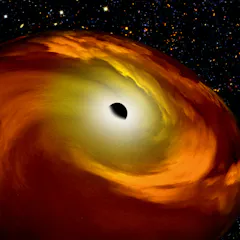
Some stars turn into black holes at the end of their lifespans, once they stop burning the fuel in their cores.

Some animal species have their eyes positioned on their heads differently than how people do – and it comes with pluses and minuses for how they see.

Energy transfer is the secret ingredient that makes iced tea a particularly refreshing drink on a hot day.

Computers break examples of human speech into small bits of sound, then put them together to sound like people do.
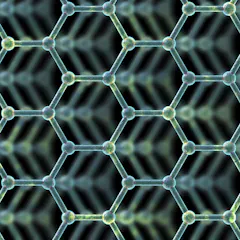
Turns out, changing the way atoms and molecules are arranged in a substance can give it new and fascinating properties.
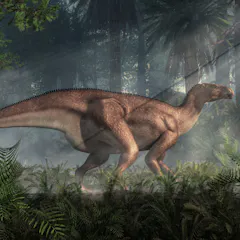
Listen to palaeobiologist Neil Gostling on The Conversation’s Curious Kids podcast talk about how scientists work out what dinosaurs looked like.

It takes an entire team of electricity, calcium, energy and proteins all working together to move your muscles.

Listen to the The Conversation’s Curious Kids podcast to hear anthropologist April Nowell explain the origins of language.
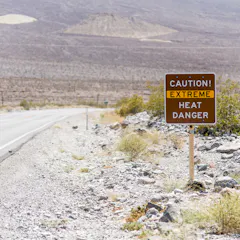
Death Valley set a record when the temperature reached 134 degrees Fahrenheit. Here’s why deserts can reach such scorching temperatures – and also very cold ones.

Listen to the The Conversation’s Curious Kids podcast to hear biochemist Mark Lorch explain how scientists are trying to make new elements for the periodic table.

Venus and Earth share some atmospheric quirks – but how did Venus get so unbearably hot, while Earth is mild and temperate?

Listen to the The Conversation’s Curious Kids podcast to hear taste researcher Linda Bartoshuk explain why our tastes for food change.

Your fingers’ lengths are just one feature of many that let your hands grasp, press, pull and otherwise interact with the world.
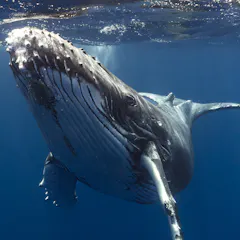
Wildlife expert Vanessa Pirotta talks whale digestion on The Conversation’s Curious Kids podcast.
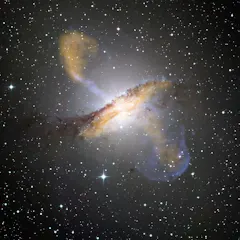
An astronomer explains why artificial black holes are pure science fiction – at least for now.
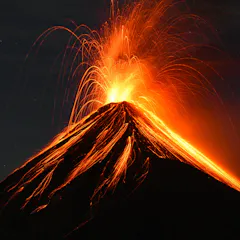
Volcanologist Martin Mangler explains how volcanic eruptions work to push lava into the air. Listen on the The Conversation’s Curious Kids podcast.

As one piece of more than a century of baseball traditions, eye black is part science experiment, part routine and part uniform.

Listen to the The Conversation’s Curious Kids podcast to hear astronomer Michael Lam on what theories scientists have for what came before the Big Bang.
Top contributors
-

Reader in Astrophysics, Keele University
-
Associate Professor of Science & Medicine, Bond University
-
Professor (Astrophysics), University of Southern Queensland
-
Associate Dean of Innovation and Engagement, Swinburne University of Technology
-
PhD Candidate, University of Southern Queensland
-
Distinguished Professor Emeritus of Anthropology, Binghamton University, State University of New York
-
Professor, Philosophy of Science, The University of Melbourne
-
Professor, Macquarie University
-
Researcher, The University of Melbourne
-
Assistant Professor of Medicine, Bond University
-
Professor of Science Communication and Chemistry, University of Hull
-
Lecturer, University of Southern Queensland
-
Associate Professor, School of Animal and Veterinary Science, Adelaide University
-
Principal Lecturer in Wildlife Conservation, Nottingham Trent University
-
Whale Scientist and Lecturer, Faculty of Science and Engineering, Macquarie University