
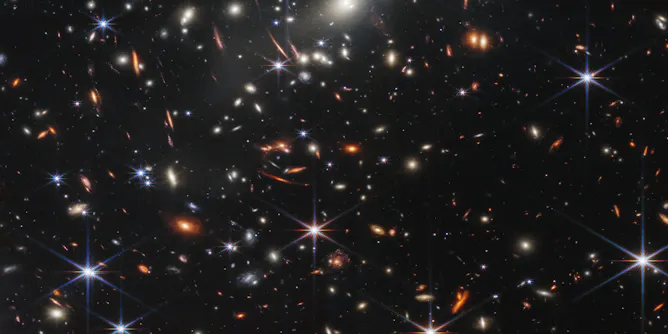
Massive objects bend light around them, a quirk that opens up unique opportunities for astronomical surveys.
Articles on Astronomy
Displaying 1 - 20 of 986 articles
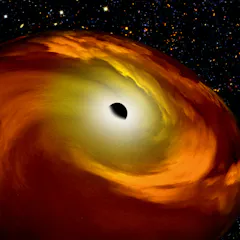
Some stars turn into black holes at the end of their lifespans, once they stop burning the fuel in their cores.
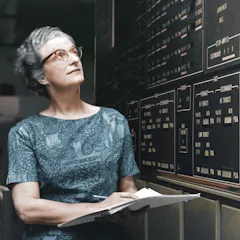
In August 2018, just four months before she died, I had the great fortune to interview Nancy Grace Roman about her extraordinary life studying the stars.
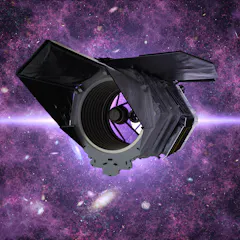
The Nancy Grace Roman Space Telescope will take a broad survey of space and use it to create a map of the universe.
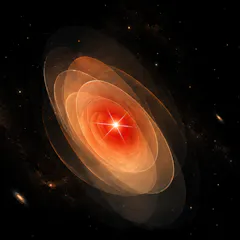
It turns out these little red dots might actually be evidence of supermassive black holes.
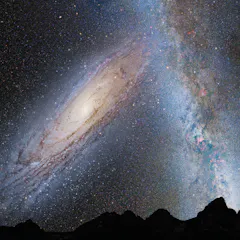
The Milky Way contains a fossil record of galaxies it has absorbed.
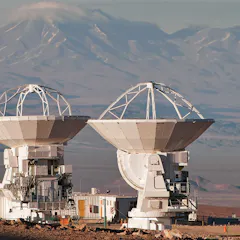
Interstellar maps can help scientists find patterns that tell them about fundamental chemical processes in the cosmos.
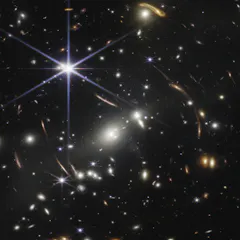
A recent paper claimed that dark energy might not exist. But new research suggests this conclusion was premature.
How my understanding of the night sky was transformed by observing stars with a hi-tech telescope.
Miniaturisation of sensors and light sails for propulsion mean we could reach the stars within a person’s lifetime.
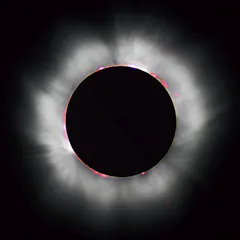
What’s the most impressive natural phenomenon known to humankind? Probably a solar eclipse! Here’s a brief overview ahead of this summer’s big celestial event.
Romans could predict eclipses, but still interpreted them as signs from the gods.
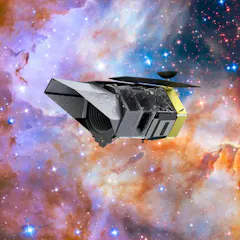
The Nancy Grace Roman telescope will probe dark energy and discover exoplanets.

From space hotels and artificial meteor showers, to a new giant mirror that reflects sunlight to Earth — low-Earth orbit is getting weird.
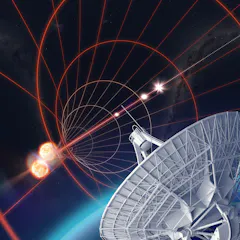
Astronomers have revisited data from a dramatic collision of neutron stars to help resolve the infamous ‘Hubble tension’.
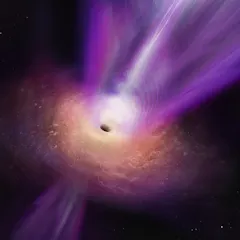
Black holes are a mainstay in sci-fi movies. How do these massive black holes, spread throughout our universe, actually work in real life?
As a galactic archaeologist, my job is to reconstruct the past of our galaxy – and read the signs of its future.
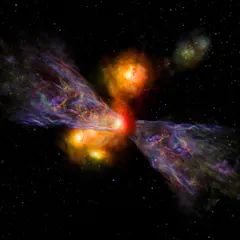
All things die, even galaxies.
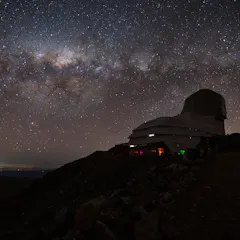
Scientists study small galaxies to look for hints of dark matter in the universe.
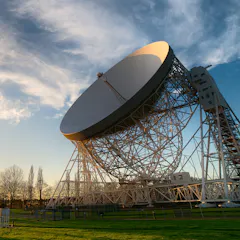
Astronomers should not try to message E.T. before international consultation has occurred.
Top contributors
-

Professor (Astrophysics), University of Southern Queensland
-
Senior Curator (Astronomy), Museums Victoria Research Institute; The University of Melbourne
-
Associate Professor in Astronomy, Monash University
-
University Distinguished Professor of Astronomy, University of Arizona
-
Associate Professor, School of Physics, The University of Melbourne
-
Professor of Astrophysics, University of Sydney
-
Professor, Radio Astronomy, University of Sydney
-
Pro Vice-Chancellor Flagship Initiatives, Swinburne University of Technology
-
Postdoctoral Researcher in Radio Astronomy, University of Sydney
-
John Curtin Distinguished Professor (Radio Astronomy), Curtin University
-
Honorary Fellow, Space and Astronomy, CSIRO; Western Sydney University
-
Lecturer in Astronomy, Nottingham Trent University
-
Associate Dean of Innovation and Engagement, Swinburne University of Technology
-
Senior Lecturer in Physics, Nottingham Trent University
-
Associate Professor, Astronomy, University of Regina