
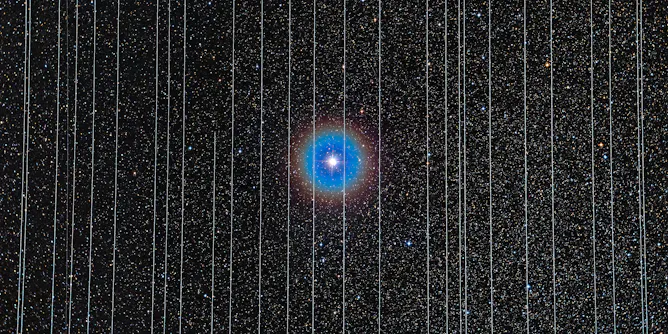
Cultural, spiritual, and most environmental impacts aren’t taken into account when launching thousands of satellites.
Articles on Astronomy
Displaying 61 - 80 of 1002 articles

When Muslims arriving in the UK tried to sight the new crescent Moon, they would often struggle – in part due to a very British problem: the cloudy weather.

So what names do astronomers use for stars and how are official star names selected?

Comet MAPS has the potential to be one of the ‘Great Comets’ of this century.

Radio pulses repeating every minute-to-hour have puzzled astronomers, but a new paper in Nature Astronomy might finally shed some light.
The US, China, India, Europe and Japan all have exciting missions on the horizon in 2026. Many of them are collaborative feats.

Stargazing can stimulate an interest in space in kids and lead to a passion for science. But rural schools often lack the resources to nurture these interests.

The findings from Pandora will complement data from the James Webb Space Telescope to give astronomers more insight into stars and planets outside our solar system.
NASA, SpaceX and Blue Origin have all successfully launched superheavy-lift rockets. These massive vehicles are designed to carry a much heavier load.
In 2026 we will see a total eclipse of the Moon, a blue Moon, a supermoon and the two brightest planets close together in the sky.

Or perhaps there was no star at all.
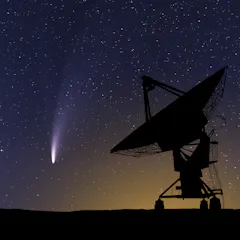
Bloemfontein could become South Africa’s top astro-tourism spot, using clear skies, observatories and planetariums to draw visitors and boost local jobs.
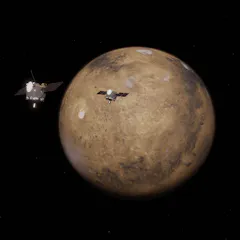
What’s better – many small space missions, or a few large, sweeping ones? Space scientists are asking this question as they face budget uncertainties.

Most of the universe is made up of dark matter and dark energy. The majority of everything else is dispersed throughout space as tiny particles.
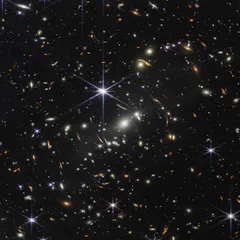
Some unique ‘stars’ might be fueled by dark matter annihilation.

Will the universe keep existing forever? An astrophysicist explains how scientists aren’t entirely sure, but they can make predictions.
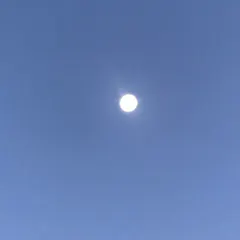
Phones can often take great photos, but why photos of the Moon typically disappointing? The Moon itself and camera design are both part of the answer.

Radio astronomy opened up the universe for scientists. They could map new elements across galaxies and also search for signals from extraterrestrial civilizations.
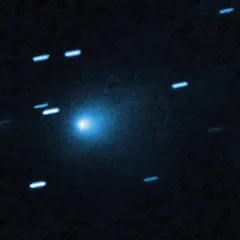
The alien question, while fun, generates misinformation and distracts from the science.
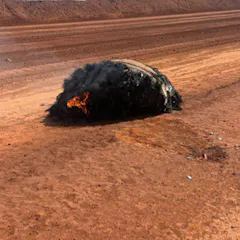
A piece of a suspected rocket found on fire in Western Australia highlights the growing problem of space junk – and how humanity is dealing with it.
Top contributors
-

Professor (Astrophysics), University of Southern Queensland
-
Senior Curator (Astronomy), Museums Victoria Research Institute; The University of Melbourne
-
Associate Professor in Astronomy, Monash University
-
University Distinguished Professor of Astronomy, University of Arizona
-
Associate Professor, School of Physics, The University of Melbourne
-
Professor of Astrophysics, University of Sydney
-
Professor, Radio Astronomy, University of Sydney
-
Honorary Fellow, Space and Astronomy, CSIRO; Western Sydney University
-
John Curtin Distinguished Professor (Radio Astronomy), Curtin University
-
Pro Vice-Chancellor Flagship Initiatives, Swinburne University of Technology
-
Postdoctoral Researcher in Radio Astronomy, University of Sydney
-
Senior Lecturer in Physics, Nottingham Trent University
-
Associate Dean of Innovation and Engagement, Swinburne University of Technology
-
Lecturer in Astronomy, Nottingham Trent University
-
Dean of Science, University of California, Santa Cruz