
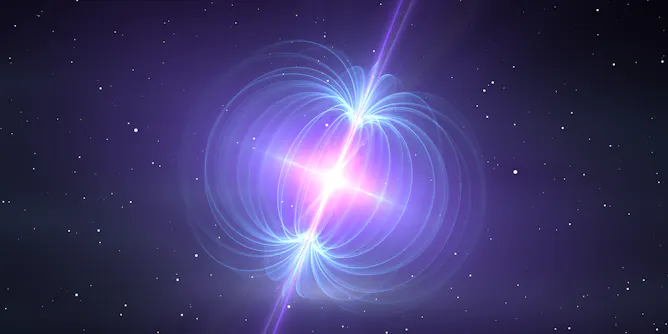
The object has a highly unusually long rotation period, and was found in an area we call the neutron star ‘graveyard’.
Articles on Astronomy
Displaying 381 - 400 of 1002 articles
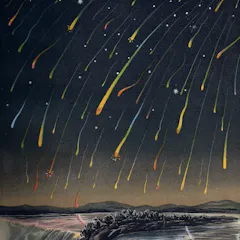
Could the Tau Herculid meteor shower put on a spectacular show next week? Only time will tell.

Nuclear isomers are rare versions of elements with properties that mystified physicists when first discovered. Isomers are now used in medicine and astronomy, and researchers are set to discover thousands more of them.

Fanaroff is one of the key individuals responsible for the current growth and strength of astronomy in South Africa.

Sagittarius A* lies in the southern sky, passing directly above South Africa.
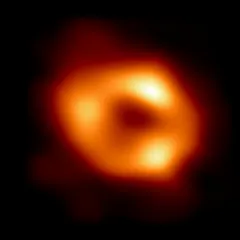
Sagittarius A* is a massive black hole at the center of the Milky Way. Now that astronomers have imaged it, they can begin to learn more about black holes within other galaxies across the universe.
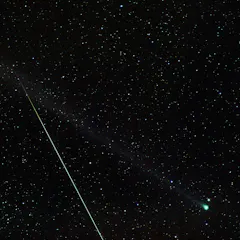
Each year, the Earth runs through a broad river of dust surrounding Comet Halley – giving birth to the spectacular Eta Aquariid meteor shower.

The pulsar PSR J0523-7125 is more than ten times brighter than any other radio pulsar outside the Milky Way.
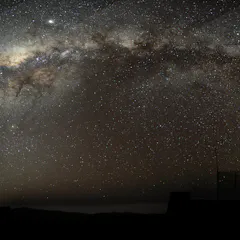
This year, two groups of astronomers plan to send messages containing information about humans and the location of Earth toward parts of space they think may be home to intelligent life.
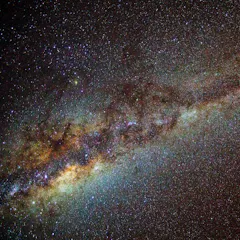
A growing number of satellite ‘mega-constellations’ are being deployed. Will a starry night sky soon be a thing of the past?
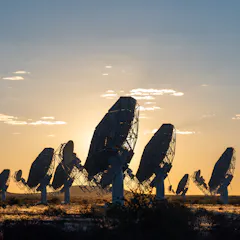
Complementary science will be at the heart of the Square Kilometre Array.
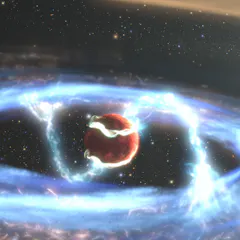
A glimpse of a distant Jupiter-sized exoplanet sheds light on how gas giants form.

The First Astronomers shares the extensive star knowledge of First Peoples worldwide, stretching back millennia to reclaim so-called Western discoveries and highlight the strength of oral traditions.
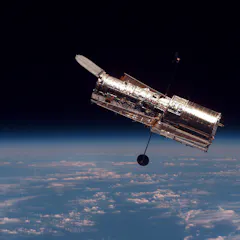
The astronomy and astrophysics decadal survey for the 2020s lays out plans to search for life on distant planets, understand the formation of galaxies and solve deep mysteries of physics.
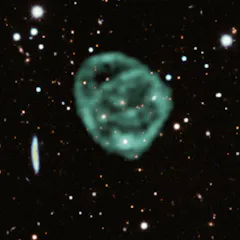
Next-generation radio telescopes unravel the mysteries of ghostly circles in the sky.
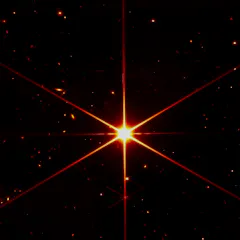
The telescopes primary mirror segments are now working together to provide a single, sharp image.
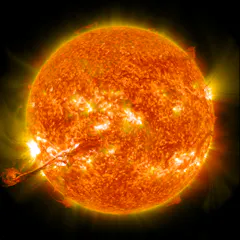
Space weather can affect satellites in a number of different ways, from frying electronics to increasing drag in the atmosphere.
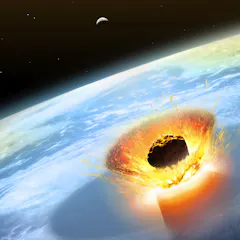
NASA has only mapped 40% of the potentially dangerous asteroids that could crash into Earth. New projects will boost that number, and upcoming missions will test tech that could prevent collisions.
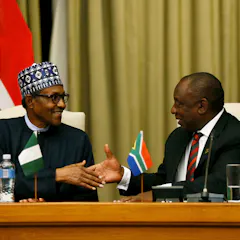
Nigeria-South Africa bi-national commission is a laudable initiative but missing the space cooperation element.
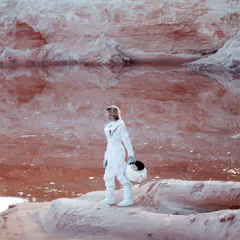
Humans might one day be able to live somewhere else in the Universe.
Top contributors
-

Professor (Astrophysics), University of Southern Queensland
-
Senior Curator (Astronomy), Museums Victoria Research Institute; The University of Melbourne
-
Associate Professor in Astronomy, Monash University
-
University Distinguished Professor of Astronomy, University of Arizona
-
Associate Professor, School of Physics, The University of Melbourne
-
Professor of Astrophysics, University of Sydney
-
Honorary Fellow, Space and Astronomy, CSIRO; Western Sydney University
-
Professor, Radio Astronomy, University of Sydney
-
John Curtin Distinguished Professor (Radio Astronomy), Curtin University
-
Pro Vice-Chancellor Flagship Initiatives, Swinburne University of Technology
-
Postdoctoral Researcher in Radio Astronomy, University of Sydney
-
Senior Lecturer in Physics, Nottingham Trent University
-
Associate Dean of Innovation and Engagement, Swinburne University of Technology
-
Lecturer in Astronomy, Nottingham Trent University
-
Dean of Science, University of California, Santa Cruz