
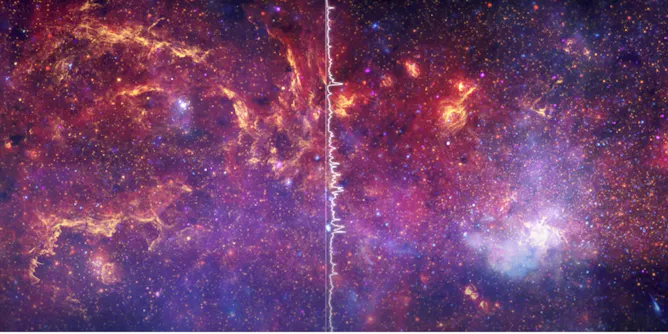
Since ancient times, the stars have been set to music. Modern technology now enables scientists to convert images of space into real compositions.
Articles on Astronomy
Displaying 341 - 360 of 1002 articles

Our galaxy should be full of traces of dead stars. Until now, we have found surprisingly few of these supernova remnants, but a new telescope collaboration is changing that.
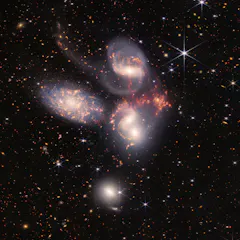
NASA has been gaining momentum in recent years as investment into space has ramped up in the US. In 2022, missions dealt with the farthest, closest, hottest and coldest conditions in the universe.

The sky looks blue on a sunny day – but at night we can see the faint glow of its true colour.

A year on since the historic launch of the most powerful infrared telescope in human history, we admire and explore some of the best images it delivered in 2022.
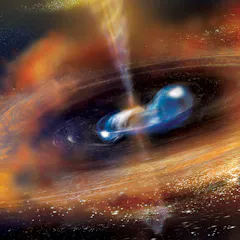
Gamma-ray bursts occur when a massive star explodes or when two neutron stars merge. A newly discovered burst has puzzled astronomers, as it lasted much longer than astronomers would have expected.
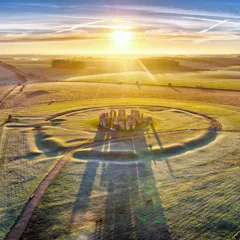
The dead of winter, when the longest night of the year takes place, has also traditionally been celebrated as a time of renewal and reverence.

Astrology and astronomy were once practiced side by side by scientists like Galileo and Kepler. And they’re more similar than you might think.

It has been one year since the launch of the James Webb Space Telescope and six months since the first pictures were released. Astronomers are already learning unexpected things about the early universe.
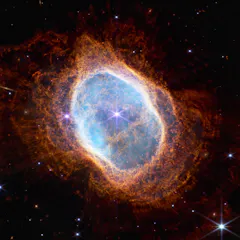
Astronomers have unpacked the mystery of how one star’s death created the nebula NGC3132 – never before seen in such detail.
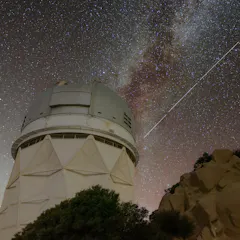
The stars, planets and Milky Way we see at night are part of a wilderness shared across the globe and across centuries. But does BlueWalker 3 herald a night sky polluted with bright satellites?
A new particle accelerator has just begun operation. It is the most powerful accelerator of its kind on Earth and will allow physicists to study some of the rarest matter in the universe.
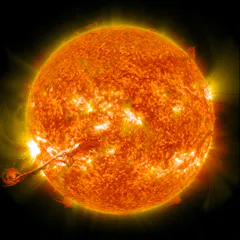
A new study of ‘solar twins’ shows a fundamental constant appears to be the same throughout our local galactic neighbourhood.
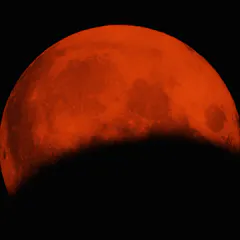
People across Australia and New Zealand will be able to catch the blood moon. Here’s how to get the best view.
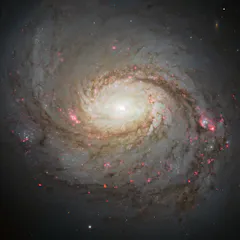
The IceCube telescope near the South Pole has received a first glimpse into the core of the galaxy NGC 1068.
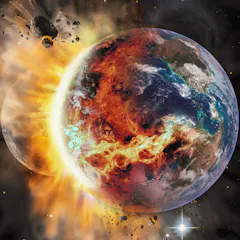
Believe it or not, this sort-of happened before in Earth’s history – and now we have the Moon.
The technology of an advanced alien civilization is likely to produce many signs that could be detected across the vastness of space. Two astronomers explain the search for technosignatures.
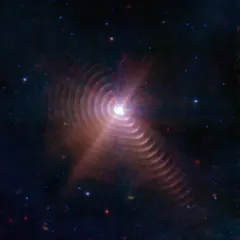
The binary star WR140 is surrounded by an astonishing array of nested shells of dust swirling into space.
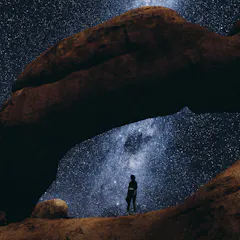
In some African countries, astronomical research is quite developed.
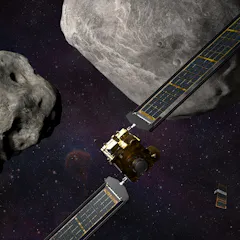
The first ever planetary defence test is about to take place 11 million kilometres from Earth. All we can do is wait and see.
Top contributors
-

Professor (Astrophysics), University of Southern Queensland
-
Senior Curator (Astronomy), Museums Victoria Research Institute; The University of Melbourne
-
Associate Professor in Astronomy, Monash University
-
University Distinguished Professor of Astronomy, University of Arizona
-
Associate Professor, School of Physics, The University of Melbourne
-
Professor of Astrophysics, University of Sydney
-
Professor, Radio Astronomy, University of Sydney
-
Honorary Fellow, Space and Astronomy, CSIRO; Western Sydney University
-
John Curtin Distinguished Professor (Radio Astronomy), Curtin University
-
Pro Vice-Chancellor Flagship Initiatives, Swinburne University of Technology
-
Postdoctoral Researcher in Radio Astronomy, University of Sydney
-
Senior Lecturer in Physics, Nottingham Trent University
-
Associate Dean of Innovation and Engagement, Swinburne University of Technology
-
Lecturer in Astronomy, Nottingham Trent University
-
Dean of Science, University of California, Santa Cruz