
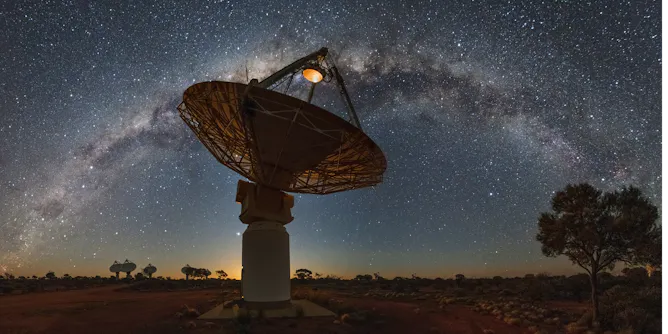
Do all big black holes in very massive galaxies emit radio waves? We used the latest radio telescopes to find out.
Articles on Astronomy
Displaying 261 - 280 of 1002 articles
Sound needs matter to propagate, so the vast vacuum of space is not just empty − it’s silent.

A newly discovered planet that should be too big to have formed around a tiny star is throwing into question what researchers know about planet formation.
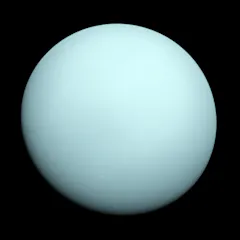
Five of the Uranus moons might be ocean worlds − and if there’s water, there might be life.

With an evidence-based strategy and careful evaluation, gender parity in science is achievable.
The universe is expanding faster than physicists would expect. To figure out what processes underlie this fast expansion rate, some researchers are first trying to rule out what processes can’t.
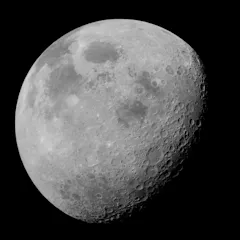
Some dark craters on the Moon are never exposed to light − ice could be hiding in these permanently shadowed regions, and India’s Chandrayaan-3 mission marked a big step toward finding it.
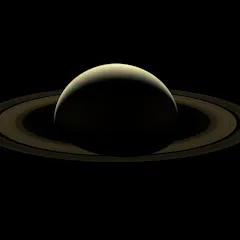
Viral headlines would have you think Saturn’s rings will vanish in just 18 months. Here’s what that really means and why you don’t need to worry.
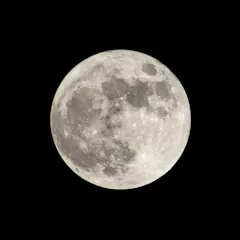
Despite the distances involved, people as far apart as the UK and Australia can see the Moon at the same time.
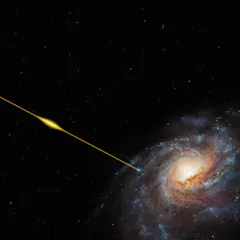
A record-breaking discovery of an extreme ‘fast radio burst’ opens a window into the early universe.
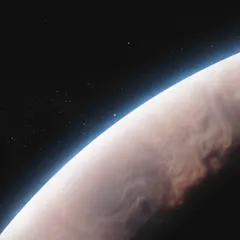
The atmosphere is a reflection of extreme conditions on the super-heated planet.
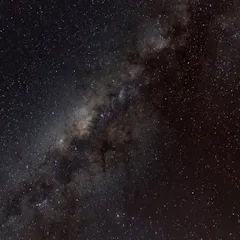
An astronomer explains why space looks so dark despite containing 200 billion trillion stars.
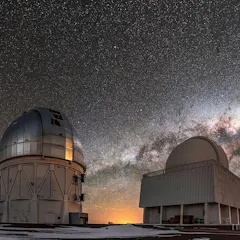
Controlled experiments are impossible in astronomy, as are direct measurements of physical properties of objects outside our solar system. So how do astronomers know so much about them?
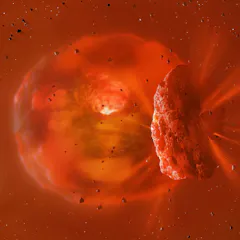
The discovery provides a way to study the birth of an entirely new planet in real time.

There’s a flurry of excitement every time a comet comes into view from Earth. But what are these celestial objects, and where do they come from?
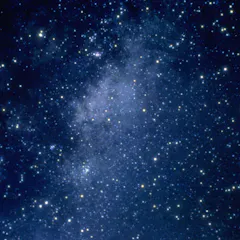
Measuring the ages of planets and stars is tricky. An observational astrophysicist describes the subtle clues that provide good estimates for how old different space objects are.
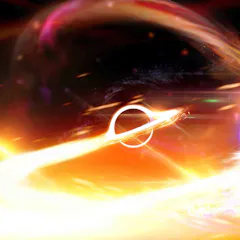
Massive flashes of energy known as ‘fast radio bursts’ have puzzled astronomers for years – and a new search for links to gravitational waves has so far found no connection.

Canada’s partnership in the world’s largest radio telescope, located in South Africa and Australia, creates new opportunities for research, but the benefits go beyond astronomy.
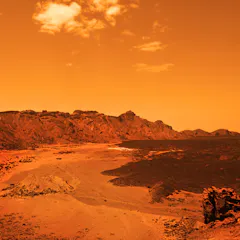
Planetary analogues are sites on Earth that are so extreme that they replicate those of celestial bodies in our solar system.
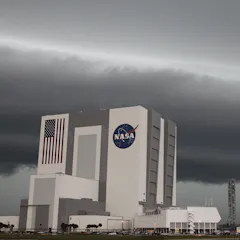
Months after a military officer made sensational claims about unexplained objects in the skies, NASA released a report loosely outlining a scientific approach for analyzing UAP reports.
Top contributors
-

Professor (Astrophysics), University of Southern Queensland
-
Senior Curator (Astronomy), Museums Victoria Research Institute; The University of Melbourne
-
Associate Professor in Astronomy, Monash University
-
University Distinguished Professor of Astronomy, University of Arizona
-
Associate Professor, School of Physics, The University of Melbourne
-
Professor of Astrophysics, University of Sydney
-
Professor, Radio Astronomy, University of Sydney
-
Honorary Fellow, Space and Astronomy, CSIRO; Western Sydney University
-
John Curtin Distinguished Professor (Radio Astronomy), Curtin University
-
Pro Vice-Chancellor Flagship Initiatives, Swinburne University of Technology
-
Postdoctoral Researcher in Radio Astronomy, University of Sydney
-
Senior Lecturer in Physics, Nottingham Trent University
-
Associate Dean of Innovation and Engagement, Swinburne University of Technology
-
Lecturer in Astronomy, Nottingham Trent University
-
Dean of Science, University of California, Santa Cruz