
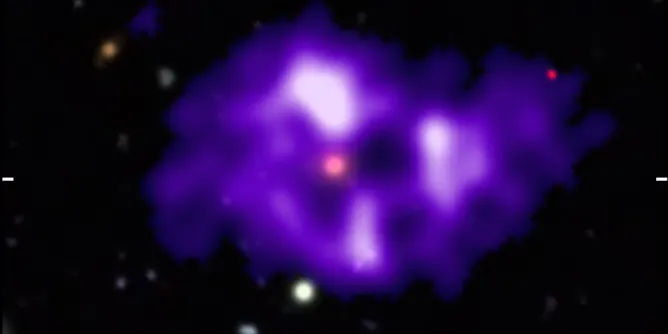
Machine learning is becoming an indispensable tool in astronomy by sorting through enormous datasets from telescopes.
Articles on Astronomy
Displaying 321 - 340 of 1002 articles

A US-led coalition and China are both planning to establish bases on the Moon. How the two nations will navigate actions on the Moon and how other countries will be involved is still unclear.

Tens of thousands of satellites orbiting Earth will hamper astronomers’ efforts to study the Universe and spot dangerous asteroids, as well as brightening the sky and hiding stars from the rest of us.
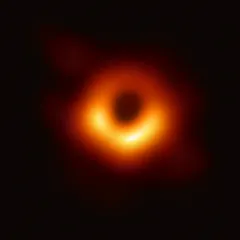
Beyond just looking at black holes, the next-generation Event Horizon Telescope collaboration is the first to bring together perspectives from across the sciences and humanities.
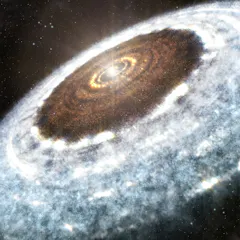
Astronomers have long known where water is first formed in the universe and how it ends up on planets, asteroids and comets. A recent discovery has finally answered what happens in between.
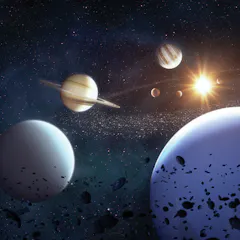
It all starts with a cloud of gas and dust.
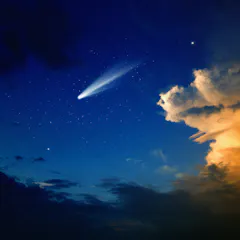
The newly discovered comet C/2023 A3 Tsuchinshan-ATLAS is anticipated to be spectacularly bright late next year. But it’s important to temper our expectations.
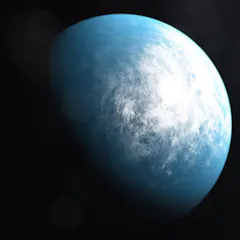
With more than 5,000 known exoplanets, astronomers are shifting their focus from discovering additional distant worlds to identifying which are good candidates for further study.
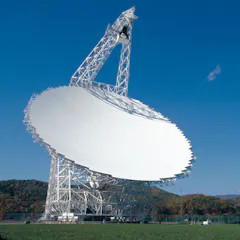
Many telescopes use the radio spectrum to learn about the cosmos. Just as human development leads to more light pollution, increasing numbers of satellites are leading to more radio interference.
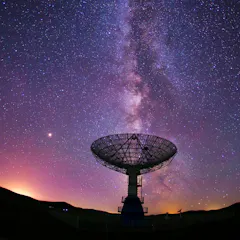
To date, we have not heard from any aliens. Nor have we seen any – but here are the fascinating projects working to change that.

With the help of thousands of citizen scientists, a new study measured exactly how much brighter night skies are getting every year.
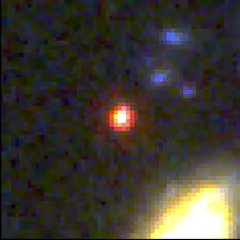
The discovery of massive, early galaxies could force scientists to rethink how the first galaxies formed after the Big Bang.
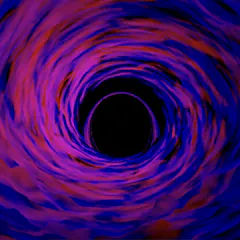
Astronomers have found that mysterious dark energy may originate in black holes.
The Solar System as we know it doesn’t really make sense without a ninth planet. So then why can’t we find it?
An astronomer takes us on a tour of the universe to learn about the birth of stars and planets and how they get their spin.
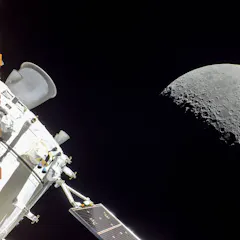
With more than 100 lunar missions planned in coming years, space junk near the Moon could become an issue for humanity. No agency tracks lunar space junk, so two astronomers decided to do it themselves.
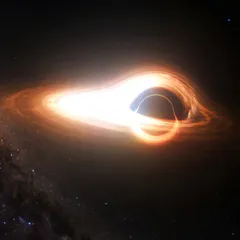
While we can’t see inside a black hole, we can spot the intensely bright glowing disc that surrounds one. Now, we might better understand why these discs appear to ‘twinkle’.
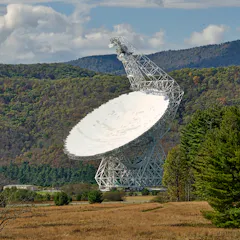
Can artificial intelligence transform the search for alien intelligence?
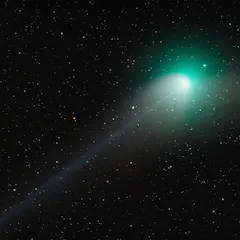
Skies in the Northern Hemisphere have been graced by a rare, green comet. Now, it’s our turn to look for it in Australia – but the view will be dimming rapidly.
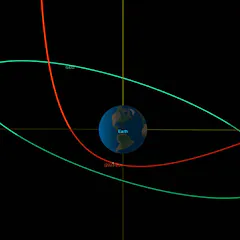
Discovered less than a week ago, the truck-sized asteroid skimmed much closer to Earth’s surface than most satellites.
Top contributors
-

Professor (Astrophysics), University of Southern Queensland
-
Senior Curator (Astronomy), Museums Victoria Research Institute; The University of Melbourne
-
Associate Professor in Astronomy, Monash University
-
University Distinguished Professor of Astronomy, University of Arizona
-
Associate Professor, School of Physics, The University of Melbourne
-
Professor of Astrophysics, University of Sydney
-
Professor, Radio Astronomy, University of Sydney
-
Honorary Fellow, Space and Astronomy, CSIRO; Western Sydney University
-
John Curtin Distinguished Professor (Radio Astronomy), Curtin University
-
Pro Vice-Chancellor Flagship Initiatives, Swinburne University of Technology
-
Postdoctoral Researcher in Radio Astronomy, University of Sydney
-
Senior Lecturer in Physics, Nottingham Trent University
-
Associate Dean of Innovation and Engagement, Swinburne University of Technology
-
Lecturer in Astronomy, Nottingham Trent University
-
Dean of Science, University of California, Santa Cruz