
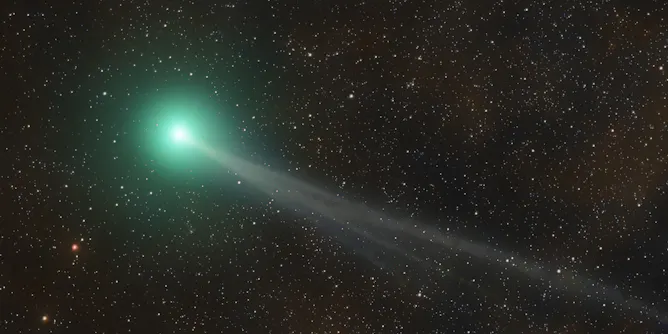
There’s a chance Nishimura might brighten unexpectedly – but it’s a slim one.
Articles on Astronomy
Displaying 281 - 300 of 1002 articles
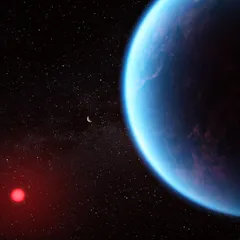
The results are intriguing, but analysing the atmospheres of exoplanets is no easy task.

An astronomer and ‘black hole historian’ explains how the parts of the universe black holes grow in might influence how quickly they become bright, supermassive objects.

To the ǀXam and San people, being in the world as a person includes “the sky’s things” - an understanding of and deep connection with the cosmos.
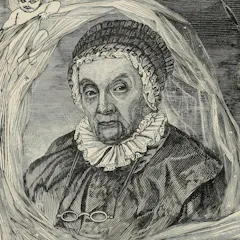
Astronomer Caroline Herschel’s work discovering and cataloging astronomical objects in the 18th century is still used in the field today, but she didn’t always get her due credit.
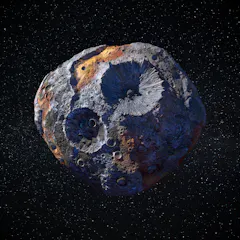
Liftoff to the distant asteroid is scheduled for Oct. 5, 2023 – the beginning of a six-year journey to one of the most unusual objects in the solar system.

Ancient stories of the sea and the sky date back to the end of the last ice age.

The universe used to be filled with a hydrogen fog, before early stars and galaxies burned through the haze. Astronomers are studying galaxies that tell them about this period in the early universe.

A mysterious hunk of space junk buzzed through Australian skies last night. It may have been the third stage of a Soyuz 2 rocket just launched by Russia.
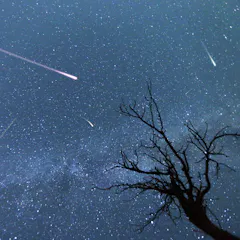
What is a shooting star? Where do these bright moving bodies come from? How and when can we observe this astronomical phenomenon?
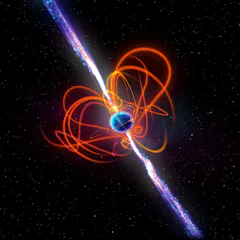
Astronomers have detected a long-running source of slow, repeating radio pulses that can’t be explained by current theories – but it’s probably not aliens.
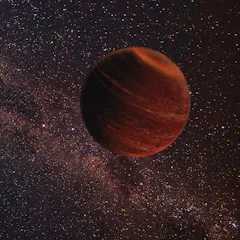
Astronomers have detected the coldest star ever found to emit radio waves using the Australian SKA Pathfinder telescope.
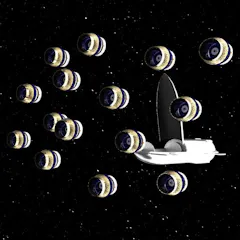
Space telescopes are limited in size due to the difficulties and cost of getting into orbit. By revamping an old optical technology, researchers are working on a lightweight and thin telescope design.
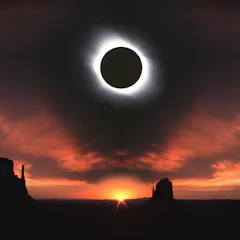
With a solar eclipse and several meteor showers coming up, an astronomy professor shares travel tips for viewing astronomical phenomena.
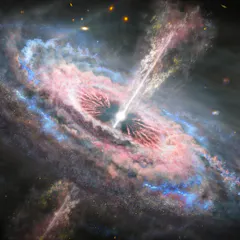
Bright, flickering galaxies called quasars were thought to pose a problem for our understanding of the cosmos – but new research shows Einstein was right yet again.

Some time measurements, like months and years, use the movements of the moon and sun, respectively. But other time measurements, like the hour, aren’t clearly connected to astronomical phenomena.
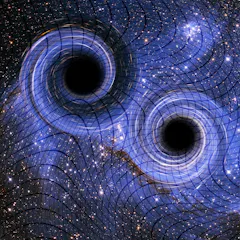
Astronomers have for the first time detected the background hum of gravitational waves likely caused by merging black holes.
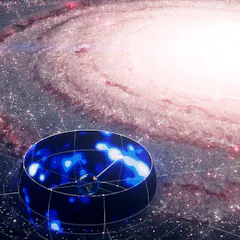
Neutrinos are some of nature’s most elusive particles, but new research has used them to create an image of our own galaxy.
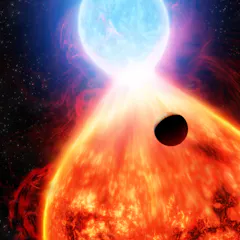
The planet Halla looks like it should have been devoured by its host star, a red giant called Baekdu – but a secret in the star’s past may hold the answer to the planet’s present.
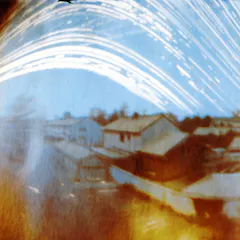
The longest and shortest days of the year are marked by the Sun’s position in the sky – but the seasons lag behind.
Top contributors
-

Professor (Astrophysics), University of Southern Queensland
-
Senior Curator (Astronomy), Museums Victoria Research Institute; The University of Melbourne
-
Associate Professor in Astronomy, Monash University
-
University Distinguished Professor of Astronomy, University of Arizona
-
Associate Professor, School of Physics, The University of Melbourne
-
Professor of Astrophysics, University of Sydney
-
Professor, Radio Astronomy, University of Sydney
-
Honorary Fellow, Space and Astronomy, CSIRO; Western Sydney University
-
John Curtin Distinguished Professor (Radio Astronomy), Curtin University
-
Pro Vice-Chancellor Flagship Initiatives, Swinburne University of Technology
-
Postdoctoral Researcher in Radio Astronomy, University of Sydney
-
Senior Lecturer in Physics, Nottingham Trent University
-
Associate Dean of Innovation and Engagement, Swinburne University of Technology
-
Lecturer in Astronomy, Nottingham Trent University
-
Dean of Science, University of California, Santa Cruz