
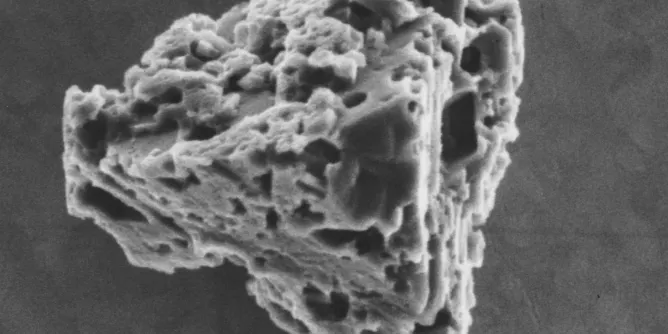
Most presolar grains were destroyed in the formation of the universe. But some survived on meteorites.
Articles on Astronomy
Displaying 181 - 200 of 1002 articles
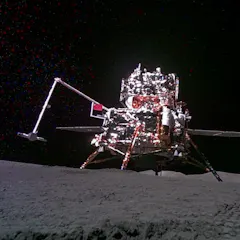
The far side of the Moon has a very different composition from the near side − so researchers are eager to see what stories these samples will tell.
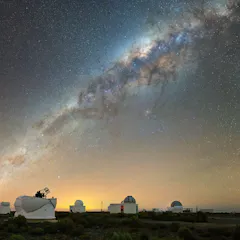
The first International Astronomical Union General Assembly was held just over 100 years ago, in Rome, Italy.
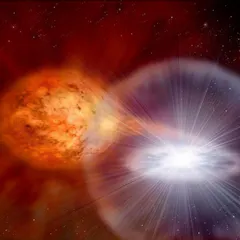
Your favorite TV show isn’t the only place where guest stars might appear. Keep an eye on the sky for the second half of 2024 and you might be able to witness a rare astronomical event.
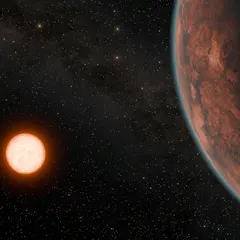
The groundbreaking discovery of a temperate Earth-size planet just 40 light-years away may hold the key to understanding stellar habitability.
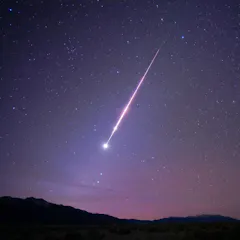
On July 31, Earth will pass through two debris streams that will produce meteor showers. Here’s where to look in the night sky in Australia and New Zealand.
X-rays emitted around black holes can tell astrophysicists about how fast they’re growing.
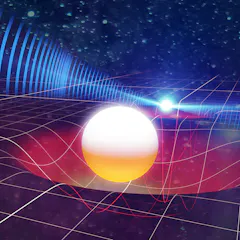
Neutron stars contain some of the universe’s most exotic states of matter – but there’s no easy way to peek inside.

Astronomers and stargazers around the world are excited to witness a rare event that only happens once every 80 years – a recurrent nova.
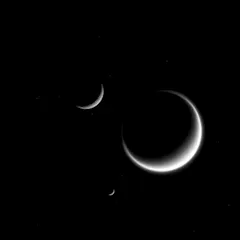
It’s not a competition, but if it were, Saturn would be winning.

Structures aligned with solar events served various purposes: science, farming, religion and even politics.
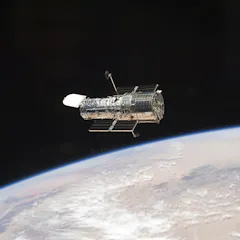
Hubble’s technical issues continue. But through some clever engineering, the telescope can continue operations with just 1 gyroscope.
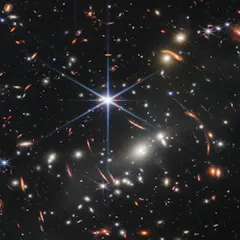
Astronomers Vicent Martínez and Bernard Jones explain the mystery of the Hubble tension, and why it matters so much for our understanding of the universe, on The Conversation Weekly podcast.
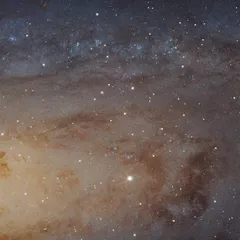
One hundred years ago, one star changed our view of the universe, proving that the Andromeda “nebula” was a galaxy like our Milky Way.
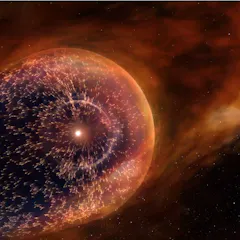
An interstellar probe could help scientists answer fundamental questions about how the Sun influences Earth, space and other planets in the solar system.
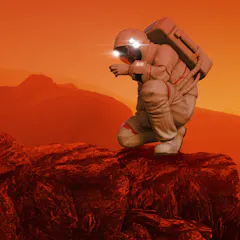
It’s hard to look for something you’ve never seen before – and that might not even exist. But you have to start somewhere.
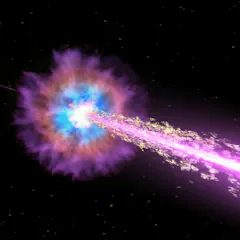
Analysis of two major cosmic blasts deepens the mystery of where the universe’s ‘heavy’ elements come from.

The best spots on the Moon for lunar bases are the same spots where scientists want to build telescopes − can these two interests coexist?
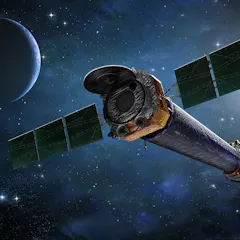
2024 marks 25 years since NASA’s Chandra X-ray Observatory started detecting X-rays from energetic astronomical events.
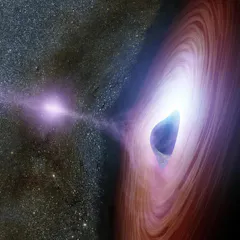
Studying theoretical, fast-spinning black holes is helping physicists understand more about the elusive black holes out in the universe.
Top contributors
-

Professor (Astrophysics), University of Southern Queensland
-
Senior Curator (Astronomy), Museums Victoria Research Institute; The University of Melbourne
-
Associate Professor in Astronomy, Monash University
-
University Distinguished Professor of Astronomy, University of Arizona
-
Associate Professor, School of Physics, The University of Melbourne
-
Professor of Astrophysics, University of Sydney
-
Professor, Radio Astronomy, University of Sydney
-
Honorary Fellow, Space and Astronomy, CSIRO; Western Sydney University
-
John Curtin Distinguished Professor (Radio Astronomy), Curtin University
-
Pro Vice-Chancellor Flagship Initiatives, Swinburne University of Technology
-
Postdoctoral Researcher in Radio Astronomy, University of Sydney
-
Senior Lecturer in Physics, Nottingham Trent University
-
Associate Dean of Innovation and Engagement, Swinburne University of Technology
-
Lecturer in Astronomy, Nottingham Trent University
-
Dean of Science, University of California, Santa Cruz