
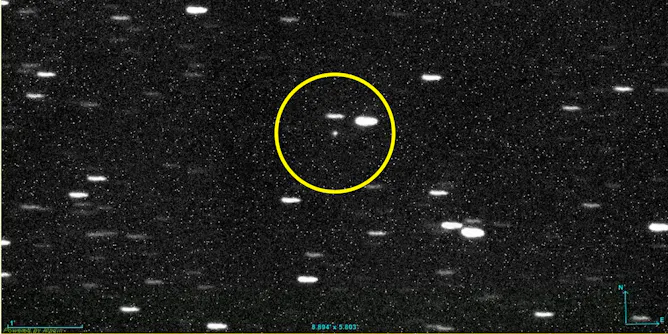
An object dubbed 3I/ATLAS is only the third interloper from outside the Solar System seen in all of human history.
Articles on Astronomy
Displaying 101 - 120 of 1002 articles
The James Webb Space Telescope has 2 powerful instruments that see light the human eye can’t.

The new observatory can take very high resolution images of distant objects in space.
Keeping Earth safe from asteroids isn’t just spotting them – it’s also helping people understand what a high-impact probability with Earth means.
Vera C. Rubin’s research into stars in galaxies led to the modern understanding of dark matter.
To make a truly realistic fake picture of a galaxy, you can model exactly how light particles travel through the atmosphere and telescope to reach its sensor.
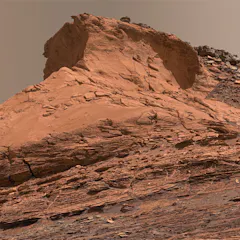
Mars isn’t a bright, fire-engine red, but the iron oxide in its rocks makes it appear redder than other planets, especially from afar.
As the universe expands, it feels like it must be spreading out from some initial point. But a physicist explains why that’s not how it works. Hint: space-time is involved.
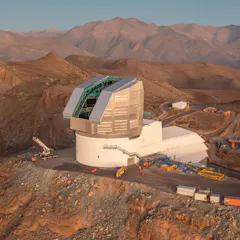
The Vera C. Rubin Observatory will capture enough detail to see a golf ball from 25km away.
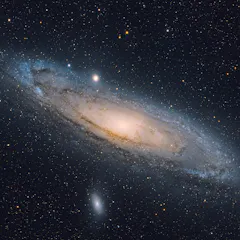
The odds of a galactic collision in our distant future are much lower than we thought, according to new simulations.
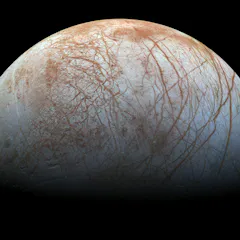
As NASA rolls out more powerful telescopes in the future, scientists will need a way to determine where to point them. A new approach could help.

The object doesn’t resemble any known type of star or system in the Milky Way.
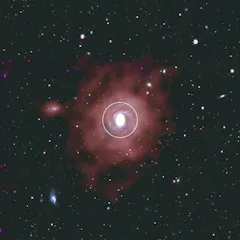
A new, more detailed study of 1,000 distant galaxies explains why some gas-rich galaxies don’t produce as many stars as you’d expect.
The speed of light is the fastest anything can travel. What happens to a photon from a galaxy 25 million light years away on its journey toward Earth?
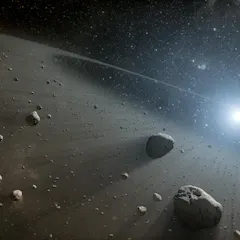
The Earth started as a mixture of gas and dust around the Sun and grew as it collided with asteroids and dust particles.
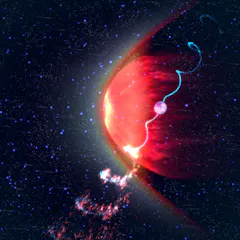
For the first time, astronomers have measured the plasma layers of a shock wave surrounding a pulsar.
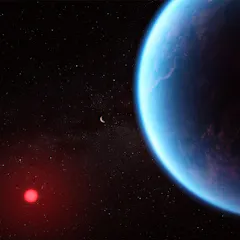
The exoplanet K2-18b could harbor a massive ocean, but scientists will need to study the planet more to see if it’s really likely to host life.
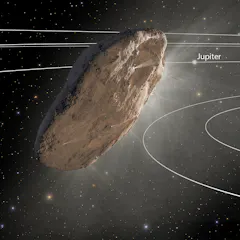
Learning about these interstellar objects could give us insights into other star systems.
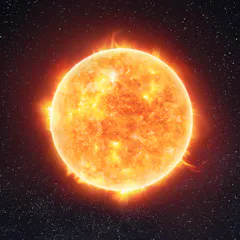
Stars are constantly vibrating because of ‘starquakes’. Listening to their sound can reveal a surprising amount of information.
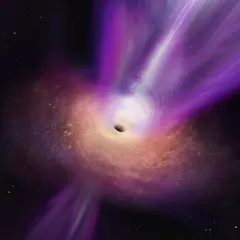
Whether a galactic environment has the right conditions for habitable planets to form could depend on how the black hole in that galaxy is rotating.
Top contributors
-

Professor (Astrophysics), University of Southern Queensland
-
Senior Curator (Astronomy), Museums Victoria Research Institute; The University of Melbourne
-
Associate Professor in Astronomy, Monash University
-
University Distinguished Professor of Astronomy, University of Arizona
-
Associate Professor, School of Physics, The University of Melbourne
-
Professor of Astrophysics, University of Sydney
-
Professor, Radio Astronomy, University of Sydney
-
Honorary Fellow, Space and Astronomy, CSIRO; Western Sydney University
-
John Curtin Distinguished Professor (Radio Astronomy), Curtin University
-
Pro Vice-Chancellor Flagship Initiatives, Swinburne University of Technology
-
Postdoctoral Researcher in Radio Astronomy, University of Sydney
-
Senior Lecturer in Physics, Nottingham Trent University
-
Associate Dean of Innovation and Engagement, Swinburne University of Technology
-
Lecturer in Astronomy, Nottingham Trent University
-
Dean of Science, University of California, Santa Cruz