
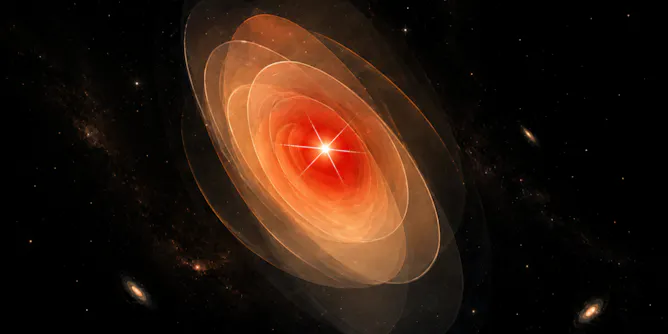
It turns out these little red dots might actually be evidence of supermassive black holes.
Articles on Astronomy
Displaying 21 - 40 of 1002 articles
The Milky Way contains a fossil record of galaxies it has absorbed.
Interstellar maps can help scientists find patterns that tell them about fundamental chemical processes in the cosmos.
A recent paper claimed that dark energy might not exist. But new research suggests this conclusion was premature.
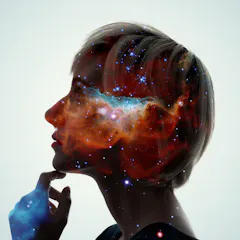
How my understanding of the night sky was transformed by observing stars with a hi-tech telescope.
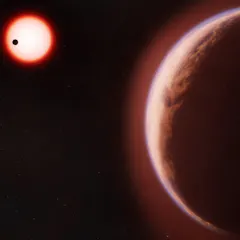
Miniaturisation of sensors and light sails for propulsion mean we could reach the stars within a person’s lifetime.
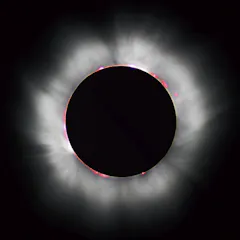
What’s the most impressive natural phenomenon known to humankind? Probably a solar eclipse! Here’s a brief overview ahead of this summer’s big celestial event.
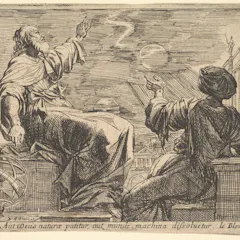
Romans could predict eclipses, but still interpreted them as signs from the gods.
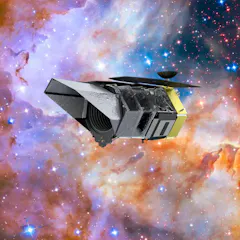
The Nancy Grace Roman telescope will probe dark energy and discover exoplanets.

From space hotels and artificial meteor showers, to a new giant mirror that reflects sunlight to Earth — low-Earth orbit is getting weird.
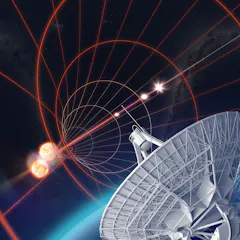
Astronomers have revisited data from a dramatic collision of neutron stars to help resolve the infamous ‘Hubble tension’.
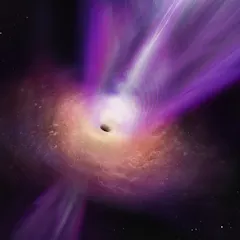
Black holes are a mainstay in sci-fi movies. How do these massive black holes, spread throughout our universe, actually work in real life?
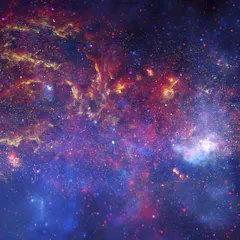
As a galactic archaeologist, my job is to reconstruct the past of our galaxy – and read the signs of its future.
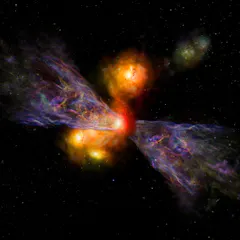
All things die, even galaxies.
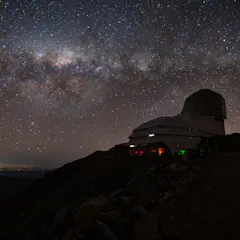
Scientists study small galaxies to look for hints of dark matter in the universe.
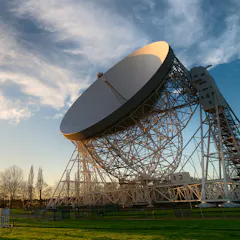
Astronomers should not try to message E.T. before international consultation has occurred.

Seeing a signal in different kinds of light is like having a text written in several forms of writing – it makes it easier to decipher.
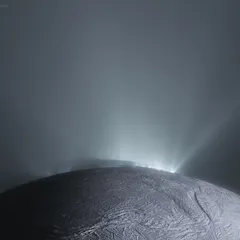
Future missions may be able to take only a small, damaged sample from space back to Earth. A simple analysis tool could help determine whether its contents suggest the presence of life.
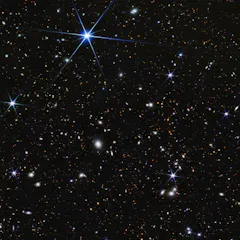
To travel between solar systems, a spacecraft would need extremely sophisticated – if not impossible – technology.
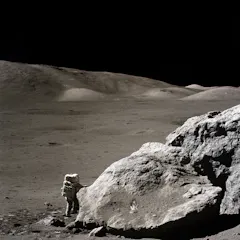
As lunar missions are back in vogue with engineering more sustainable human presence on the Moon in mind, there’s no getting away from the fact that you can’t breathe on a satellite that has no atmosphere.
Top contributors
-

Professor (Astrophysics), University of Southern Queensland
-
Senior Curator (Astronomy), Museums Victoria Research Institute; The University of Melbourne
-
Associate Professor in Astronomy, Monash University
-
University Distinguished Professor of Astronomy, University of Arizona
-
Associate Professor, School of Physics, The University of Melbourne
-
Professor of Astrophysics, University of Sydney
-
Professor, Radio Astronomy, University of Sydney
-
Honorary Fellow, Space and Astronomy, CSIRO; Western Sydney University
-
John Curtin Distinguished Professor (Radio Astronomy), Curtin University
-
Pro Vice-Chancellor Flagship Initiatives, Swinburne University of Technology
-
Postdoctoral Researcher in Radio Astronomy, University of Sydney
-
Senior Lecturer in Physics, Nottingham Trent University
-
Associate Dean of Innovation and Engagement, Swinburne University of Technology
-
Lecturer in Astronomy, Nottingham Trent University
-
Dean of Science, University of California, Santa Cruz