
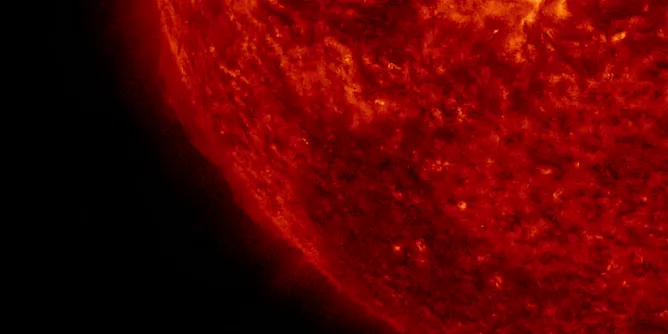
The Sun is a complex physical body. It generates incredible amounts of heat and a strong, often tangled, magnetic field.
Articles on Astronomy
Displaying 41 - 60 of 1002 articles
Aboriginal communities have observed the night sky for millennia. But they face a growing threat – light pollution.
Astronomers want to understand how spiral galaxies form and get their massive spiral arms.
Discoveries of molecules in space that suggest extraterrestrial life are exciting, but they need to be taken with a grain of salt – an astrochemist explains why.
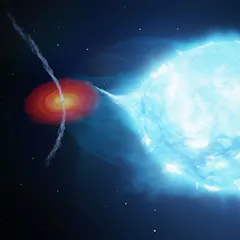
Astronomers have discovered stellar winds can cause black hole jets to change direction – just like wind on Earth can blow around the water in a fountain.
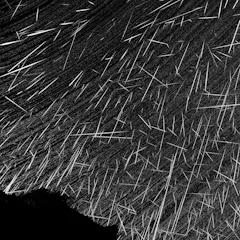
A newly identified meteor shower reveals that intense heat is fragmenting a previously unknown asteroid as it passes too close to the Sun.
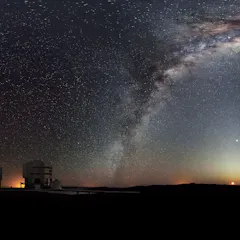
A program cut has Australian astronomers up in arms – but it points at much bigger problems with national research funding.
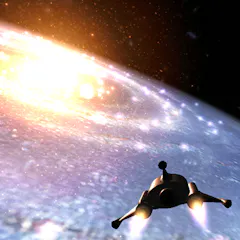
With college students less likely to read through a full textbook than they once were, video games can help keep them engaged.
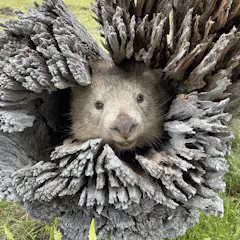
From wombat and mozzie surveillance to deciphering climate history and spotting star explosions, citizen scientists are instrumental in contributing knowledge.
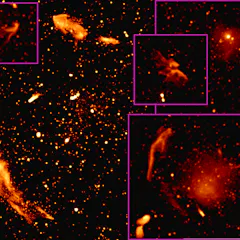
South Africa is using homegrown technology to answer questions about where our universe came from and where it is going.
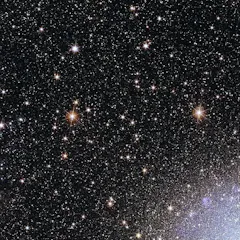
The fictional biologist in ‘Project Hail Mary’ claims that potential alien organisms might not be made of carbon or require water, unlike life on Earth.

AI could help astronomers crunch the vast amounts of data produced by a new observatory.
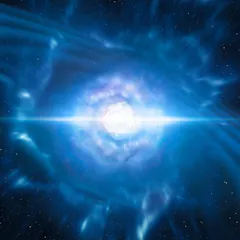
Gold and platinum are found in space, created when two stars collide. Astrophysicists can even trace this process further back, to the merger of galaxies.
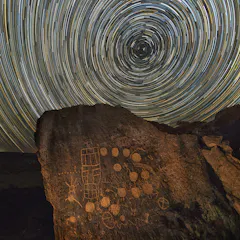
From Earth spinning on its axis and orbiting the Sun to it precessing like a top, lots of factors affect which stars you can see in the sky.
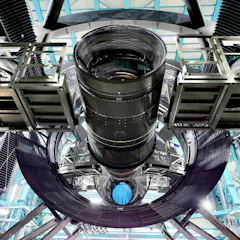
The camera can reach the furthest reaches of the cosmos and observe objects that are closer to home.
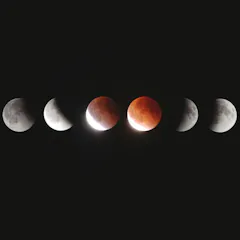
Australia and Aotearoa New Zealand are in a prime position to catch this total eclipse of the Moon; find the timing in our interactive map.
Astronomers captured the clearest example yet of one of these hidden explosions.

The Rubin Observatory in Chile has the largest camera ever built – and is set to find objects never before seen by human eyes.
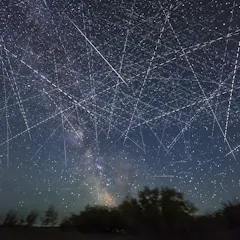
Planned ‘megaconstellations’ of satellites could cause unforeseen harm to the ozone layer and climate systems. Global regulation is needed before it’s too late.
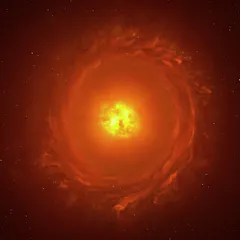
Astronomers have been watching the supergiant WOH G64 for decades – and it might have turned into a hypergiant and be heading for self-destruction.
Top contributors
-

Professor (Astrophysics), University of Southern Queensland
-
Senior Curator (Astronomy), Museums Victoria Research Institute; The University of Melbourne
-
Associate Professor in Astronomy, Monash University
-
University Distinguished Professor of Astronomy, University of Arizona
-
Associate Professor, School of Physics, The University of Melbourne
-
Professor of Astrophysics, University of Sydney
-
Professor, Radio Astronomy, University of Sydney
-
Honorary Fellow, Space and Astronomy, CSIRO; Western Sydney University
-
John Curtin Distinguished Professor (Radio Astronomy), Curtin University
-
Pro Vice-Chancellor Flagship Initiatives, Swinburne University of Technology
-
Postdoctoral Researcher in Radio Astronomy, University of Sydney
-
Senior Lecturer in Physics, Nottingham Trent University
-
Associate Dean of Innovation and Engagement, Swinburne University of Technology
-
Lecturer in Astronomy, Nottingham Trent University
-
Dean of Science, University of California, Santa Cruz