
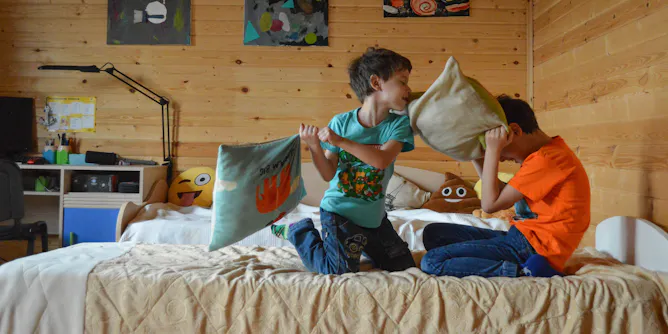
As school winds down, family life can get busier and less predictable. Kids can bicker and whinge, and parents can feel like they are freaking out.
Articles on Parenting
Displaying 1 - 20 of 1182 articles

Restricting who buys a game doesn’t decide who holds the controller afterwards. Those under 18 might still encounter the game in other ways.
Political polarization and declining student test scores are two factors fueling people’s mistrust of schools.

The challenge for parents is not to avoid saying no, it’s to help children learn how to navigate it.

Harmful sexual behaviour takes many forms. It can involve coercion, threats, or exploitation and can occur online or offline. Here’s how to respond.

Restricting access to candy is one way parents try to teach their kids moderation. But this can backfire and harm a child’s relationship to food and eating in the long run.

Repeatedly talking about consent with teenagers and young adults is necessary to help them understand the risks of sexual assault.

Check costumes for trip hazards, or masks that obscure vision. And keep little kids within reach.

Leave the pillowcase at home. Parents can try giving children a smaller bucket or bag to take trick-or-treating.
Past trauma can amplify the difficulties, sexual or otherwise, that arise after having a baby.
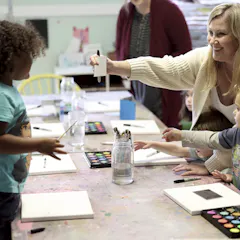
Improving both supply and quality of childcare has been the focus of several states trying to find solutions on their own.
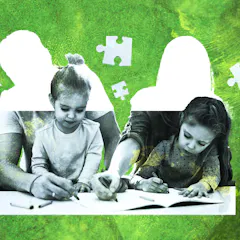
Australia invests billions in children annually, but we still struggle to keep them safe, happy and healthy. It’s time to include the missing puzzle piece: parents.

Some might worry prohibiting physical punishment would lead to parents suddenly being convicted of assault,. But data from overseas shows this doesn’t happen.

Enjoying parenting and loving your child are two very different things.

Child neglect statutes are intended to protect children. But some of them are so broadly written that they can end up harming families seeking to instill independence in their kids.

Advice around screens is no longer just about avoiding harms, but maximising benefits for your kid. No wonder some parents feel like their heads might explode.
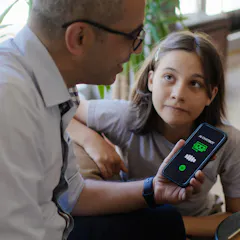
Children and teens often turn to artificial intelligence for advice on sensitive topics. But chatbots are not a substitute for human support.

When parents have different approaches to raising children, who’s right? Research suggests the answer matters less than how they handle their disagreements.
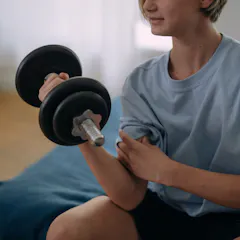
Here’s how parents can spot the difference between a boy who loves to train and one who has unhealthy feelings about his body.

The design of funding systems may matter more than funding levels.
Top contributors
-

Professor, Canada Research Chair in Determinants of Child Development, Owerko Centre at the Alberta Children’s Hospital Research Institute, University of Calgary
-
Associate Professor in Psychology, Deakin University
-
Professor of Educational Psychology, University of Wollongong
-
Researcher, Digital Wellbeing, Western Sydney University
-
Professor of Child Public Health, Swansea University
-
Clinical Trials Director, Department of Endocrinology, RPA Hospital, University of Sydney
-
Senior Lecturer in Psychology, University of the Sunshine Coast
-
Senior Lecturer in Education, Edith Cowan University
-
Assistant Professor in Psychology, Bond University
-
Professor of Midwifery, Associate Dean Research and HDR, Midwifery Discipline Leader, Western Sydney University
-
Senior Lecturer in Education, Queensland University of Technology
-
Senior Lecturer in Psychiatry, The University of Melbourne
-
Adjunct Professor, School of Nursing and Midwifery, Western Sydney University
-
Associate Professor, School of Psychology, Scientist, Children's Hospital of Eastern Ontario Research Institute, L’Université d’Ottawa/University of Ottawa
-
Associate Professor in the Early Childhood Education, University of New England