

Marginalised or minority groups seem to suffer the most from heat-related deaths and disease.
National Institute for Communicable Diseases

The National Institute for Communicable Diseases (NICD) is the national public health insitute for South Africa. It provides reference microbiology,virology,epidemiology, surveillance and public health research to support the government’s response to communicable disease threats.
The NICD is organised into functional Centres, bringing together expertise in both reference microbiology and epidemiology to enable an intergrated public health response to communicable disease threats.
The NICD primarily supports the programmes of the National and Provincial Departments of Health. As well as national support, the NICD also provides public health services such as collaborating laboratory or regional reference laboratory functions for global programmes of the World Health Organisation (WHO)
The NICD has established co-operatives agreements with partner national public health institutions such as the Center for Disease Control (CDC) and NIH/NIAID of the USA, the European Centre for Disease Control (ECDC) and the Health Protection Agency (HPA) of the United Kingdom, as well as other internationally recognised public health insitutions.
Links
Articles
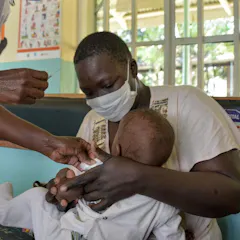
Le premier vaccin contre le paludisme, Mosquirix, a été approuvé par l'OMS en 2021. Brian Ongoro. AFP via Getty Images.
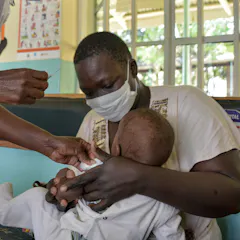
For a malaria vaccine to have an impact, health promotion is key. Awareness campaigns must address safety concerns and emphasise expected positive impacts.
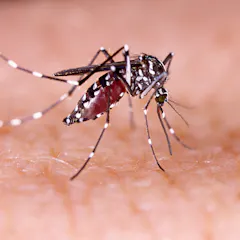
It is estimated that half of world’s population is at risk of being infected by an arbovirus.
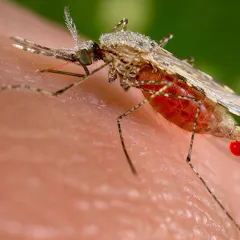
The spread of this urban malaria vector species threatens the gains made against malaria and the achievement of malaria elimination.

Repeated resurgences of SARS-CoV-2 transmission are expected in the years to come.

The displacement of people and overcrowding that often results from flooding provide optimal conditions for outbreaks of respiratory and gastrointestinal illness.
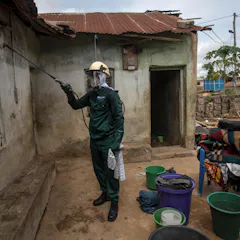
Insecticide resistance is a growing threat to malaria control efforts globally. It is, thus, important to keep a close eye on vector mosquito populations in affected areas.
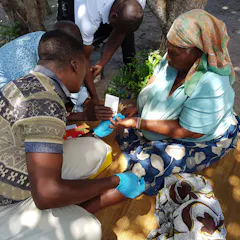
South Africa is one of the few malaria-endemic countries in Africa that did not see a major upsurge in malaria cases caused by COVID-related disruptions.
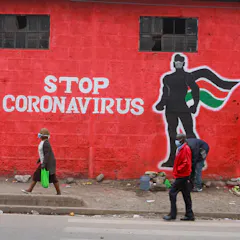
A pesar de la pandemia, las disparidades y las estructuras de poder desiguales en la salud mundial siguen intactas. Será difícil afrontar nuevos desafíos globales, como el calentamiento global, si no cambia el sistema.
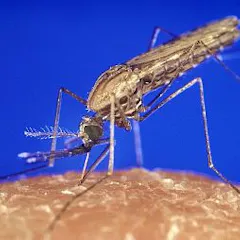
Apa yang kita sebut nyamuk sebenarnya adalah 3500 jenis serangga yang berbeda, dan mereka semua berperilaku berbeda.
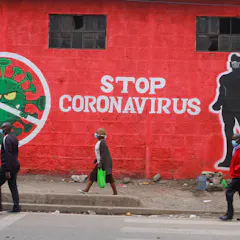
It’s a huge cause for concern that, two years into the pandemic, the disparities and unequal power structures in global health are still intact.
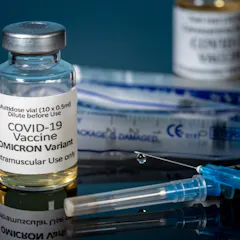
Instead of focusing on new variant-specific vaccines, the emphasis should be on deploying existing vaccines as fast as possible to as many people.
This is not an alternative to traditional disease surveillance, but a complementary tool.
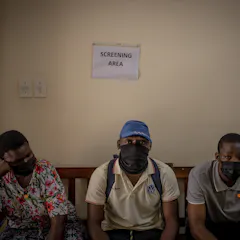
This is a transcript of The Conversation Weekly podcast episode published on February 3 2022.

Plus, is the human emotional response to music innate or is it shaped by a person’s culture? Listen to The Conversation Weekly podcast.
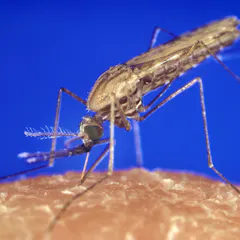
What we call mosquitoes are actually 3500 different types of insects, and they all behave differently.
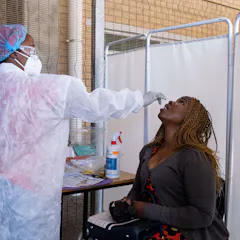
At this stage, we cannot say anything about the severity of cases with Omicron - either in primary or reinfections.

Like the coronavirus causing the current pandemic, both the malaria parasite and mosquito vector are developing ways to avoid control.
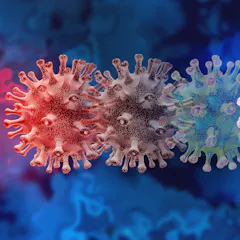
Une nouvelle lignée de SARS-CoV-2, B.1.1.529, a été identifiée. Baptisée Omicron par l’OMS, qui l’a catégorisé « préoccupant », ce variant a un profil génétique très différent des précédents.
Authors
-

Senior Pathologist, National Institute for Communicable Diseases
-
Co-head of the Centre for Respiratory Disease and Meningitis, National Institute for Communicable Diseases
-
Senior Medical Scientist at the National Institute for Communicable Diseases, National Institute for Communicable Diseases
-
Senior Medical Scientist, National Institute for Communicable Diseases
-
Epidemiologist, National Institute for Communicable Diseases
-
Principal Medical Scientist and Head of Laboratory for Antimalarial Resistance Monitoring and Malaria Operational Research, National Institute for Communicable Diseases
-
Principal Medical Scientist at National Institute for Communicable Diseases (NICD), National Institute for Communicable Diseases
-
Medical Epidemiologist, National Institute for Communicable Diseases
-
Head: Centre for Enteric Diseases, National Institute for Communicable Diseases
-
Epidemiologist, National Institute for Communicable Diseases
-
Medical epidemiologist: Centre for Enteric Diseases,, National Institute for Communicable Diseases
-
Data Manager, Center for Respiratory Diseases and Meningitis, National Institute for Communicable Diseases
-
Principal Pathologist, National Institute for Communicable Diseases
-
Medical scientist, National Institute for Communicable Diseases
-
Senior scientist, National Institute for Communicable Diseases