

Restaurer les écosystèmes africains exige des services climatiques croisant prévisions et savoirs autochtones.
University of Cape Town

Located on the slopes of Devil’s Peak in Cape Town, the University of Cape Town is a leading, research-intensive university in South Africa and on the continent, known for its academic excellence and pioneering scholarship. The university is home to a third of South Africa’s A-rated researchers (acknowledged by the Department of Science and Technology as international leaders in their field) and a fifth of the country’s national research chairs. UCT encourages students and staff to use their expertise to speed up social change and economic development across the country and continent, while pursuing the highest standards of excellence in academic knowledge and research: developing African solutions to African challenges that are also shared by developing nations around the world.
UCT, like the city of Cape Town, has a vibrant, cosmopolitan community drawn from all corners of South Africa. It also attracts students and staff from more than 100 countries in Africa and the rest of the world. The university has strong partnerships and networks with leading African and other international institutions - helping to enrich the academic, social and cultural diversity of the campus as well as to extend the reach of UCT’s academic work.
Links
Articles

People restoring Africa’s ecosystems need climate services that combine forecasts with Indigenous knowledge and information about land, water and livelihoods.
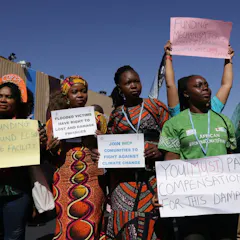
Le financement de la lutte contre le changement climatique ne devrait pas être dissocié du financement du développement.

Partnerships need to grapple with the tension between what to preserve and what to change rather than be paralysed by it.

While some creators proudly embrace the label of sex worker, many others reject it outright.

Climate finance should not be separated from development funding.

Tupac est la preuve que le fait d'être jeune, en marge de la société et noir ne signifie pas forcément être impuissant.

Tupac is proof that being young, marginal and Black does not necessarily mean being powerless.
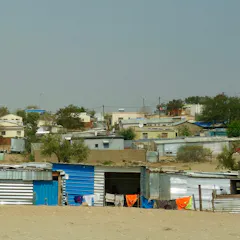
Caregivers said their priorities were pension increases, a dedicated allowance, food security and basic infrastructure.
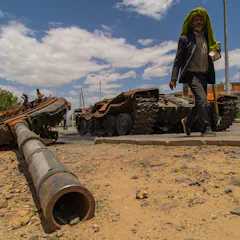
An incomplete peace agreement has become a useful political tool to the Ethiopian government, the TPLF and Eritrea.

Automation is expected to make air traffic controllers’ jobs a bit easier. But instead it could add more work and lead to more mistakes being made.
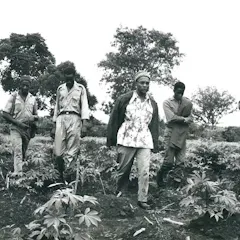
Une nouvelle collection des écrits agricoles d’Amílcar Cabral montre que la crise des sols en Afrique a aussi une dimension historique, politique et sociale.
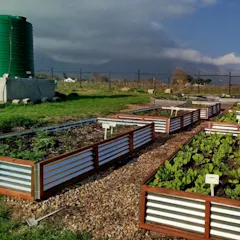
A test case in Franschhoek, South Africa has used natural filtering of polluted water to produce 50,000 litres a day that is safe for irrigation.

Une étude dans huit pays a évalué l’efficacité de programmes de soutien à la parentalité déployés à grande échelle.
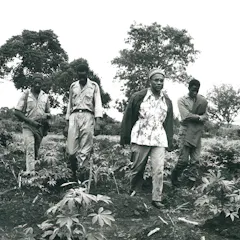
A new collection of Amílcar Cabral’s agricultural writings shows why Africa’s soil crisis today is about history, politics and people as much as farming.
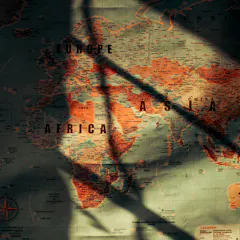
African countries should start early to develop an agreed position before the next set of global priorities is discussed.

The issue is not whether cities should use technology for public safety, but how those technologies are chosen, evaluated and governed.

L'étude de l'olivine, un minéral présent dans la kimberlite, apporte un éclairage sur l'origine des diamants.

An eight-country study assessed whether parenting programmes that were developed through research also work when offered at a wider scale in real-life conditions.

Solar farms can bring jobs, but the story of one South African community shows that rural residents who give up their land need more say in how benefits are shared.
Authors
-

Research officer, University of Cape Town
-
Professor at the Nelson Mandela School of Public Governance, University of Cape Town
-
Research Officer (Climate Responsive Nature-based Solutions), University of Cape Town
-
PhD in aviation law, University of Cape Town
-
Honorary research affiliate, Centre of Criminology, University of Cape Town
-
Professor of Sociology, University of Cape Town
-
Research fellow, University of Cape Town
-
Postdoctoral research fellow, University of Cape Town
-
Senior Lecturer, University of Cape Town
-
Research fellow, University of Oslo; University of Cape Town
-
Senior Scholar in Environmental & Geographical Science, University of Cape Town
-
Professor in the School of Economics, University of Cape Town
-
Senior Researcher, University of Cape Town
-
PhD researcher, University of Cape Town
-
Professor, University of Cape Town