

Digital platforms offer opportunities for African dance influencers to construct their own visions of what it means to be African.
Articles on African Dance
Displaying all articles

Some of the dances depicted in rock art are just about entertainment, not ritual.

Germaine Acogny has risen as a female artist who has defied stereotypes to become one of the world’s most revered dance makers.
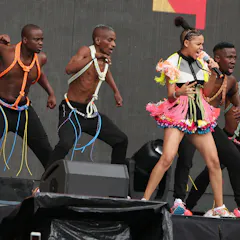
Costume, hair and dance allow her to modernise Tsonga culture – and help shape youth identity.

The 38 dancers highlight the ongoing lack of African representation on theatrical stages.
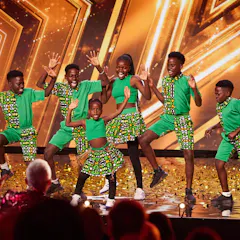
The Ugandan orphans stole headlines after performing on Britain’s Got Talent - but have been an internet sensation for years.

Some offerings were political and academic, some were celebratory. Some told us personal or cultural stories, some had 100 dancers, some had one.
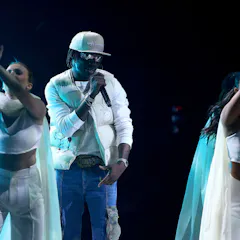
The five Iranian teenagers were arrested and forced to apologise – but the dance challenge continues to go viral.

Dhamaal music and dance reveals a rich and complex mixing of cultures that is shaped by history.
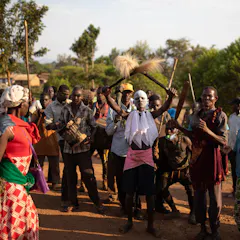
The ritual site becomes a communal classroom where songs and dances teach history, impart values and preserve cultural identity.
Durban’s Jomba! festival is now 100% online and free, and there has been a move from stage art to screen dance.
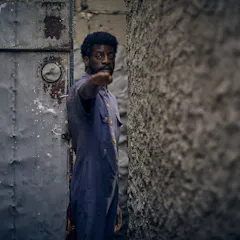
Theatre is able to create a space for discussion about how and why women experience physical and emotional violence.

A year later, it’s clear that the dance promotes a conscious concept of Africanity – sowing feelings of tolerance and contentment that have conquered international audiences.
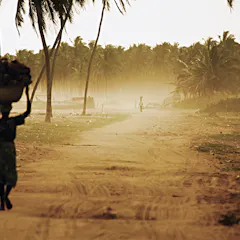
Sacred sites where rituals are performed by the community should be protected as living archives that house local heritage.

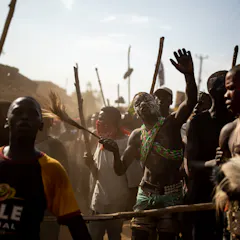
South Africa’s famous toyi-toyi was adopted from Zimbabwean troops, who learned it in Algeria – showing the interconnected nature of Africa’s liberation struggles.

During the coronavirus pandemic the Jerusalema dance challenge enacted a way for communities to connect - repetitive enough to be picked up and varied enough to tease.
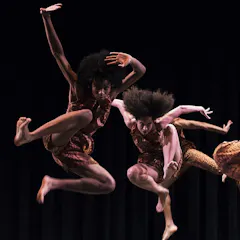
COBA, the Collective of Black Artists has been working to introduce Canadian audiences to African and Caribbean dances for 25 years.
Top contributors
-

Lecturer, University of KwaZulu-Natal
-
Lecturer, Makerere University
-
FBA Professor of English Literature, King's College London
-
Associate research scientist, Universidade de Lisboa
-
Associate Professor in Performing Arts, Tshwane University of Technology
-
Lecturer in Costume Theory and theatre costumer, Tshwane University of Technology
-
PhD Candidate in Dance and Dance History Tutor, The University of Melbourne
-
Postdoctoral Fellow at Wits Centre for Diversity Studies, University of the Witwatersrand
-
PhD candidate, Department of Education, York University, Canada
-
Global Challenges Research Fellow, University of Sheffield
-
Reader in History of Art, University of Edinburgh
-
Professor, University of Sussex
-
Postdoctoral fellow, University of Tübingen
-
ICREA Research Professor, Universitat de Barcelona
-
Anthropologist, University of Helsinki