
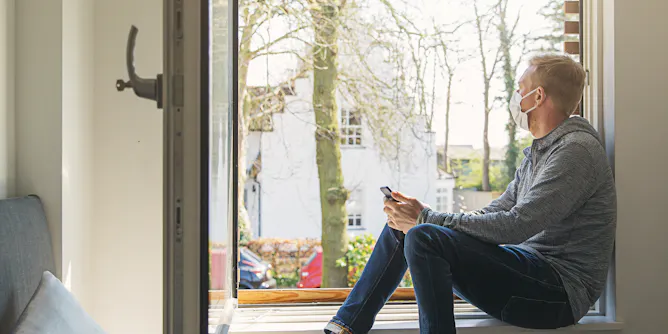
Good ventilation can reduce the risk of catching coronavirus. An environmental engineer explains how to know if enough outside air is getting into a room and what to do if ventilation is bad.
Articles on Air quality
Displaying 101 - 120 of 153 articles
From June through October, it’s not unusual for huge Saharan dust plumes to blow across the Atlantic. They can darken skies but also bring calmer weather and electric sunsets. Here’s how they form.
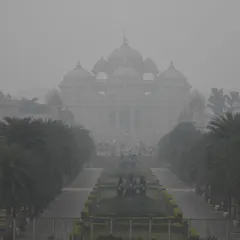
In South Asia, days with both extreme heat and extreme pollution are expected to increase 175% by 2050. Separately, the health effects are bad; together they will likely be worse.
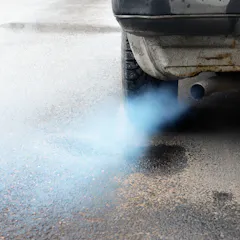
Removing engine idling would be like removing up to 1.6 million cars from the road.
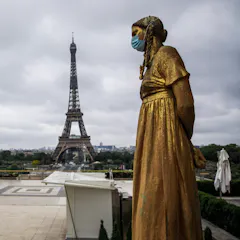
Yes, poor air quality is bad for your health – but beware simplistic correlations with COVID-19.
Researchers built cheap air quality monitors using parts found at hardware and electronics scores. The results have big implications for anyone who travels outside near busy roads.

The data shows a big improvement of pollution levels over some cities – but in others, pollution has, perhaps surprisingly, increased.
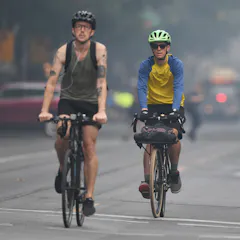
Bushfire smoke accumulating over Australian cities contains a complex chemical mix which does all sorts of things to the human body.

This is not the first time Australia’s major cities have been shrouded in bushfire smoke. But this time, the culprits must held to account.

Smoke haze almost seems to be the new normal in parts of Australia. But what do we know about the dangers to our health in the longer term?
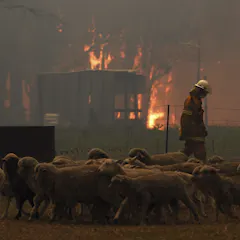
Wildfire smoke can damage animals’ respiratory tract and lead to breathing problems and even death.
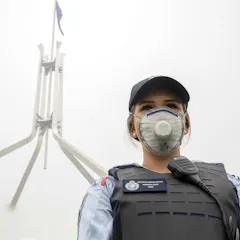
Plugging ventilation holes in walls helps, but there are dangers.

Pregnant women exposed to bushfire smoke face a higher risk of complications including gestational diabetes, high blood pressure and giving birth prematurely.
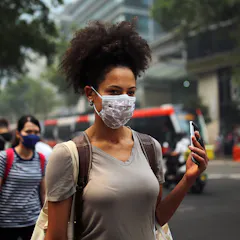
With smoke haze this week at its most hazardous level yet, people on Australia’s east coast have been taking precautions to protect their health. But some methods are more effective than others.
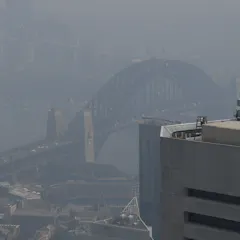
Smoke haze appears to make it hard for participants in financial markets to make the right decisions. The finding has far-reaching implications.
Some previous research suggests people living in rural areas may be at a higher risk of developing Alzheimer’s disease. But these results tell a different story.

The dangers of outdoor air pollution are now well known, but those related to the air we breathe at homes and at work are much less so, according to an international study.

Filtering air uses lots of energy and concentrates harmful chemicals in landfills.
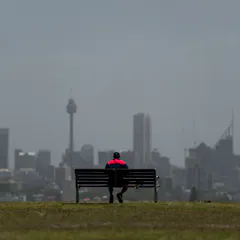
Even as the dust storm over NSW subsides, the unseen fine particles outside, or even inside your house, can still present a health risk.
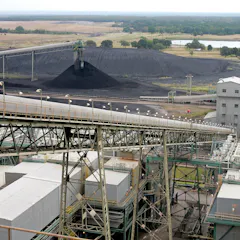
A study of the social cost of carbon emitted by the shrinking fleet of Texan coal plants suggests that closing more of them down would be good for the climate and public health.
Top contributors
-

Associate Professor, University of Pretoria
-
Professor of Civil and Environmental Engineering, Rice University
-
Professor of Atmospheric Chemistry at the National Centre for Atmospheric Science, University of York
-
Professor of Chemical and Biochemical Engineering, University of Iowa
-
Professor of Mechanical Engineering, University of Colorado Boulder
-
Associate Professor of Chemical Engineering, The University of Melbourne
-
Senior Research Fellow, Woolcock Institute of Medical Research, Macquarie University and the South West Sydney Clinical School, UNSW Sydney. Affiliate, Centre for Safe Air., UNSW
-
Adjunct academic, mycology, Flinders University
-
Professor, University of Pretoria
-
Honorary Professor, School of Natural Sciences, Macquarie University
-
University of Iowa Distinguished Chair, Professor of Environmental Health, University of Iowa
-
Adjunct Professor of Architecture, University of Technology Sydney
-
Professor of Atmospheric Science, University of Birmingham
-
Professor, Faculty of Health Sciences, Simon Fraser University
-
Assistant Professor, Faculty of Health Sciences, Simon Fraser University