
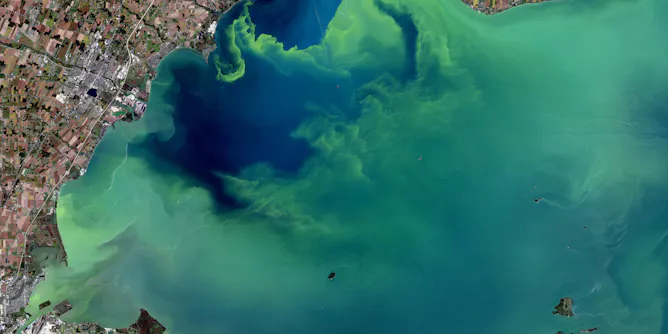
Many of the excess nutrients causing algal blooms in Lake Erie come from nearby farms, and the challenge is keeping them out of waterways.
Articles on Algae blooms
Displaying all articles

Communities and entrepreneurs are experimenting with ways to turn this nuisance into a valuable resource.
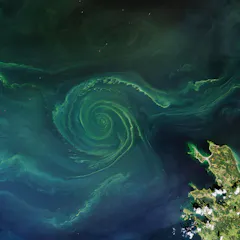
Made internationally famous by their use to clean up the Lincoln Memorial pool in Washington, this tech is starting to be used globally.

The organisms that cause greening are highly concentrated in Kenya’s shallow Winam Gulf.
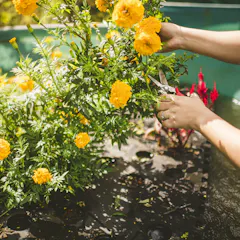
Phosphorus and nitrogen contribute to water pollution and cause harmful algal blooms. New research shows how mats of floating flower beds can take advantage of these nutrients while cleaning the water.
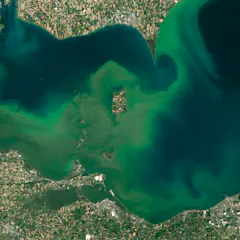
Nutrient pollution fouls lakes and bays with algae, killing fish and threatening public health. Progress curbing it has been slow, mainly because of farm pollution.
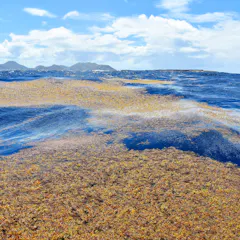
Huge blooms of brown seaweed have fouled Florida and Caribbean beaches almost every year over the past decade. They originate in Africa and South America. and are fueled by human activities.
Top contributors
-

Professor of Environmental Sustainability, York St John University
-
Professor of Marine Science, University of Maryland Center for Environmental Science
-
Post Doctoral Associate in the Institute of Environment, Florida International University
-
Professor of Agroecology, Florida International University
-
Professor Emeritus of Environment and Sustainability, University of Michigan
-
Professor of Coastal Science, Florida International University
-
Senior Research, Euro-Mediterranean Center on Climate Change; Professor of Ocean and Climate Dynamics, Georgia Institute of Technology
-
Distinguished Research Professor and Director, Great Lakes Center for Fresh Waters and Human Health, Bowling Green State University
-
Professor of Geography, Bowling Green State University
-
PhD candidate, Michigan Geomicrobiology Lab, University of Michigan
-
Professor of Biology, University of Michigan
-
Postdoctoral Fellow in Oceanography, Georgia Institute of Technology
-
Professor of Ocean Sciences, Georgia Institute of Technology
-
Postdoctoral Researcher, Geography Environment and Geomatics, University of Guelph
-
Professor of Watershed Science and Environmental Modelling, University of Guelph