

The United States came out of the Revolutionary War victorious. But building a new nation was very different from fighting a war.
Articles on American Revolution
Displaying 1 - 20 of 51 articles

The bipartisan revolution against automated license plate readers suggests Americans have not entirely lost their rebellious spirit.
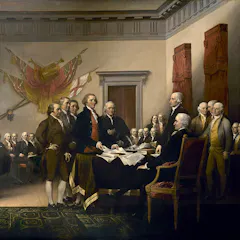
Marking the first 250 years of the United States of America.
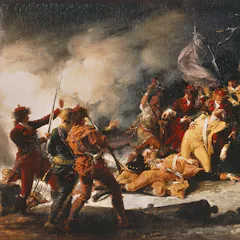
Britain controlled vast tracts in North America beyond the original 13 Colonies. And the American invasion of Canada played a role in the final political settlement.
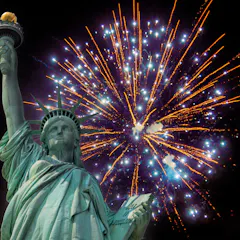
Two revolutions, two republics and the enduring power of national myths and civic festivities come to the fore in July as France and the US both celebrate national holidays.
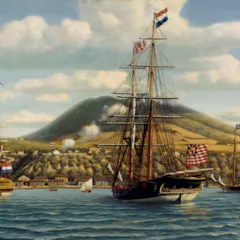
The American Revolution was won not just by ideals and armies, but by the strategic trade networks of a small Caribbean port.

Dina escaped from slavery and sold pepper pot stew on the streets of Philadelphia, while her enslaver tried to recapture her.
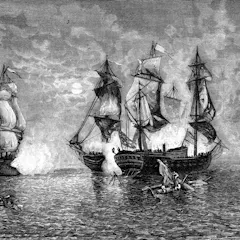
A British ban stripped thousands of skilled mariners of their livelihoods overnight – and gave Washington a chance to turn the tide.
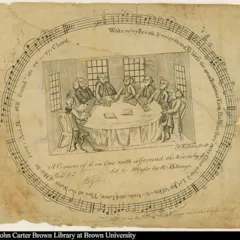
William Billings has been largely forgotten, except among music historians. But he was the country’s first notable composer, penning protest songs against Great Britain.

The founding generation in America was not of one mind. John Adams and Thomas Jefferson differed on crucial ideas, but exemplify the capacity for people to disagree and yet work for a common cause.
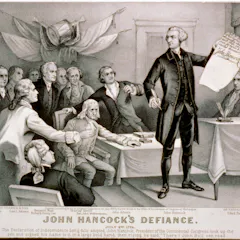
US charitable institutions rapidly changed in the 1780s as Americans established groups to support people in need and to reform society.

Matthias Aspden was a wealthy Philadelphia businessman who remained faithful to Britain. As a result, he lost his home, property and sense of belonging, and died in exile.
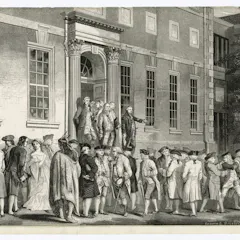
Debates about religion’s role in America often circle back to the country’s founding documents.

TV series about the great founding event of the USA were thin on the ground until the 21st century.
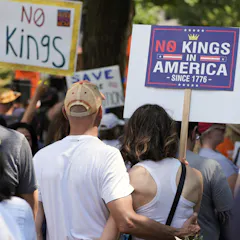
‘In America, the law is king!’ ‘No King! No Tyranny!’ For a skeptical Thomas Paine, every day was ‘No Kings Day.’

Washington’s ‘warrior ethos’ was grounded in decency, temperance and the capacity to act with courage without surrendering to rage. That ideal built an army – and in time, a republic.
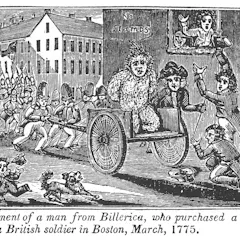
The US has long fused politics and violence, often through firearms. To claim that such shootings betray ‘who we are’ is to forget that the US was founded on this form of political violence.

Hailed as a returning hero, the Marquis de Lafayette made a grand tour of the US in 1824-25, just before the country’s 50th birthday.

Trump often casts himself as a man of the people. But his statue garden feeds into a ‘great man’ approach to history at the expense of local and state history.

Military personnel at all levels are now facing the question of whether they will stand up for the military’s independent role in maintaining the integrity and stability of American democracy.
Top contributors
-

Assistant Professor of History, University of Tampa
-
Professor of American History, Università di Torino
-
Professor of History, University of South Carolina
-
Lecturer in International Studies, University of Washington
-
Associate Professor of History, University of California, Berkeley
-
Associate Professor of Religion, University of Illinois Urbana-Champaign
-
Associate Professor of History, Miami University
-
Professor of History, University of New Hampshire
-
Associate Professor of Business, Boston University
-
Principal Lecturer in History, Manchester Metropolitan University
-
Clinical Associate Professor of Dentistry, New York University
-
Lecturer in History, Aston University
-
Adjunct Instructor in History, Indiana University
-
Instructor in Political Science & Public Scholarship Coordinator, University of British Columbia
-
Associate Professor of English, Washington University in St. Louis