

New research shows that when companies do things like give to charity or reduce their carbon footprint, consumers perceive their products as less risky.
Articles on Behavioral economics
Displaying 21 - 40 of 55 articles

Because most people want to be perceived as generous, sometimes monetary incentives for doing a good deed are counterproductive.

A scholar who studies consumer decision-making explains just what it is in the human mind that makes people susceptible to nudges toward one behavior or another.

Like any personal touch, there’s a chance this common fundraising step makes people feel warm and fuzzy inside. But a five-year research project found that it doesn’t make donors more generous.

Some Californians want to ban people from living in wildfire-prone areas. Behavioral economics offers a less heavy-handed approach to reducing the costs and risks.

Why do even the rich cheat on their taxes? Roesearch suggests some people may be genetically predisposed to break the rules for their own financial gain.
It may be easier to give money away when you budget for it.

A study found that grocery shoppers who could change their orders were more likely to swap produce for junk food than the other way around.
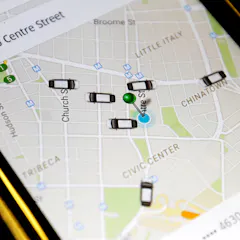
Uber’s IPO will value the company at more than $80 billion, yet the data it collects on its users may be worth even more – and creates the potential for dangerous manipulation.

Software makers including Apple have been creating apps aimed at limiting how much time we spend using our smartphones. A behavioral scientist explains how – and whether – they work.

Millennials are more financially conservative than their high debt balances might suggest.

People have to make countless decisions on a daily basis that involve some degree of risk, from boarding a plane to crossing the street. The trouble is most of us don’t weigh risk well.
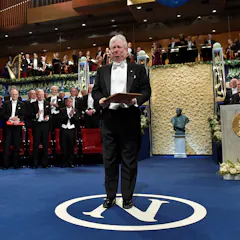
After two Nobel prize wins for behavioral economists, the burgeoning field has demonstrated its importance in shaping effective economic and government policy.

A scholar applies lessons from her research to negotiate with her spouse better and have an ‘awesome holiday.’ Here’s how you can too – and make your family life happier overall.

Dropping old, bad habits is hard, but starting new, good ones may not be so difficult. Or so a recent study suggests. Read how a simple sign at an airport made a difference.
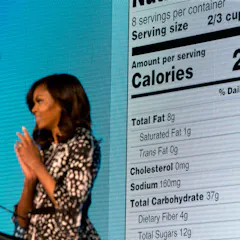
Government initiatives to prod people to make better decisions got a lot of attention after Richard Thaler won a Nobel in economics for his working on nudging.
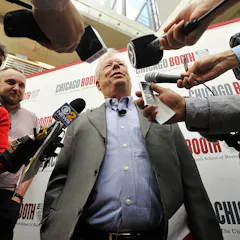
Richard Thaler won the 2017 Nobel Prize in economics for his groundbreaking work incorporating how humans actually behave into economic thinking.
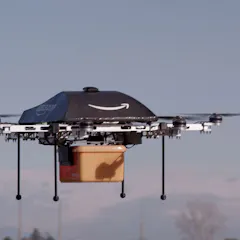
Amazon.com and others are eager to fill the skies with drones delivering packages at all hours. Convenient, yes, but it could transform – and not in a good way – our ability to make informed choices.
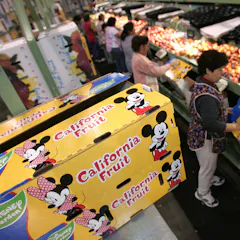
Defaults are powerful tools that policymakers and marketers can use to nudge us to make certain choices, whether in our interest or in theirs. How do we ensure they’re used responsibly?

For 30 years, sports fans have been told to forget about streaks because the ‘hot hand’ is a fallacy. But a reanalysis says not so fast: Statistics show players really are in the zone sometimes.
Top contributors
-

Harvard University
-
Associate Professor of Business, Boston University
-
Associate Professor of Economics, University of Miami
-
Associate Professor of Economics, Rady School of Management, University of California, San Diego
-
PhD Candidate in Management, Columbia University
-
Assistant Professor of Marketing, Northeastern University
-
Professor of Economics and Psychology, Carnegie Mellon University
-
Professor of Psychology, Carnegie Mellon University
-
Associate Professor of Marketing, Washington University in St. Louis
-
Associate Professor of Economics, HEC Paris Business School
-
Adjunct Research Fellow, School of Human Sciences, The University of Western Australia
-
Assistant Professor of Finance, New York University
-
Researcher in Public Health, San Diego State University
-
Assistant Professor of Economics, Universidad de Alicante
-
Assistant Professor of Marketing, University of California, Los Angeles